Comparing Timelines
Exploring the overlapping histories of "Ottoman Empire" and "Abolitionism".

Ottoman Empire
1299 - 1924
Abolitionism
1315 - 2022
1299 CE
Foundation of the Ottoman Beylik
Osman I establishes a small principality in northwestern Anatolia, founding what would become the Ottoman Empire. This beylik emerged from the fragmented Anatolian Beyliks following the decline of the Rum Sultanate. Osman's early followers consisted of Turkish tribal groups and Byzantine renegades.
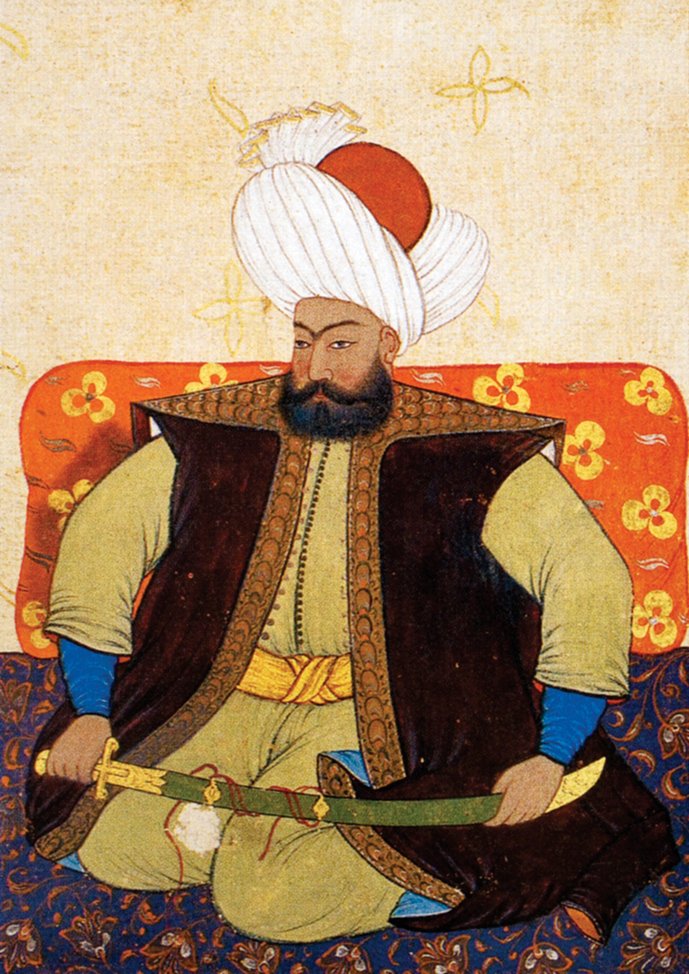
Sultan Uthman I
Portrait of Osman I, founder of the Ottoman Empire
1302 CE
Battle of Bapheus
Ottoman forces under Osman I defeat the Byzantines at Bapheus, marking a significant early victory that contributed to Osman's rise and Ottoman expansion into Byzantine territory. This battle demonstrated the military effectiveness of the early Ottoman forces.
1315 CE
France Outlaws Slavery in Metropolitan Territory
Louis X, king of France, published a decree proclaiming that 'France signifies freedom' and that any slave setting foot on French soil should be freed. This was the first country to fully outlaw slavery, though it was later used in French colonies. The decree established the principle that French soil was incompatible with slavery.
1324 CE
Death of Osman I
Osman I, founder of the Ottoman Empire, dies and is succeeded by his son Orhan. Under Osman's leadership, the small beylik had begun its transformation from a tribal confederation into an organized state that would eventually become a major empire.
1326 CE
Capture of Bursa
Orhan, son of Osman I, captures the northwestern Anatolian city of Bursa from the Byzantines, making it the new Ottoman capital. This conquest marked a significant expansion of Ottoman territory and established their first major urban center, supplanting Byzantine control in the region.
1387 CE
Capture of Thessaloniki
Ottoman forces capture the important port city of Thessaloniki from the Venetians and sack it. This conquest demonstrated Ottoman naval capabilities and their expansion into strategically important Mediterranean ports, challenging Venetian commercial dominance.
1389 CE
Battle of Kosovo
Ottoman victory at Kosovo effectively marks the end of Serbian power in the region, paving the way for Ottoman expansion into Europe. This decisive battle established Ottoman dominance in the Balkans and opened the path for further European conquests.
1396 CE
Battle of Nicopolis
Ottoman forces defeat a large crusading army at Nicopolis, regarded as the last large-scale crusade of the Middle Ages. This victory failed to stop Ottoman advance and demonstrated their military superiority over European coalition forces, securing their position in the Balkans.
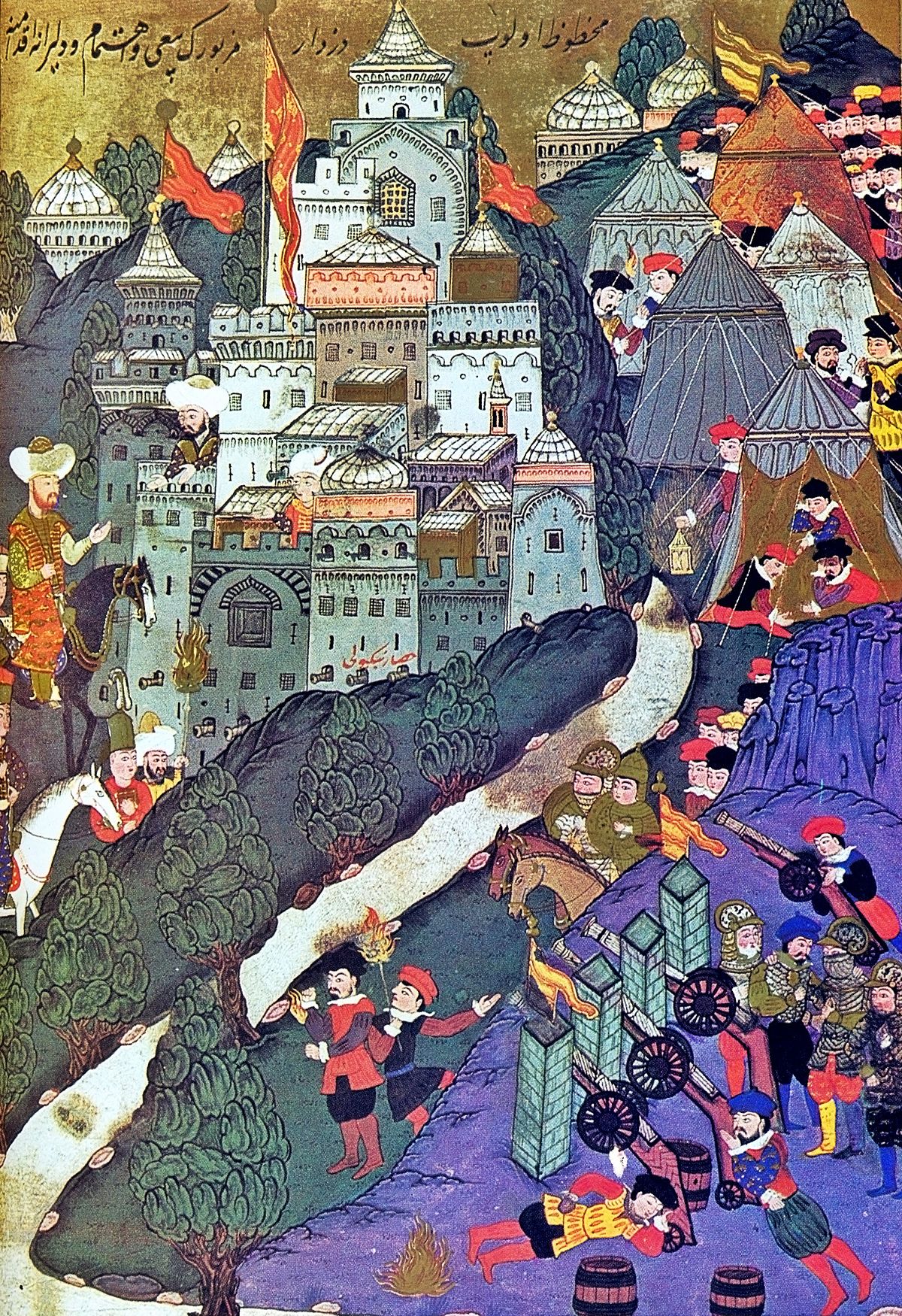
Battle of Nicopolis
The Battle of Nicopolis in 1396, as depicted in an Ottoman miniature from 1523
1402 CE
Battle of Ankara
Timur defeats Ottoman forces and captures Sultan Bayezid I, throwing the empire into disorder. This devastating defeat by the Timurid Empire temporarily relieved Byzantine pressure on Constantinople and led to a period of Ottoman civil war and fragmentation.
1413 CE
End of Ottoman Interregnum
The Ottoman civil war ends when Mehmed I emerges as sultan and restores Ottoman power. This period of succession struggle among Bayezid's sons lasted from 1402 to 1413, during which the empire was divided and weakened, but Mehmed's victory reunified the state.
1444 CE
Battle of Varna
Murad II repels the Crusade of Varna by defeating Hungarian, Polish, and Wallachian armies under Władysław III of Poland and John Hunyadi. This victory secured Ottoman control over the Balkans and ended the last major crusading effort against the empire.
1448 CE
Second Battle of Kosovo
John Hunyadi's second attempt to attack the Turks with Hungarian and Wallachian forces is defeated at Kosovo. This victory further consolidated Ottoman control over the Balkans and demonstrated the futility of European attempts to roll back Ottoman expansion.
1453 CE
Conquest of Constantinople
Sultan Mehmed the Conqueror captures Constantinople, ending the Byzantine Empire after over 1,000 years. This monumental achievement made the Ottomans masters of the strategic Bosphorus strait and established them as a major European power, with Constantinople becoming their new capital.
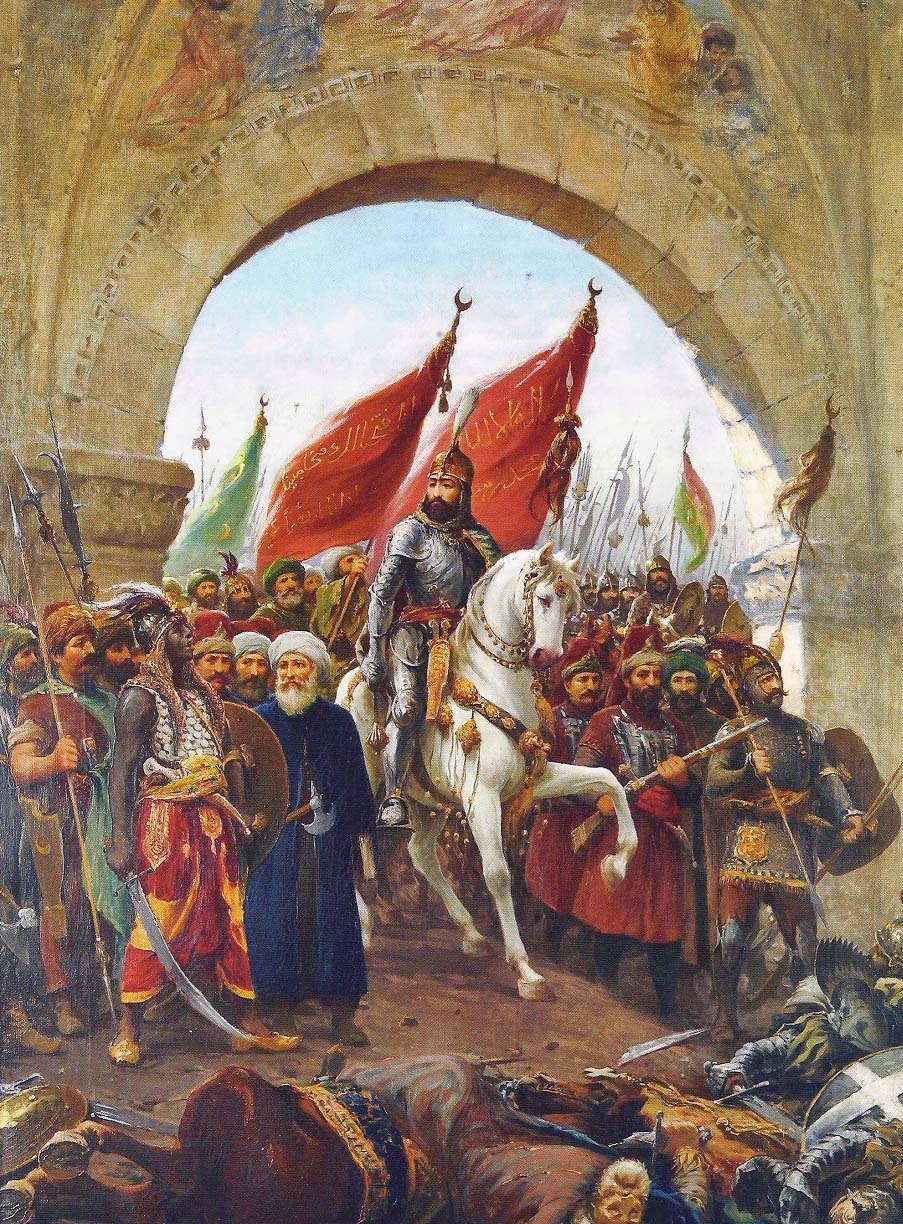
Sultan Mehmed the Conqueror's entry into Constantinople
Painting by Fausto Zonaro depicting Mehmed II's triumphant entry into Constantinople
1514 CE
Battle of Chaldiran
Sultan Selim I defeats Shah Ismail of Safavid Iran at Chaldiran, dramatically expanding Ottoman eastern and southern frontiers. This victory established Ottoman dominance over eastern Anatolia and northern Mesopotamia, while also securing the empire's eastern border against Persian expansion.
1517 CE
Ottoman Conquest of Egypt
Selim I defeats and annexes the Mamluk Sultanate of Egypt, establishing Ottoman rule in Egypt and creating a naval presence on the Red Sea. This conquest brought the wealthy province of Egypt under Ottoman control and positioned the empire to compete with Portuguese expansion in the Indian Ocean.
1521 CE
Capture of Belgrade
Suleiman the Magnificent captures Belgrade, opening the path for Ottoman expansion into Central Europe. This strategic victory removed a key Hungarian fortress and paved the way for the Ottoman conquest of much of the Kingdom of Hungary.
1526 CE
Battle of Mohács
Suleiman the Magnificent achieves a historic victory at Mohács, establishing Ottoman rule in the territory of present-day Hungary and other Central European territories. This decisive battle effectively ended Hungarian independence and opened Central Europe to Ottoman expansion.

Battle of Mohács
Ottoman miniature of the Battle of Mohács in 1526
1529 CE
First Siege of Vienna
Suleiman the Magnificent lays siege to Vienna but fails to take the city, marking the furthest extent of Ottoman expansion into Europe. This failure represented the first major check to Ottoman expansion and demonstrated the limits of their military reach into Central Europe.
1535 CE
Ottoman Conquest of Baghdad
Ottoman Turks take Baghdad from the Persians, establishing Ottoman rule in Iraq and gaining naval access to the Persian Gulf. This conquest extended Ottoman control over Mesopotamia and positioned the empire to challenge Portuguese dominance in the Indian Ocean trade routes.
1538 CE
Battle of Preveza
Ottoman admiral Barbarossa Hayreddin Pasha defeats the Holy League of Charles V under Andrea Doria at Preveza. This naval victory established Ottoman dominance in the Eastern Mediterranean and secured their control over key sea routes.

Battle of Preveza
Ottoman admiral Barbarossa Hayreddin Pasha defeated the Holy League of Charles V under the command of Andrea Doria at the Battle of Preveza in 1538
1542 CE
Spain Enacts New Laws Abolishing Indigenous Slavery
Spain passed the New Laws in 1542, which abolished native slavery for the first time in European colonial history. This legislation was influenced by Bartolomé de las Casas' advocacy for indigenous rights and his book 'A Short Account of the Destruction of the Indies'. The laws represented the first systematic attempt to protect indigenous peoples from enslavement.
1566 CE
Death of Suleiman the Magnificent
Suleiman the Magnificent dies of natural causes during the siege of Szigetvár, ending the reign of the Ottoman Empire's most celebrated sultan. His death marked the end of the classical period of Ottoman expansion, with the empire spanning approximately three continents at its peak.
1569 CE
English Court Rules Against Slavery Recognition
An English court considered the case of Cartwright, who had bought a slave from Russia, and ruled that English law could not recognize slavery as it was never established officially. This early legal precedent challenged the legitimacy of slavery under English common law, though it was later overshadowed by subsequent developments.
1571 CE
Battle of Lepanto
The Holy League consisting of Spanish and Venetian fleets wins a victory over the Ottoman fleet at Lepanto, off southwestern Greece. Catholic forces killed over 30,000 Turks and destroyed 200 ships, dealing a symbolic blow to Ottoman naval invincibility, though the empire quickly recovered.

Battle of Lepanto
Order of battle of the two fleets in the Battle of Lepanto, with an allegory of the three powers of the Holy League in the foreground, fresco by Giorgio Vasari
1590 CE
Japan Abolishes Chattel Slavery
Under the actions of Toyotomi Hideyoshi, chattel slavery was abolished across Japan. This made Japan one of the earliest countries to systematically eliminate slavery, though other forms of forced labor continued to be used, particularly during World War II. The abolition represented a significant shift in Japanese social policy.
1639 CE
Treaty of Zuhab
The Treaty of Zuhab decisively divides the Caucasus and adjacent regions between the Ottoman and Safavid empires, confirming the territorial arrangements established in the 1555 Peace of Amasya. This treaty established lasting borders between the two empires in the region.
1669 CE
Conquest of Crete Completed
The Ottomans complete their conquest of Crete from Venice, ending a long campaign that began decades earlier. This victory extended Ottoman control over the Eastern Mediterranean and eliminated a major Venetian stronghold in the region.
1683 CE
Second Siege of Vienna
Grand Vizier Kara Mustafa Pasha leads a massive Ottoman army in a second attempt to capture Vienna, but the siege fails catastrophically. The Ottoman forces are swept away by allied Habsburg, German, and Polish forces led by Polish king John III Sobieski, marking the beginning of Ottoman decline in Europe.

Second Siege of Vienna
The Second Siege of Vienna in 1683, by Frans Geffels (1624–1694)
1697 CE
Battle of Zenta
Mustafa II leads a counterattack against the Habsburgs in Hungary but suffers a disastrous defeat at Zenta in modern Serbia. This crushing defeat further weakened Ottoman position in Europe and contributed to major territorial losses in subsequent peace negotiations.
1699 CE
Treaty of Karlowitz
The Treaty of Karlowitz ends the Great Turkish War, with the Ottomans surrendering control of significant territories, many permanently. This treaty marked the first major territorial losses for the Ottoman Empire and signaled the beginning of its long retreat from Europe.
1700 CE
Lord Chief Justice Holt Upholds Anti-Slavery Ruling
Lord Chief Justice John Holt ruled that a slave became free as soon as he arrived in England, upholding the earlier 1569 precedent. This decision reinforced the principle that English common law did not recognize slavery, setting important legal groundwork for future abolitionist arguments in British courts.
1711 CE
Pruth River Campaign Victory
Ottoman forces achieve victory in the Pruth River Campaign against Russia in Moldavia, after Charles XII of Sweden persuaded Sultan Ahmed III to declare war on Russia. This victory temporarily restored Ottoman prestige after earlier defeats.
1717 CE
Austrian Capture of Belgrade
Austrian troops led by Prince Eugene of Savoy capture Belgrade from the Ottomans. Austrian control in Serbia lasted until the Turkish victory in the Austro-Russian–Turkish War, but this loss demonstrated continued Ottoman military weakness in Europe.

Austrian Capture of Belgrade
Austrian troops led by Prince Eugene of Savoy capture Belgrade in 1717
1729 CE
First Ottoman Printing Press
Ibrahim Muteferrika's printing press publishes its first book, marking the beginning of Ottoman printing. Despite initial religious opposition, this technological advancement represented an important step in Ottoman modernization and the spread of knowledge.
1739 CE
Treaty of Belgrade
The Treaty of Belgrade ends the Austro-Russian–Turkish War, resulting in Ottoman recovery of northern Bosnia, Habsburg Serbia (including Belgrade), Oltenia and southern parts of the Banat of Temeswar. However, the empire lost the port of Azov to the Russians.
1755 CE
First Scottish Freedom Suit Filed
The case of Montgomery v. Sheddan took place in Scotland, representing one of the first freedom suits in the British Isles to challenge the legality of slavery. The slave had been baptized in Scotland and challenged his enslavement, setting important legal precedents for future cases, though the case ended before a court decision due to the plaintiff's death.
1769 CE
Second Scottish Freedom Suit
The case of Spens v. Dalrymple was heard in Scotland, continuing the legal challenges to slavery in Scottish courts. Like the previous case, the enslaved person had been baptized in Scotland and challenged the legality of their bondage. These cases established important legal procedures that would later lead to successful outcomes for plaintiffs in similar situations.
1772 CE
Somerset's Case Establishes Anti-Slavery Precedent
Lord Mansfield delivered his landmark judgment in Somerset's Case, declaring that slavery had no basis in English common law. The case involved James Somerset, a fugitive slave whose master attempted to ship him to Jamaica. Mansfield's decision was widely interpreted as prohibiting slavery in England, though it did not apply to British overseas territories.

Lord Mansfield (1705–1793)
Lord Mansfield, whose opinion in Somerset's Case (1772) was widely taken to have held that there was no basis in law for slavery in England
1774 CE
Treaty of Küçük Kaynarca
The Treaty of Küçük Kaynarca ends the Russo-Turkish War of 1768–1774, providing freedom of worship for Christian citizens in Ottoman-controlled Wallachia and Moldavia. This treaty marked a significant Russian victory and increased Russian influence in Ottoman territories.
1777 CE
Vermont Abolishes Adult Slavery
Vermont became the first state in what would become the United States to abolish adult slavery through its constitution. As an independent republic from 1777 to 1791, Vermont's action preceded its joining the Union and represented the first systematic abolition of slavery in North America by a political entity.
1778 CE
Knight v. Wedderburn Extends Anti-Slavery Law to Scotland
The Court of Session of Scotland ruled in Knight v. Wedderburn that chattel slavery was not recognized under Scottish law. Joseph Knight, an enslaved African brought from Jamaica, successfully argued for his freedom. The court declared that slaves could seek court protection to leave a master or avoid being forcibly removed from Scotland.
1780 CE
Pennsylvania Passes Gradual Emancipation Act
Pennsylvania became the first U.S. state to pass legislation for the gradual abolition of slavery. The act provided that no new slaves could be imported and that children born to enslaved mothers would eventually be freed, though existing slaves remained in bondage. This pioneering legislation served as a model for other northern states.
1787 CE
Society for Effecting the Abolition of the Slave Trade Founded
The Society for Effecting the Abolition of the Slave Trade was formed in London, marking the beginning of organized British abolitionist activism. This society would become instrumental in the parliamentary campaign against the slave trade, with members like William Wilberforce and Thomas Clarkson leading the movement.
1788 CE
Society of the Friends of the Blacks Established
Jacques Pierre Brissot founded the Society of the Friends of the Blacks (Société des Amis des Noirs) in Paris to work for the abolition of slavery. This organization played a crucial role in building anti-slavery sentiment in France and would influence the revolutionary government's decision to abolish slavery in 1794.

Jacques Pierre Brissot (1754–1793)
Jacques Pierre Brissot, who organized the Society of the Friends of the Blacks in 1788
1791 CE
Haitian Revolution Begins
The slave revolt in Saint-Domingue began, marking the start of what would become the Haitian Revolution. Led by formerly enslaved people like Georges Biassou, Toussaint L'Ouverture, and Jean-Jacques Dessalines, this revolution would ultimately lead to Haiti becoming the first nation to achieve independence through a successful slave revolt.
1792 CE
Denmark Decrees End to Transatlantic Slave Trade
Denmark became the first country to issue a decree to abolish their transatlantic slave trade, effective from the start of 1803. While this was a significant step, Denmark would not abolish slavery in the Danish West Indies until 1848. The decree represented the first national commitment to ending participation in the Atlantic slave trade.
France Grants Citizenship to Free People of Color
Following the French Revolution, France granted free people of color full citizenship on April 4, 1792. This significant step toward racial equality preceded the complete abolition of slavery and represented a major advancement in civil rights for people of African descent in French territories.
1793 CE
Upper Canada Passes Act Against Slavery
Upper Canada passed the Act Against Slavery under Lieutenant Governor John Graves Simcoe, becoming the first legislation against slavery in the British Empire. The act prohibited the importation of new slaves and provided for the gradual emancipation of existing slaves, with children of enslaved mothers to be freed at age 25.
First Modern Emancipation Proclamation Issued
French Civil Commissioners Léger-Félicité Sonthonax and Étienne Polverel issued the first emancipation proclamation of the modern world (Decree of 16 Pluviôse An II) in Saint-Domingue. This proclamation was a crucial military strategy that brought most black troops into the French fold during the Haitian Revolution.
1794 CE
France Abolishes Slavery in All Territories
The French National Convention, under the leadership of Maximilien Robespierre, abolished slavery in law in France and its colonies on February 4, 1794. This was the first general abolition of slavery by a major European power, though Napoleon would later restore it in 1802. The law provided for compensation to slave owners.
1802 CE
Colonel Delgrès Leads Guadeloupe Rebellion
Colonel Delgrès launched a rebellion in Guadeloupe against Napoleon's representative, General Richepanse, in response to the re-establishment of slavery. The rebellion was ultimately repressed, and slavery was re-established in the colony. This resistance demonstrated the fierce opposition to the restoration of bondage.
Napoleon Re-establishes Slavery in French Colonies
Napoleon Bonaparte promulgated the law of May 20, 1802, re-establishing slavery in French colonies after becoming First Consul. This decision was influenced by pressure from planters, concerns about colonial revenues, and his wife's slaveholder family connections. Military governors and troops were sent to enforce the restoration of slavery.
1804 CE
Serbian Revolution Begins
The Serbian revolution begins, marking the start of an era of national awakening in the Balkans during the Eastern Question. This uprising represented the first successful national liberation movement against Ottoman rule and inspired other Balkan peoples.
Haiti Declares Independence and Abolishes Slavery
Haiti formally declared independence from France, becoming the first nation in the Western Hemisphere to permanently eliminate slavery in the modern era following the successful Haitian Revolution. This achievement made Haiti the first and only country to self-liberate from slavery through revolution, establishing a precedent for anti-colonial movements worldwide.
All Northern U.S. States Abolish Slavery
By 1804, all northern states in the United States had passed legislation abolishing slavery, though this did not immediately free all enslaved people. Some had to continue working as indentured servants for up to two more decades, and the process of gradual emancipation varied by state. This created a clear geographical division between free and slave states.
1807 CE
British Parliament Passes Slave Trade Act
The British Parliament passed the Slave Trade Act on March 25, 1807, making the slave trade illegal throughout the British Empire. While this did not immediately free existing slaves, it marked a crucial step toward complete abolition and established Britain as a leader in the international campaign against the slave trade.
1808 CE
United States Outlaws Slave Importation
The United States outlawed the importation of slaves, joining the international movement to end the Atlantic slave trade. However, this law did not affect the domestic slave trade or free existing slaves, and slavery continued to expand westward. The law represented a compromise between anti-slavery and pro-slavery factions.
1811 CE
Chile Declares Freedom of Wombs
Chile declared freedom of wombs, meaning that children born to enslaved mothers would be free. This represented an early step toward gradual emancipation in Latin America during the wars of independence. The policy was part of broader liberal reforms implemented by the new republican government.
1813 CE
United Provinces of River Plate Enacts Freedom of Wombs
The United Provinces of the River Plate (modern-day Argentina) followed Chile's example by declaring freedom of wombs in 1813. This policy ensured that children born to enslaved mothers would be free, representing a significant step toward gradual emancipation in the region during the independence period.
1821 CE
Greek War of Independence Begins
The Greeks declare war on the Sultan, beginning the Greek War of Independence. A rebellion that originated in Moldavia was followed by the main revolution in the Peloponnese, which became the first part of the Ottoman Empire to achieve independence in 1829.
Colombia and Venezuela Declare Freedom of Wombs
Colombia and Venezuela implemented freedom of womb laws, continuing the pattern of gradual emancipation across newly independent Latin American republics. These laws were part of the broader liberal agenda of the independence movements, though complete abolition would take several more decades to achieve.
1823 CE
Chile Completely Abolishes Slavery
Chile became one of the first Latin American countries to completely abolish slavery, moving beyond the gradual emancipation policies of the previous decade. This decisive action reflected the influence of liberal ideology and the practical needs of building a new republican society based on principles of equality.
First Anti-Slavery Society Founded in Britain
The Society for the Mitigation and Gradual Abolition of Slavery Throughout the British Dominions was founded, marking the revival of the abolitionist movement to campaign against the institution of slavery itself, not just the slave trade. Many members had previously campaigned against the slave trade and now focused on complete emancipation.
1825 CE
France Recognizes Haiti and Imposes Indemnity
France finally recognized Haiti's independence but forced the nation to pay substantial reparations for losses during the revolution. This indemnity, which Haiti could ill afford, became a major cause of the country's enduring poverty and was not fully paid off until 1947. The recognition came with a heavy economic price.
1826 CE
Destruction of Janissary Corps
Sultan Mahmud II eliminates the Janissary corps in the Auspicious Incident, crushing their revolt and disbanding the powerful military organization. This dramatic reform removed a major obstacle to modernization and allowed for the creation of a modern Ottoman army.
1827 CE
Battle of Navarino
Muhammad Ali of Egypt loses his fleet at the Battle of Navarino during the Greek War of Independence. This naval defeat was costly for Muhammad Ali and contributed to the eventual Greek independence, while also weakening Ottoman naval power in the Mediterranean.
1830 CE
Greek Independence Achieved
Greece achieves formal independence from the Ottoman Empire, becoming the first Ottoman territory to successfully break away through nationalist revolution. This independence inspired other Balkan peoples and marked the beginning of the empire's territorial disintegration in Europe.
French Invasion of Algeria
The French invade the Deylik of Algiers, beginning the French conquest of Algeria. The campaign took 21 days and resulted in over 5,000 Algerian military casualties and about 2,600 French ones, marking the beginning of French colonial rule in North Africa.
1831 CE
First Egyptian-Ottoman War Begins
Muhammad Ali of Egypt revolts against Sultan Mahmud II, beginning the first Egyptian-Ottoman War. The French-trained Egyptian army under Ibrahim Pasha defeats Ottoman forces and advances deep into Anatolia, reaching within 320 km of Constantinople.
1833 CE
Convention of Kütahya
The Convention of Kütahya ends the first Egyptian-Ottoman War, with Muhammad Ali agreeing to abandon his campaign against the Sultan in exchange for governorship of several provinces including Crete, Aleppo, Tripoli, Damascus and Sidon, effectively gaining control of modern Syria and Lebanon.
Slavery Abolition Act Passed in Britain
The British Parliament passed the Slavery Abolition Act on August 28, 1833, which purchased slaves from their masters and paved the way for the abolition of slavery throughout the British Empire by 1838. This landmark legislation represented the culmination of decades of abolitionist campaigning and established Britain as a global leader in emancipation.
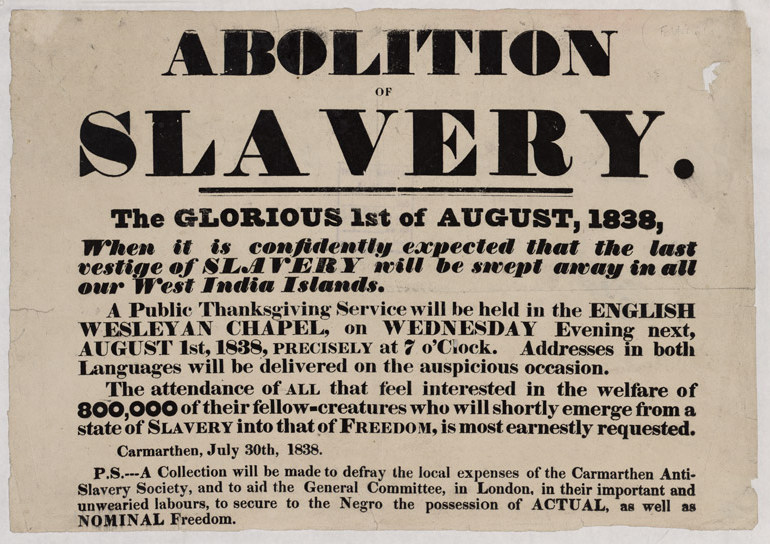
A poster advertising a special chapel service to celebrate the Abolition of Slavery in 1838
Commemorative poster celebrating the implementation of the Slavery Abolition Act
1837 CE
Elijah Parish Lovejoy Murdered by Pro-Slavery Mob
Abolitionist newspaper editor Elijah Parish Lovejoy was murdered by a pro-slavery mob in Alton, Illinois, on November 7, 1837. His death was covered in newspapers nationwide and caused a significant rise in membership in abolitionist societies. Lovejoy became a martyr for the anti-slavery cause and galvanized Northern opposition to slavery.
1839 CE
Tanzimat Edict Issued
The Edict of Gülhane launches the Tanzimat period of Ottoman reforms, introducing constitutional changes that led to a modern conscripted army, banking system reforms, decriminalization of homosexuality, replacement of religious law with secular law, and modernization of various institutions.
British and Foreign Anti-Slavery Society Founded
Joseph Sturge founded the British and Foreign Anti-Slavery Society, which attempted to outlaw slavery worldwide and pressure the government to help enforce the suppression of the slave trade. This organization, which continues today as Anti-Slavery International, became the world's oldest international human rights organization.
1840 CE
Ottoman Ministry of Post Established
The Ottoman Ministry of Post is established in Istanbul, marking an important step in modernizing Ottoman communications and administration. This development was part of the broader Tanzimat reforms aimed at modernizing the empire's infrastructure.
World Anti-Slavery Convention Held in London
The British and Foreign Anti-Slavery Society organized the World Anti-Slavery Convention at Exeter Hall in London from June 12-23, 1840. This was the first international attempt to address the abolition of slavery, bringing together delegates from around the world. Thomas Clarkson was the key speaker at this historic gathering.

The 1840 Anti-Slavery Convention at Exeter Hall
Historic painting depicting the first international anti-slavery convention
1843 CE
Wallachia and Moldavia Begin Roma Emancipation
The principalities of Wallachia and Moldavia began the process of emancipating all 250,000 enslaved Roma people between 1843 and 1855. This progressive pro-European and anti-Ottoman movement worked systematically to abolish the legal slavery of the Roma population, representing a significant human rights achievement in Eastern Europe.
1847 CE
Ottoman Telegraph Patent
American inventor Samuel Morse receives an Ottoman patent for the telegraph, issued by Sultan Abdülmecid who personally tested the invention. This technological adoption represented Ottoman efforts to modernize communications infrastructure during the Tanzimat period.
1848 CE
Denmark Abolishes Slavery in West Indies
Denmark finally abolished slavery in the Danish West Indies in 1848, completing the process that began with the 1792 decree to end the slave trade. This action eliminated one of the last remaining European slave systems in the Caribbean and demonstrated the continuing international pressure for complete emancipation.
France Permanently Abolishes Slavery
Under the Second Republic, France permanently abolished slavery in its remaining colonies on April 27, 1848, through a decree-law written by Victor Schœlcher. The state purchased the slaves from the colonists and then freed them, ensuring that this abolition would be permanent and comprehensive across all French territories.

Proclamation of the Abolition of Slavery in the French Colonies, 27 April 1848, by Biard (1849)
Artistic depiction of the permanent abolition of slavery in French colonies
1851 CE
Colombia Abolishes Slavery
Colombia completely abolished slavery in 1851, moving beyond the gradual emancipation policies implemented during the independence period. This decisive action reflected the growing influence of liberal ideology and international pressure for complete emancipation throughout Latin America.
1853 CE
Crimean War Begins
The Crimean War begins as part of a long-running contest between major European powers for influence over territories of the declining Ottoman Empire. The financial burden of the war forces the Ottoman state to issue foreign loans amounting to 5 million pounds sterling.

Ottoman troops storming Fort Shefketil
Ottoman troops storming Fort Shefketil during the Crimean War of 1853–1856
Argentina Abolishes Slavery
Argentina abolished slavery with the signing of the Argentine Constitution of 1853, completing the gradual emancipation process that began during the independence period. This constitutional provision ensured that slavery would be permanently prohibited throughout the Argentine Republic.
1854 CE
Peru Abolishes Slavery
Peru abolished slavery in 1854, joining the growing number of Latin American republics that had eliminated the institution. This action was part of the broader liberal reforms sweeping across the region and reflected the influence of international abolitionist movements on Latin American politics.
Venezuela Abolishes Slavery
José Gregorio Monagas abolished slavery in Venezuela in 1854, completing the emancipation process that began with freedom of womb laws in 1821. This action eliminated one of the last remaining slave systems in northern South America and demonstrated the continuing influence of liberal ideology in the region.

José Gregorio Monagas abolished slavery in Venezuela in 1854
Historical depiction of the abolition of slavery in Venezuela
1855 CE
Wallachia and Moldavia Complete Roma Emancipation
The principalities of Wallachia and Moldavia completed the emancipation of all 250,000 enslaved Roma people by 1855. This systematic process, which began in 1843, represented one of the most comprehensive ethnic emancipation programs in European history and eliminated a centuries-old system of Roma bondage.
1861 CE
Russia Emancipates the Serfs
Russia emancipated its serfs in 1861, ending centuries of feudal bondage for millions of peasants. This major social reform was implemented by Tsar Alexander II and represented one of the largest emancipation programs in history, though it failed to fully address rural and industrial unrest that would contribute to future revolutions.
1862 CE
District of Columbia Compensated Emancipation Act
Abraham Lincoln signed the District of Columbia Compensated Emancipation Act on April 16, 1862, abolishing slavery in Washington D.C. This act provided compensation to slave owners and represented the first federal legislation to free slaves in the United States, setting a precedent for broader emancipation measures.
Second Confiscation Act Frees Rebel-Owned Slaves
Congress passed the second Confiscation Act on July 17, 1862, stating that escaped or liberated slaves belonging to anyone who participated in or supported the rebellion 'shall be deemed captives of war, and shall be forever free of their servitude.' This act significantly expanded the scope of emancipation during the Civil War.
1863 CE
Lincoln Issues Emancipation Proclamation
Abraham Lincoln issued the Emancipation Proclamation on January 1, 1863, changing the legal status of 3 million slaves in the Confederacy from 'slave' to 'free.' Though limited in scope, this executive order transformed the Civil War into a war for freedom and allowed freed slaves to join the Union army.
1864 CE
Maryland Abolishes Slavery
The state of Maryland abolished slavery on October 13, 1864, as part of the broader emancipation process during the American Civil War. Maryland was one of the border states that remained in the Union but maintained slavery until state-level abolition measures were implemented.
1865 CE
Missouri Abolishes Slavery
Missouri abolished slavery on January 11, 1865, eliminating bondage in another border state that had remained in the Union during the Civil War. This action preceded the ratification of the 13th Amendment and demonstrated the momentum toward complete emancipation throughout the United States.
West Virginia Fully Abolishes Slavery
West Virginia, which had been admitted to the Union in 1863 as a slave state with the condition of gradual emancipation, fully abolished slavery on February 3, 1865. This action completed the emancipation process in the state and eliminated slavery in another border region.
Juneteenth - Union Army Liberates Texas Slaves
On June 19, 1865, known as 'Juneteenth,' the Union Army gained control of Texas and liberated the last enslaved people in the Confederacy. This date became a symbol of emancipation and is now celebrated as a federal holiday commemorating the end of slavery in the United States.
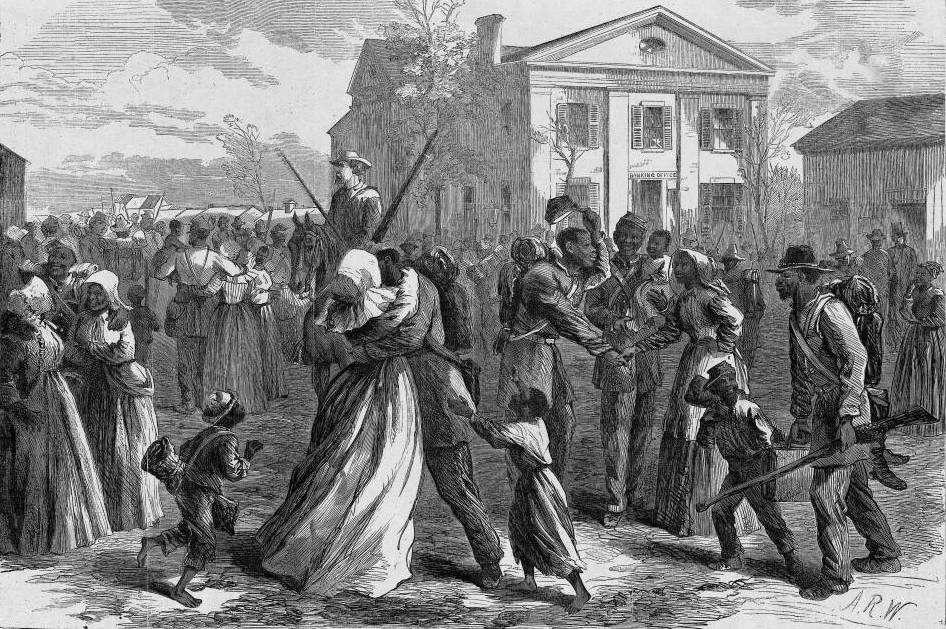
United States Union black volunteer soldiers muster out to their first freedom at Little Rock, Arkansas, Harper's Weekly, 1866
Illustration showing freed slaves and Union soldiers celebrating emancipation
13th Amendment Ratified
The 13th Amendment to the U.S. Constitution took effect in December 1865, finally ending slavery for non-criminals throughout the United States. The amendment also abolished slavery among Indian tribes and represented the constitutional culmination of the American abolitionist movement, though it included an exception for punishment of crime.
1873 CE
Puerto Rico Abolishes Slavery
Puerto Rico abolished slavery in 1873, eliminating bondage in one of the last Spanish Caribbean colonies to maintain the institution. This action was part of Spain's gradual retreat from slavery in its remaining colonial territories and reflected growing international pressure for complete emancipation.
1876 CE
Ottoman Constitution Proclaimed
The Ottoman Constitution, called the Kanûn-u Esâsî, is proclaimed, establishing the empire's First Constitutional Era. However, this constitutional period was short-lived, with the parliament surviving for only two years before the sultan suspended it.

First Ottoman Parliament
Opening ceremony of the First Ottoman Parliament at the Dolmabahçe Palace in 1876
1878 CE
Russo-Turkish War Ends
The Russo-Turkish War of 1877–1878 ends with a decisive victory for Russia. As a result, Ottoman holdings in Europe decline sharply: Bulgaria becomes an independent principality, Romania achieves full independence, and Serbia and Montenegro gain complete independence.
Austria-Hungary Occupies Bosnia-Herzegovina
Austria-Hungary unilaterally occupies the Ottoman provinces of Bosnia-Herzegovina and Novi Pazar, further reducing Ottoman territory in Europe. This occupation was formalized at the Congress of Berlin and represented another major territorial loss for the empire.
1882 CE
British Occupation of Egypt
Britain sends troops to Egypt to put down the Urabi Revolt, effectively gaining control of the territory. Sultan Abdul Hamid II was too paranoid to mobilize his own army, fearing it would result in a coup d'état, allowing British control to be established.
1886 CE
Cuba Abolishes Slavery
Cuba abolished slavery in 1886, eliminating bondage in one of the last major slave societies in the Americas. The abolition came after years of gradual emancipation policies and represented the end of Spanish colonial slavery in the Caribbean, leaving only Brazil as the final holdout in the Western Hemisphere.
1888 CE
Brazil Abolishes Slavery - Last in the Americas
Brazil abolished slavery in 1888 with the Lei Áurea (Golden Law), becoming the last country in the Americas to outlaw the institution. This action eliminated the largest slave system in the Western Hemisphere and marked the complete end of legal slavery in the Americas, concluding nearly four centuries of Atlantic slavery.

Punishing slaves at Calabouço, in Rio de Janeiro
Historical illustration showing the harsh conditions of slavery in Brazil before abolition
1890 CE
Brussels Conference Act Addresses Global Slavery
The Brussels Anti-Slavery Conference concluded with the Brussels Conference Act of 1890, representing the first major international governmental effort to address slavery on a semi-global level. The conference brought together representatives of colonial powers to coordinate anti-slavery efforts and establish international protocols.
1894 CE
Hamidian Massacres Begin
Between 100,000 and 300,000 Armenians living throughout the empire are killed in what becomes known as the Hamidian massacres. These systematic killings represent a dark period in Ottoman history and foreshadow the later Armenian genocide during World War I.
1905 CE
France Abolishes Slavery in West Africa
France abolished slavery in most of French West Africa in 1905, though the abolition was not strictly enforced and some territories continued practicing slavery until later dates. This action was part of France's broader colonial policy but faced practical challenges in implementation across diverse African societies.
1908 CE
Young Turk Revolution
The Young Turk Revolution led by the Committee of Union and Progress reestablishes constitutional monarchy in the Ottoman Empire. This revolution restored the Constitution and brought in multi-party politics, offering hope for modernization and reform of the empire's institutions.

Young Turk Revolution Declaration
Declaration of the Young Turk Revolution by the leaders of the Ottoman millets in 1908
Austria-Hungary Annexes Bosnia-Herzegovina
Austria-Hungary officially annexes Bosnia and Herzegovina, taking advantage of the civil strife following the Young Turk Revolution. This annexation further reduced Ottoman territory and increased tensions in the Balkans leading up to World War I.
1911 CE
Italo-Turkish War
The Ottoman Empire loses its North African territories and the Dodecanese to Italy in the Italo-Turkish War. Despite military reforms that reconstituted the Ottoman Modern Army, the empire could not prevent this territorial loss to Italian colonial expansion.
1912 CE
First Balkan War
The Ottoman Empire loses almost all of its European territories in the First Balkan War, retaining only East Thrace (European Turkey). This devastating defeat resulted in around 400,000 Muslims fleeing with the retreating Ottoman armies, with many dying from cholera.
1913 CE
CUP Coup d'État
The Committee of Union and Progress leads a coup d'état that establishes a dictatorship in the Ottoman Empire. Following the disastrous Balkan Wars, the CUP became increasingly radicalized and nationalistic, abandoning constitutional government for authoritarian rule.
1914 CE
Ottoman Entry into World War I
The Ottoman Empire enters World War I on the side of the Central Powers with a combined German-Ottoman surprise attack on the Black Sea coast of the Russian Empire. This decision would prove catastrophic for the empire, leading to its eventual dissolution.

Admiral Wilhelm Souchon
Admiral Wilhelm Souchon, who commanded the Black Sea raid on 29 October 1914, and his officers in Ottoman naval uniforms
1915 CE
Armenian Genocide Begins
The Ottoman government and Kurdish tribes begin the systematic extermination of the ethnic Armenian population, resulting in the deaths of up to 1.5 million Armenians. The genocide was implemented through wholesale killing of men and deportation of women, children, and elderly on death marches to the Syrian desert.

Armenian Deportees
Column of deportees walking through Harput vilayet during the Armenian genocide
1916 CE
Arab Revolt Begins
The Arab Revolt begins with British support, officially initiated at Mecca. Based on the McMahon–Hussein Correspondence, the revolt aimed to create a single unified Arab state stretching from Aleppo to Aden, turning the tide against the Ottomans in the Middle East.
1918 CE
Armistice of Mudros
The defeated Ottoman Empire signs the Armistice of Mudros, effectively ending Ottoman participation in World War I. This armistice led to the occupation of Istanbul by combined British, French, Italian, and Greek forces and set the stage for the empire's partition.
1919 CE
Greek Occupation of Smyrna
Greece takes control of the area around Smyrna (now İzmir) as part of the post-war occupation of Ottoman territories. This occupation was part of the broader Allied partition of the Ottoman Empire and contributed to the rise of Turkish nationalist resistance.
1920 CE
Treaty of Sèvres
The partition of the Ottoman Empire is finalized under the terms of the Treaty of Sèvres. This treaty, designed in the Conference of London, allowed the Sultan to retain his position and title but severely reduced Ottoman territory and sovereignty.
1922 CE
Abolition of the Sultanate
The Ottoman sultanate is abolished by the Turkish nationalist movement led by Mustafa Kemal Atatürk. This marked the end of over 600 years of Ottoman rule and paved the way for the establishment of the Republic of Turkey.
Last Sultan Leaves Turkey
Mehmed VI, the last Sultan of the Ottoman Empire, leaves the country after the abolition of the Ottoman sultanate. His departure marked the definitive end of the Ottoman dynasty's rule and the complete transition to the new Turkish republic.

Mehmed VI Departure
Mehmed VI, the last Sultan of the Ottoman Empire, leaving the country after the abolition of the Ottoman sultanate, 17 November 1922
1923 CE
Republic of Turkey Established
The Republic of Turkey is established in the new capital city of Ankara, replacing the Ottoman Empire. This marked the complete transformation from a multi-ethnic empire to a modern nation-state under the leadership of Mustafa Kemal Atatürk.
1924 CE
Abolition of the Caliphate
The caliphate is abolished, ending the Ottoman claim to leadership of the Muslim world. This final act completed the dismantling of Ottoman institutions and marked the definitive end of the Ottoman Empire's religious and political authority.
League of Nations Establishes Temporary Slavery Commission
The League of Nations founded the Temporary Slavery Commission (TSC) in 1924 to conduct a global investigation of slavery and slave trade worldwide. This commission represented the first systematic international effort to document and address slavery on a global scale, leading to important international treaties.
1926 CE
1926 Slavery Convention Adopted
The 1926 Slavery Convention was adopted based on the investigation of the Temporary Slavery Commission, representing a turning point in banning global slavery. This international treaty established legal frameworks for combating slavery worldwide and created binding obligations for signatory nations to eliminate the institution.
1932 CE
League Forms Committee of Experts on Slavery
The League of Nations formed the Committee of Experts on Slavery (CES) in 1932 to review the results and enforcement of the 1926 Slavery Convention. This committee conducted new international investigations and led to the establishment of the first permanent slavery committee, demonstrating continued international commitment to abolition.
1934 CE
Advisory Committee of Experts on Slavery Established
The Advisory Committee of Experts on Slavery (ACE) was established in 1934 as the first permanent international slavery committee. Between 1934 and 1939, the ACE conducted major international investigations on slavery and slave trade, inspecting all colonial empires and territories under their control.
1948 CE
UN Universal Declaration Bans Slavery
Article 4 of the Universal Declaration of Human Rights, adopted in 1948 by the UN General Assembly, explicitly banned slavery worldwide. This declaration established slavery prohibition as a fundamental human right and created the moral and legal foundation for modern anti-slavery efforts.
1950 CE
UN Ad Hoc Committee on Slavery Inaugurated
The Ad Hoc Committee on Slavery of the United Nations was inaugurated in February 1950, continuing the investigation of global slavery conducted by the League of Nations. This committee worked to develop new international instruments to combat slavery and ultimately led to the 1956 Supplementary Convention.
1956 CE
UN Supplementary Convention on Abolition of Slavery
The United Nations 1956 Supplementary Convention on the Abolition of Slavery was convened to outlaw and ban slavery worldwide, including child slavery. This comprehensive treaty expanded the definition of slavery and created stronger international mechanisms for enforcement and cooperation in anti-slavery efforts.
1962 CE
Saudi Arabia and Yemen Abolish Slavery
In November 1962, Faisal of Saudi Arabia prohibited the owning of slaves, followed by the abolition of slavery in Yemen in 1962. These actions eliminated some of the last legal slave systems in the world and marked the end of institutional chattel slavery in most of the Arabian Peninsula.
1963 CE
Dubai Abolishes Slavery
Dubai abolished slavery in 1963, continuing the process of eliminating the last legal slave systems in the Arabian Peninsula. This action was part of the broader modernization efforts in the Gulf region and international pressure to end all forms of legal bondage.
1966 CE
International Covenant on Civil and Political Rights
The UN General Assembly adopted the International Covenant on Civil and Political Rights in December 1966, with Article 4 banning slavery. The treaty came into force in March 1976 after ratification by 35 nations and created binding legal obligations for states to prohibit slavery and ensure civil rights.
1970 CE
Oman Abolishes Slavery
Oman abolished slavery in 1970, becoming one of the last countries in the world to legally end the institution. This action eliminated one of the final remaining legal slave systems and marked the near-complete global abolition of institutional chattel slavery, with only a few countries remaining.
1981 CE
Mauritania Officially Abolishes Slavery
Mauritania became the latest country to officially abolish slavery with a presidential decree in 1981, making it the last country in the world to legally prohibit the institution. However, slavery continues to persist illegally in Mauritania, with estimates suggesting that up to 20% of the population remains enslaved.
2000 CE
United States Passes Trafficking Victims Protection Act
The United States passed the Victims of Trafficking and Violence Protection Act (TVPA) in 2000 'to combat trafficking in persons, especially into the sex trade, slavery, and involuntary servitude.' The TVPA created new law enforcement tools and made human trafficking a federal crime with severe penalties.
2001 CE
France Recognizes Slavery as Crime Against Humanity
The Taubira law, passed on May 10, 2001, officially acknowledged slavery and the Atlantic slave trade as a crime against humanity in France. May 10 was chosen as the day dedicated to recognition of the crime of slavery, establishing an annual commemoration and formal acknowledgment of historical injustices.
2004 CE
UN Declares International Year Against Slavery
The United Nations General Assembly declared 2004 the International Year to Commemorate the Struggle against Slavery and its Abolition, marking the bicentenary of Haiti's independence. This proclamation led to numerous exhibitions, events, and research programs worldwide to commemorate abolitionist movements.
2014 CE
Religious Leaders Unite Against Modern Slavery
For the first time in history, major Anglican, Catholic, and Orthodox Christian leaders, as well as Jewish, Muslim, Hindu, and Buddhist leaders, met in 2014 to sign a shared commitment against modern-day slavery. Their declaration called for the elimination of slavery and human trafficking by 2020.
2018 CE
Colorado Removes Prison Labor Exception
In 2018, Colorado became the first state to remove language in its state constitution allowing slavery 'as punishment for crime' through a legislatively referred ballot referendum. This action began a movement to eliminate the 13th Amendment's exception for prison labor from state constitutions across the United States.

Map of states where slave prison labor is permitted in the state constitution as of November 2022
Map showing the ongoing legal framework for prison labor in various U.S. states