Comparing Timelines
Exploring the overlapping histories of "Islamic Golden Age" and "Renaissance".

Islamic Golden Age
750 - 1350
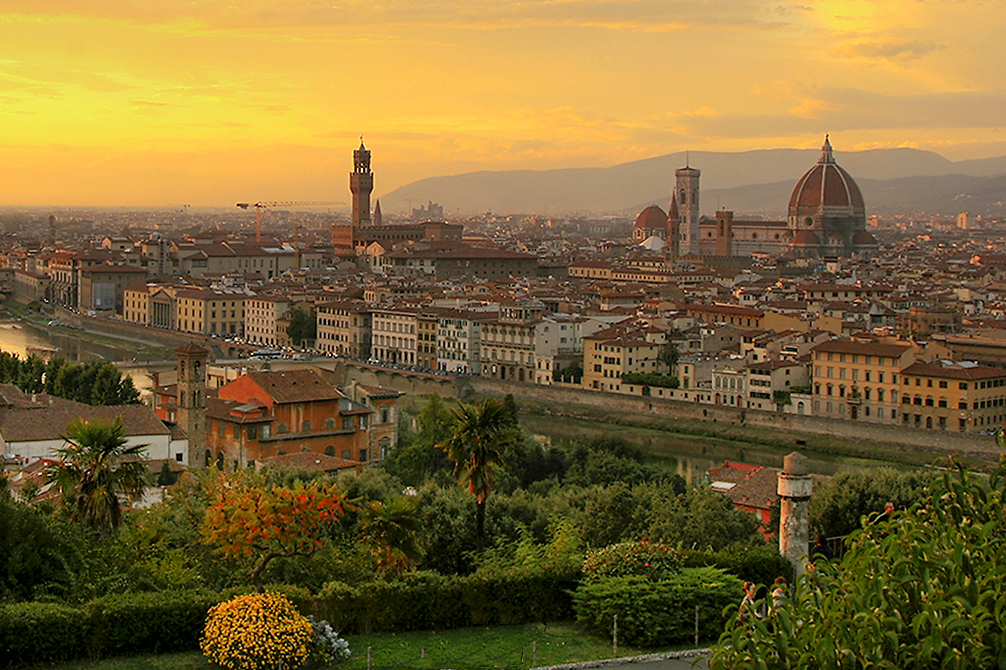
Renaissance
1250 - 1650
750 CE
Beginning of the Abbasid Dynasty
The Abbasid dynasty came to power, marking the beginning of what many consider the Islamic Golden Age. This period saw the establishment of organized scholarship and the flourishing of science and culture under caliphal patronage.
762 CE
Capital Moved to Baghdad
The Abbasid capital was moved to Baghdad, which became the world's largest city at the time. This relocation facilitated the gathering of scholars from across the Muslim world and the translation of classical knowledge into Arabic and Persian.
786 CE
Reign of Harun al-Rashid Begins
The reign of Abbasid caliph Harun al-Rashid began, traditionally marking the start of the Islamic Golden Age. His reign saw the inauguration of the House of Wisdom and unprecedented cultural and scientific flourishing.
805 CE
First Islamic Hospital Built in Baghdad
The earliest known Islamic hospital was built in Baghdad by order of Harun Al-Rashid. This marked the beginning of systematic medical care and hospital administration in the Islamic world.
809 CE
End of Harun al-Rashid's Reign
The reign of Harun al-Rashid ended, marking the conclusion of what many consider the peak period of early Islamic Golden Age prosperity and cultural achievement.
825 CE
House of Wisdom Established
The House of Wisdom was established in Baghdad by Caliph al-Mansur, modeled after the academy of Jundishapur. It became the premier center for translation and scholarship, where scholars translated Greek, Persian, and Sanskrit works into Arabic.
833 CE
Death of al-Ma'mun
The death of Caliph al-Ma'mun marked the beginning of territorial losses and political decline that would gradually weaken the Islamic empire, according to some historians marking the beginning of the end of the golden age.
847 CE
Great Mosque of Samarra Completed
The Great Mosque of Samarra in Iraq was completed, featuring innovative hypostyle architecture with rows of columns supporting a flat base and a huge spiralling minaret, representing architectural achievements of the period.
859 CE
University of Al Karaouine Founded
The University of Al Karaouine was founded in Fez, Morocco. It is listed in The Guinness Book of Records as the world's oldest degree-granting university, representing the institutionalization of higher learning in the Islamic world.
927 CE
Nastulus Creates Earliest Known Astrolabe
The earliest known astrolabe in existence today was made by Nastulus, representing the sophisticated astronomical instruments developed during the Islamic Golden Age for navigation and timekeeping.
Improvements to the astrolabe were one of the achievements of this era
Islamic astronomers made significant improvements to the astrolabe
964 CE
Abd al-Rahman al-Sufi Describes Andromeda Galaxy
Persian astronomer Abd al-Rahman al-Sufi described a 'nebulous spot' in the Andromeda constellation in his Book of Fixed Stars, providing the first definitive reference to what is now known as the Andromeda Galaxy.
978 CE
Al-Azhar Mosque Instruction Begins
Organized instruction began in the Al-Azhar Mosque in Cairo, which became one of the most important centers of Islamic learning and is now recognized as a university, representing the institutionalization of religious and secular education.

Organized instruction in the Cairo Al-Azhar Mosque began in 978
Al-Azhar became a major center of Islamic learning
982 CE
Important Baghdad Hospital Established
The most important of Baghdad's hospitals was established by the Buyid ruler 'Adud al-Dawla, representing the advancement of medical care and hospital administration during the Islamic Golden Age.
1070 CE
Omar Khayyam's Treatise on Algebra
Persian mathematician Omar Khayyam completed his 'Treatise on Demonstrations of Problems of Algebra', which was a significant step in the development of algebra and part of the body of Persian mathematics eventually transmitted to Europe.
1154 CE
Al-Idrisi Creates World Atlas
Muhammad al-Idrisi created the Tabula Rogeriana, considered the best maps of the Middle Ages. These maps were later used by explorers such as Christopher Columbus and Vasco da Gama for their voyages to America and India.

Introductory summary overview map from al-Idrisi's 1154 world atlas
Al-Idrisi's world atlas was the most accurate of its time
1250 CE
Beginning of Italian Proto-Renaissance
The Italian Proto-Renaissance begins around 1250-1300, marking the earliest phase of the Renaissance movement. This period saw the emergence of new artistic and intellectual approaches that would later flourish into the full Renaissance. It represents the transition from medieval to early modern European culture.
1258 CE
Mongol Siege of Baghdad
The Mongol siege of Baghdad resulted in the destruction of the city and the House of Wisdom, traditionally marking the end of the Islamic Golden Age. This event devastated the center of Islamic learning and scholarship.
1265 CE
Dante Alighieri's Literary Contributions
Dante Alighieri (1265-1321) produces his major works, including the Divine Comedy, which exemplify the early Renaissance spirit. His writings represent some of the first traces of Renaissance ideas in Italy, combining classical influences with vernacular language. Dante's work is considered foundational to Renaissance literature and thought.
1267 CE
Giotto's Revolutionary Paintings
Giotto di Bondone (1267-1337) creates groundbreaking paintings that mark a departure from medieval artistic conventions. He is credited with first treating a painting as a window into space, developing early techniques of realistic representation. His work represents a crucial step toward Renaissance artistic realism.
1304 CE
Petrarch's Humanist Influence
Francesco Petrarch (1304-1374) develops humanist ideas and literary works that become foundational to Renaissance thought. He is credited by contemporaries with the 14th-century resurgence of learning based on classical sources. Petrarch's work in recovering ancient texts and promoting classical learning helps establish Renaissance humanism.
1330 CE
Petrarch Defines Historical Periods
In the 1330s, Petrarch refers to pre-Christian times as 'antiqua' (ancient) and to the Christian period as 'nova' (new), establishing an early framework for historical periodization. This conceptual division would later influence how Renaissance thinkers viewed their relationship to classical antiquity and the medieval period.
1338 CE
Ambrogio Lorenzetti's Political Frescoes
Ambrogio Lorenzetti paints 'The Allegory of Good and Bad Government' (1338-1340), an early Renaissance fresco cycle with strong messages about virtues of fairness, justice, republicanism and good administration. This work represents the emergence of political philosophy in Renaissance art and the anti-monarchical thinking of Italian city-republics.
1348 CE
Black Death Devastates Europe
The Black Death pandemic hits Europe between 1348 and 1350, causing massive social and economic upheaval. In Florence, the population is nearly halved in 1348. The plague's devastation leads to significant social changes, including increased value of the working class and greater social mobility, which some theorize contributed to Renaissance developments.
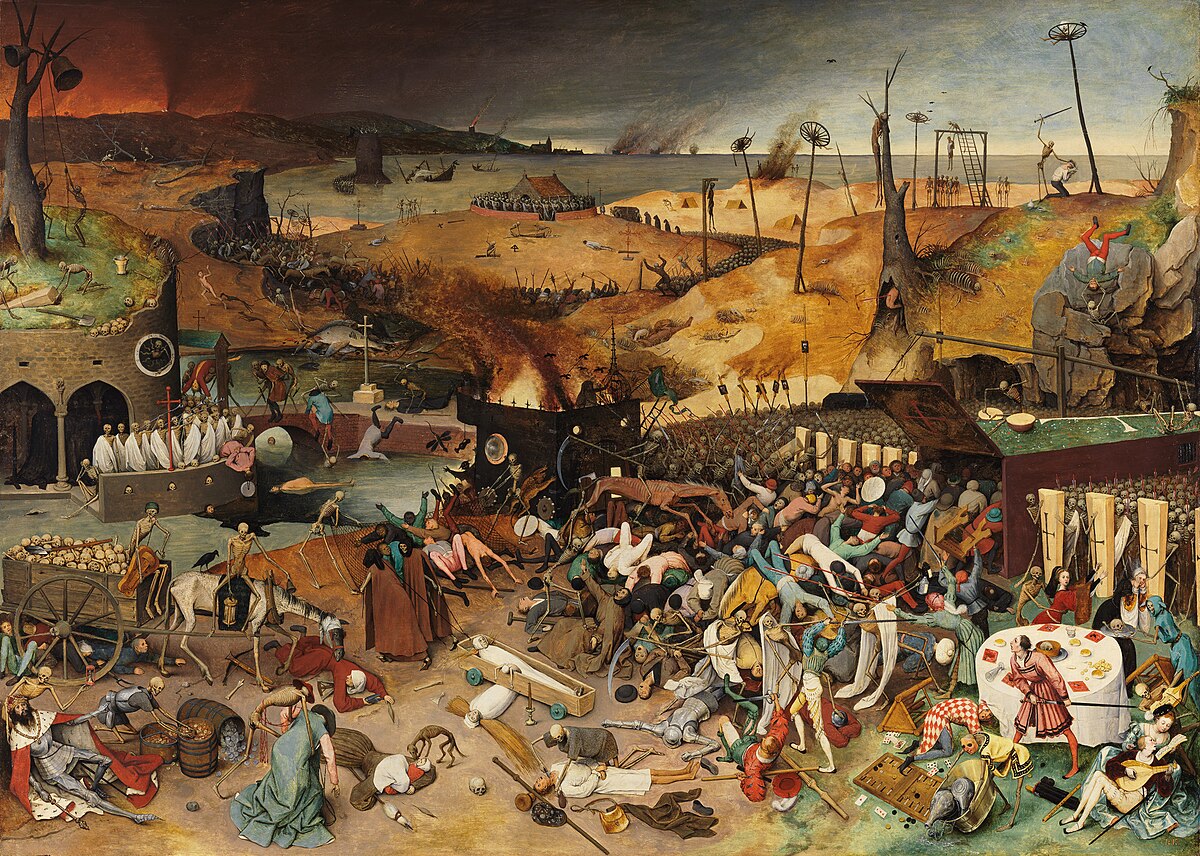
The Triumph of Death by Pieter Bruegel
Reflects the social upheaval and terror that followed the plague that devastated medieval Europe
1350 CE
Ibn al-Shatir's Astronomical Model
Ibn al-Shatir, working in Damascus, employed the Tusi-couple to successfully eliminate the equant and other objectionable circles from Ptolemaic astronomy, creating a mathematically sound celestial model that influenced later European astronomy.
1396 CE
Manuel Chrysoloras Teaches Greek in Florence
Byzantine diplomat and scholar Manuel Chrysoloras (c. 1355-1415) is invited by Coluccio Salutati to teach Greek in Florence in 1396. This marks the beginning of the systematic reintegration of Greek literary, historical, and theological texts into Western European curriculum, a crucial development in Renaissance humanism.
1401 CE
Competition for Florence Cathedral Doors
Lorenzo Ghiberti and Filippo Brunelleschi compete for the contract to build the bronze doors for the Baptistery of Florence Cathedral in 1401, with Ghiberti winning. This competition is sometimes cited as a precise starting point for the Renaissance, representing the rivalry and creativity that sparked Renaissance artistic innovation.
1421 CE
Brunelleschi's Old Sacristy
Filippo Brunelleschi completes the Old Sacristy (1421-1440), one of the first buildings to use pilasters as an integrated system in Renaissance architecture. This work demonstrates the Renaissance architectural style that emulated and improved on classical forms, marking a significant development in architectural design.
1430 CE
Palmieri's Plague Dialogues
During the plague of 1430, Matteo Palmieri composes dialogues set in a country house in the Mugello countryside outside Florence. These works explore humanist ideals about civic life, child development, moral conduct, and the qualities of the ideal citizen, representing the development of Renaissance civic humanism.
1440 CE
Invention of the Printing Press
The printing press is invented around 1440, revolutionizing the dissemination of ideas and knowledge. This technological innovation democratizes learning and allows faster propagation of Renaissance ideas across Europe. The printing press becomes crucial to the spread of humanist texts and scientific knowledge.
1442 CE
Leonardo Bruni's Historical Periodization
Leonardo Bruni completes his 'History of the Florentine People' in 1442, becoming the first to use tripartite periodization. He divides history into three periods based on Petrarch's framework but adds a third period, believing Italy was no longer in decline. This establishes a new way of understanding historical periods.

Leonardo Bruni
The historian who first used tripartite periodization
1450 CE
Nicholas of Cusa's Infinite Universe
Writing around 1450, Nicholas of Cusa claims that the universe must be infinite in extent and therefore devoid of a center. This represents an early challenge to traditional Aristotelian and Ptolemaic views of the universe, contributing to the scientific developments that would characterize the Renaissance.
1453 CE
Fall of Constantinople
Constantinople falls to the Ottoman Empire in 1453, generating a wave of émigré Greek scholars bringing precious manuscripts in ancient Greek to Western Europe. Many of these texts had fallen into obscurity in the West, and their arrival significantly enriches Renaissance scholarship and contributes to the Greek phase of Renaissance humanism.
1465 CE
Palmieri's Poetic Work
Matteo Palmieri completes his poetic work 'La città di vita' in 1465, which provides perhaps the most succinct expression of his perspective on humanism. This work, along with his earlier 'Della vita civile', helps define Renaissance civic humanism and the ideal of the educated citizen.
1469 CE
First Use of 'Middle Ages' Term
The term 'Middle Ages' first appears in Latin in 1469 as 'media tempestas' (middle times). This represents the Renaissance intellectual framework of viewing history in periods, with humanist historians arguing that contemporary scholarship restored direct links to the classical period, bypassing the medieval period.
1472 CE
András Hess Establishes Printing in Buda
András Hess sets up a printing press in Buda in 1472, bringing printing technology to Hungary. This development helps spread Renaissance ideas and humanist texts in Central Europe, contributing to the Hungarian Renaissance and the broader dissemination of Renaissance culture beyond Italy.
1476 CE
King Matthias Marries Beatrice of Naples
King Matthias Corvinus of Hungary marries Beatrice of Naples in 1476, making Buda one of the most important artistic centers of the Renaissance north of the Alps. This marriage brings Italian Renaissance culture directly to Hungary and establishes strong cultural connections between Hungary and Italy.
1479 CE
Matthias Begins Major Building Projects
King Matthias Corvinus starts major building projects in Buda and Visegrád around 1479, rebuilding the palace at Visegrád in Renaissance style and adding new wings to the royal castle of Buda. He appoints Italian Chimenti Camicia and Dalmatian Giovanni Dalmata to direct these projects, bringing Renaissance architecture to Hungary.
1485 CE
Leonardo da Vinci Visits Hungary
In spring 1485, Leonardo da Vinci travels to Hungary on behalf of Sforza to meet King Matthias Corvinus and is commissioned by him to paint a Madonna. This visit represents the international reach of Renaissance artistic patronage and the cultural connections between Italian artists and European courts.
1486 CE
Pico della Mirandola's Oration
Giovanni Pico della Mirandola writes 'De hominis dignitate' (Oration on the Dignity of Man) in 1486, a series of theses on philosophy, natural thought, faith, and magic. This work, often called the 'Manifesto of the Renaissance,' provides a vibrant defense of thinking and represents a crucial contribution to Renaissance humanism.

Giovanni Pico della Mirandola
Writer of the famous Oration on the Dignity of Man, which has been called the 'Manifesto of the Renaissance'
1489 CE
Bartolomeo della Fonte Praises Corvinus Library
In 1489, Bartolomeo della Fonte of Florence writes that Lorenzo de' Medici founded his own Greek-Latin library encouraged by the example of Hungarian King Matthias Corvinus. The Bibliotheca Corviniana was Europe's greatest collection of secular books and second only to the Vatican Library in size.
1492 CE
Columbus Discovers the Americas
Christopher Columbus sails across the Atlantic Ocean from Spain in 1492, seeking a direct route to India but accidentally discovering the Americas. This discovery has a profound impact on European intellectual life, challenging classical worldviews and contributing to the Scientific Revolution by disproving central claims about the world.

The Cantino planisphere (1502)
The earliest world map detailing Portuguese maritime exploration
1495 CE
Italian Renaissance Arrives in France
The Italian Renaissance arrives in France in 1495, imported by King Charles VIII after his invasion of Italy. This marks the beginning of the French Renaissance, as Italian art, artists, and cultural ideas begin to influence French court culture and artistic production.
Luca Pacioli Publishes First Accounting Work
At the end of the 15th century, Luca Pacioli publishes the first work on bookkeeping, making him the founder of accounting. This represents the application of Renaissance innovation to commerce and the development of modern business practices that would support the growing merchant economy.

Portrait of Luca Pacioli
Father of accounting, painted by Jacopo de' Barbari, 1495
1505 CE
John I Albert's Renaissance Tomb
The tomb of John I Albert, completed in 1505 by Francesco Fiorentino, becomes the first example of a Renaissance composition in Poland. This marks the beginning of Renaissance artistic influence in Poland and the introduction of Italian Renaissance styles to Central European art and architecture.
1517 CE
Luther's Ninety-Five Theses
In October 1517, Martin Luther publishes the Ninety-Five Theses, challenging papal authority and criticizing perceived corruption, particularly regarding sold indulgences. This leads to the Reformation, a break with the Roman Catholic Church, demonstrating how Renaissance humanism and textual criticism contributed to religious reform movements.
1518 CE
Bona Sforza Marries Sigismund I
Bona Sforza of Milan marries King Sigismund I of Poland in 1518, bringing many Italian artists to Poland. This marriage significantly strengthens the Polish Renaissance by introducing Italian artistic and cultural influences directly to the Polish court and establishing stronger cultural ties between Poland and Italy.
1519 CE
Magellan-Elcano Circumnavigation
Between 1519 and 1522, the Magellan-Elcano expedition achieves the first circumnavigation of Earth in history, including the first crossing of the Pacific by a European expedition. This voyage reveals the vast scale of the Pacific Ocean and dramatically expands European geographical knowledge during the Renaissance period of exploration.
Château de Chambord Construction Begins
Construction begins on Château de Chambord (1519-1547), one of the most famous examples of Renaissance architecture in France. This project represents the French adoption and adaptation of Italian Renaissance architectural styles, demonstrating how Renaissance culture spread and evolved across different European regions.

Château de Chambord
One of the most famous examples of Renaissance architecture
1527 CE
Sack of Rome Ends Italian Renaissance
Holy Roman Emperor Charles V launches an assault on Rome in 1527 during the War of the League of Cognac, effectively concluding the Italian Renaissance. Despite this political catastrophe, the Renaissance's artistic impact endures in the work of Italian painters like Tintoretto, Sofonisba Anguissola, and Paolo Veronese.
1528 CE
Palmieri's Civic Life Published
Matteo Palmieri's work 'Della vita civile' (On Civic Life) is printed in 1528, advocating civic humanism and refining the Tuscan vernacular to the same level as Latin. This publication represents the maturation of Renaissance civic philosophy and the elevation of vernacular languages in scholarly discourse.
1533 CE
Catherine de' Medici Marries Henry II
Fourteen-year-old Catherine de' Medici (1519-1589), born in Florence, marries Henry II of France in 1533. Though later famous for her role in the French Wars of Religion, she makes a direct contribution in bringing arts, sciences, and music (including the origins of ballet) to the French court from her native Florence.
1534 CE
Pope Paul III's Reign Begins
Pope Paul III comes to the papal throne (1534-1549) after the sack of Rome in 1527, with uncertainties prevalent in the Catholic Church following the Reformation. His papacy represents the Church's response to Renaissance and Reformation challenges, including patronage of Renaissance art and the Counter-Reformation.
1543 CE
Copernicus Publishes Heliocentric Theory
Nicolaus Copernicus publishes 'De revolutionibus orbium coelestium' (On the Revolutions of the Heavenly Spheres), positing that the Earth moves around the Sun. This work, dedicated to Pope Paul III, represents a fundamental challenge to traditional cosmology and marks a crucial development in the Scientific Revolution.
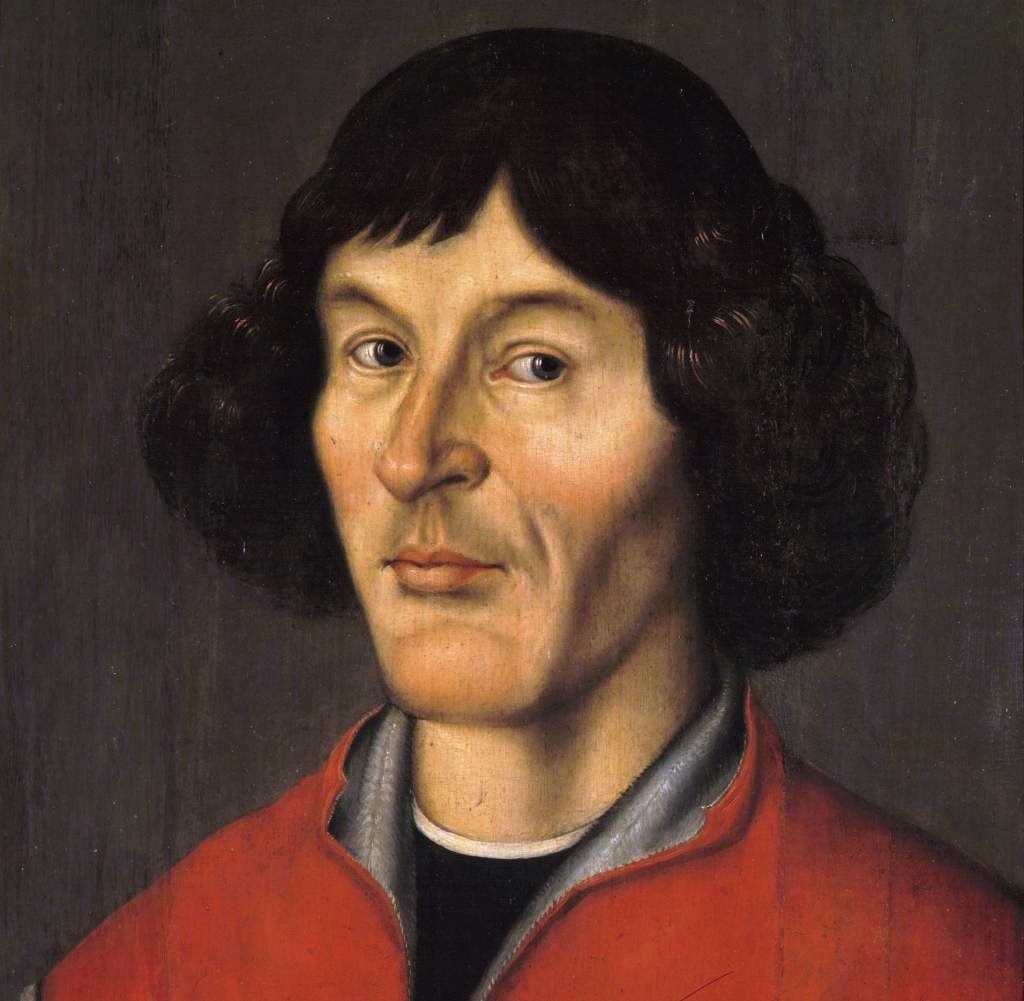
Anonymous portrait of Nicolaus Copernicus
The astronomer who proposed the heliocentric model of the solar system
Vesalius Publishes Anatomical Work
Andreas Vesalius publishes 'De humani corporis fabrica' (On the Workings of the Human Body), giving new confidence to the role of dissection, observation, and the mechanistic view of anatomy. This work represents the Renaissance emphasis on direct observation and empirical study in medicine and natural science.
1544 CE
Königsberg Academy Founded
The Academy at Königsberg is founded in 1544, representing the expansion of higher education institutions during the Renaissance. This is one of three new academies established in the Polish-Lithuanian Commonwealth, along with Vilnius (1579) and Zamość (1594), contributing to the educational reforms of the period.
1546 CE
Farnese Hours Completed
Giulio Clovio completes the Farnese Hours in 1546, arguably the last major illuminated manuscript and a masterpiece that marks the end of the Italian Renaissance of illuminated manuscripts. This work represents the culmination of Renaissance manuscript art before the dominance of printed books.
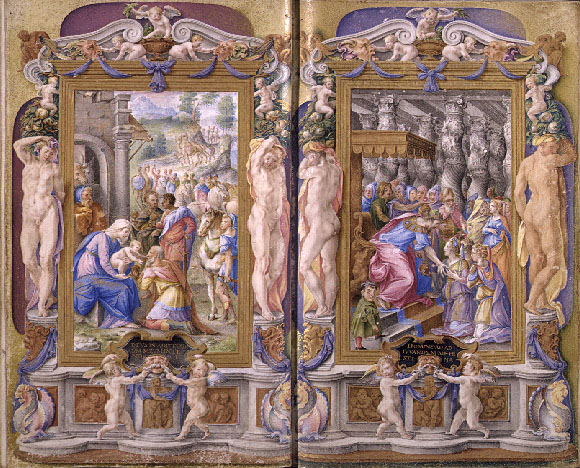
Adoration of the Magi from the Farnese Hours
Marks the end of the Italian Renaissance of illuminated manuscript
1550 CE
Vasari's Lives of the Artists
Giorgio Vasari publishes 'Lives of the Artists' in 1550 (revised 1568), first using the term 'rinascita' (rebirth) in its broad sense. Vasari divides the Renaissance into three phases and establishes the framework for understanding Renaissance art history, making this work foundational to Renaissance historiography.

A cover of the Lives of the Artists by Giorgio Vasari
The foundational work of Renaissance art history
1577 CE
Drake's Circumnavigation
Between 1577 and 1580, Drake's Raiding Expedition achieves the second circumnavigation of Earth, carried out in a single expedition. Drake becomes the first to complete a circumnavigation as captain while leading the expedition throughout the entire voyage, demonstrating English maritime capabilities during the Renaissance.
1579 CE
Vilnius Academy Founded
The Academy at Vilnius is founded in 1579, becoming one of the major institutions of higher education in the Polish-Lithuanian Commonwealth. This academy, along with others founded during this period, contributes to the educational and cultural development of the Renaissance in Eastern Europe.
1594 CE
Zamość Academy Founded
The Academy at Zamość is founded in 1594, completing the trio of new academies established in the Polish-Lithuanian Commonwealth during the Renaissance. These institutions represent the expansion of higher education and the spread of Renaissance learning in Central and Eastern Europe.
1606 CE
Willem Janszoon Lands in Australia
In 1606, Dutch navigator Willem Janszoon sails from the East Indies in the Dutch East India Company ship Duyfken and lands in Australia. He charts about 300 km of the west coast of Cape York Peninsula in Queensland, representing the first known European landing on the Australian continent during the age of Renaissance exploration.
1642 CE
Abel Tasman Circumnavigates Australia
Between 1642 and 1643, Abel Tasman circumnavigates the Australian continent, proving that it was not joined to the imagined south polar continent. This voyage contributes to the Renaissance expansion of geographical knowledge and the mapping of previously unknown territories.
1648 CE
Joan Blaeu's World Map
Dutch cartographer Joan Blaeu creates the large world map 'Nova Totius Terrarum Orbis Tabula' in 1648 to commemorate the Peace of Westphalia. This map represents the culmination of Renaissance geographical knowledge, showing that every continent except Antarctica had been visited and mostly mapped by Europeans during the Renaissance period.
1650 CE
Dutch Complete Australian Coastal Mapping
By 1650, Dutch cartographers have mapped most of the coastline of the Australian continent, which they named New Holland, except the east coast. This achievement represents the culmination of Renaissance exploration and mapping efforts, demonstrating the extent of European geographical knowledge by the end of the Renaissance period.