Comparing Timelines
Exploring the overlapping histories of "Space Race" and "The Holocaust".

Space Race
1921 - 1991

The Holocaust
1933 - 1948
1921 CE
Soviet Gas Dynamics Laboratory Established
The Soviet military sanctioned the Gas Dynamics Laboratory, a small research laboratory to explore solid-fuel rockets, led by Nikolai Tikhomirov. This marked the beginning of organized Soviet rocket development efforts.
1928 CE
First Soviet Solid Fuel Rocket Test
The first test-firing of a solid fuel rocket was carried out by the Soviet Gas Dynamics Laboratory. This represented an early milestone in Soviet rocket technology development.
1933 CE
First Soviet Liquid-Fueled Rocket Launch
Soviet rocket pioneers Sergey Korolev, Friedrich Zander, Mikhail Tikhonravov and Leonid Dushkin launched GIRD-X, the first Soviet liquid-fueled rocket. This achievement demonstrated Soviet progress in advanced rocket technology.
Nazi Party Seizes Power in Germany
Adolf Hitler was appointed chancellor of Germany in January 1933 through a backroom deal supported by right-wing politicians. Within months, all other political parties were banned, the regime seized control of media, and tens of thousands of political opponents were arrested. This marked the beginning of Nazi control that would lead to the Holocaust.
Anti-Jewish Laws Begin in Germany
In 1933, Jews were banned or restricted from several professions and the civil service. Various German government agencies, Nazi Party organizations, and local authorities instituted about 1,500 anti-Jewish laws. This systematic legal persecution laid the groundwork for later atrocities.
1935 CE
Nuremberg Laws Enacted
The regime passed the Nuremberg Laws in 1935, which reserved full citizenship rights for those of 'German or related blood', restricted Jews' economic activity, and criminalized new marriages and sexual relationships between Jews and non-Jewish Germans. These laws legally codified racial discrimination.
1936 CE
Soviet Rocket Development Damaged by Great Purge
Joseph Stalin's Great Purge severely damaged Soviet rocket technology progress. Many scientists and engineers were imprisoned or executed, setting back the Soviet rocket program significantly.
1938 CE
Kristallnacht - Night of Broken Glass
On November 9-10, 1938, the Nazis organized Kristallnacht, a nationwide pogrom. Over 7,500 Jewish shops were looted, more than 1,000 synagogues were damaged or destroyed, at least 90 Jews were murdered, and as many as 30,000 Jewish men were arrested. This marked a dramatic escalation in anti-Jewish violence.

View of the old synagogue in Aachen after its destruction during Kristallnacht
View of the old synagogue in Aachen after its destruction during Kristallnacht
1939 CE
First Nazi Ghettos Established
The first Nazi ghettos were established in the Wartheland and General Governorate in 1939 and 1940 on the initiative of local German administrators. The largest ghettos, such as Warsaw and Łódź, were established in existing residential neighborhoods and closed by fences or walls, concentrating Jewish populations for later deportation.
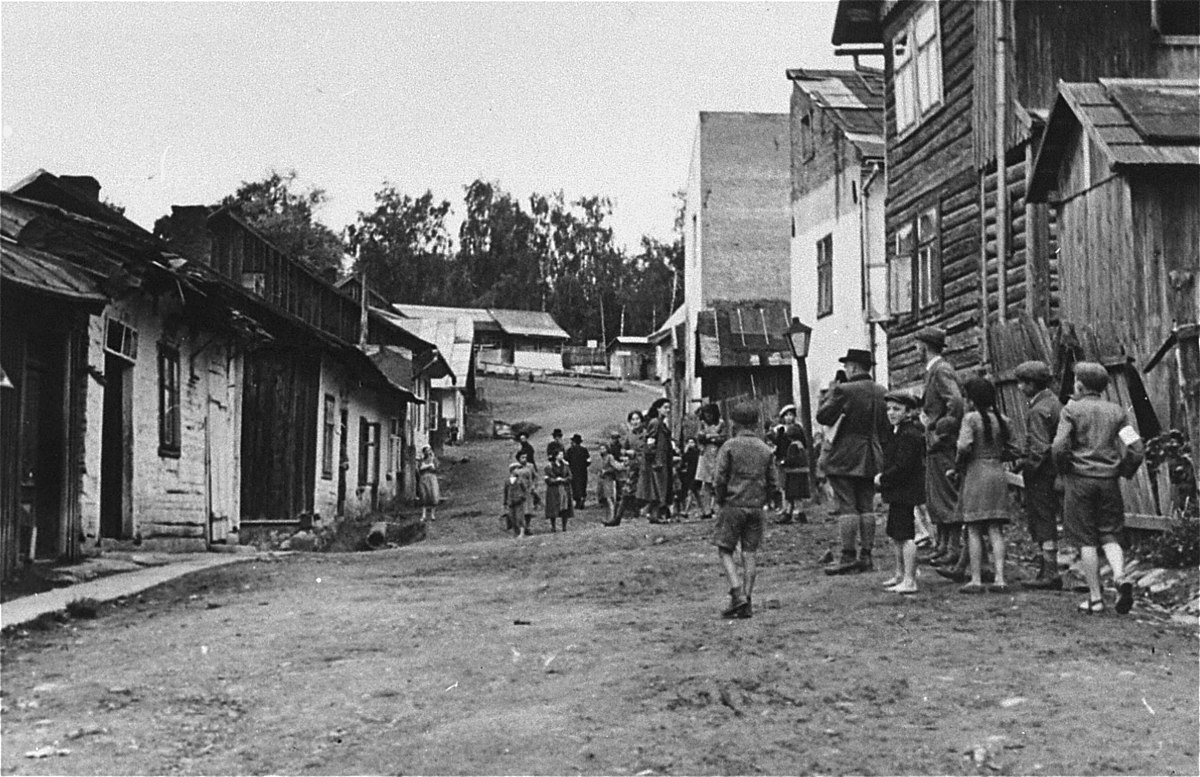
Unpaved street in the Frysztak Ghetto, Krakow District
Unpaved street in the Frysztak Ghetto, Krakow District
Germany Invades Poland - World War II Begins
The German Wehrmacht invaded Poland on September 1, 1939, triggering declarations of war from the United Kingdom and France. This invasion marked the beginning of World War II and brought millions of Polish Jews under Nazi control, setting the stage for the Holocaust's expansion.
1940 CE
Aktion T4 Euthanasia Program
The war provided cover for 'Aktion T4', the murder of around 70,000 institutionalized Germans with mental or physical disabilities at specialized killing centers using poison gas. The victims included all 4,000 to 5,000 institutionalized Jews. This program served as a testing ground for later mass murder techniques used in the Holocaust.
1941 CE
Mass Shootings of Soviet Jews Begin
Following the June 1941 invasion of the Soviet Union, 1.5 to 2 million Jews were shot by German forces and local collaborators. The systematic murder of Jews began in the Soviet Union with Einsatzgruppen and other units conducting mass executions. This marked the transition from persecution to systematic extermination.

Original Nazi propaganda caption: "Too bad even for a bullet... The Jews shown here were shot at once." 28 June 1941 in Rozhanka, Belarus
Original Nazi propaganda caption: "Too bad even for a bullet... The Jews shown here were shot at once." 28 June 1941 in Rozhanka, Belarus
Germany Invades Soviet Union - Operation Barbarossa
Germany and its allies invaded the Soviet Union on June 22, 1941. This invasion was planned as a war of extermination with complete disregard for the laws of war. It brought millions more Jews under Nazi control and marked the beginning of systematic mass murder of Soviet Jews.
Chełmno Extermination Camp Opens
The first extermination camp was Chełmno in the Wartheland, established with Himmler's approval. It began operations in December 1941 using gas vans. This marked the beginning of the systematic use of purpose-built facilities for mass murder, representing a crucial escalation in the Holocaust.

Deportation to Chełmno
Deportation to Chełmno
Hitler's Declaration of War on United States
On December 11, 1941, Hitler declared war on the United States after Japan attacked Pearl Harbor. The next day, he told leading Nazi party officials, referring to his 1939 prophecy, 'The world war is here; the annihilation of the Jews must be the necessary consequence.' This marked a crucial escalation in genocidal intent.
1942 CE
Wannsee Conference
Reinhard Heydrich, head of the Reich Main Security Office, convened the Wannsee Conference on January 20, 1942. This high-level meeting was intended to coordinate anti-Jewish policy across Nazi-occupied Europe. It represented the bureaucratic organization of continent-wide genocide.
Belzec Extermination Camp Begins Operations
In March 1942, killings began in Belzec, targeting Jews from Lublin who were not capable of work. Belzec was the first purpose-built extermination camp to feature stationary gas chambers using carbon monoxide. This marked the beginning of Operation Reinhard, the systematic murder of Polish Jews.
Sobibor Extermination Camp Opens
Sobibor extermination camp began operations in May 1942 as part of Operation Reinhard. Located in the Lublin District, it used stationary gas chambers with engine exhaust to murder Jews. The camp was part of the systematic effort to eliminate the Jewish population of the General Governorate.
BBC Reports on Holocaust
On June 26, 1942, BBC services in all languages publicized a report by the Jewish Social-Democratic Bund and other resistance groups, transmitted by the Polish government-in-exile, documenting the killing of 700,000 Jews in Poland. This was one of the first major international reports on the systematic murder of Jews.
Peak of Holocaust Killings
The period from late July to early November 1942 saw the most intense killing phase of the Holocaust. Biologist Lewi Stone calculated that around 1.47 million Jews were murdered in Europe in just 100 days during this period. Over 3 million Jews were killed in 1942 alone, making it the deadliest year of the Holocaust.

Cumulative murders of Jews from the General Governorate at Belzec, Sobibor, and Treblinka from January 1942 to February 1943
Cumulative murders of Jews from the General Governorate at Belzec, Sobibor, and Treblinka from January 1942 to February 1943
Warsaw Ghetto Liquidation Begins
The Warsaw Ghetto was cleared between July 22 and September 12, 1942. Of the original population of 350,000 Jews, 250,000 were killed at Treblinka, representing one of the largest single deportation actions of the Holocaust. This marked the beginning of the systematic liquidation of Polish ghettos.
Allied Declaration on Holocaust
In December 1942, the Allies, then known as the United Nations, adopted a joint declaration condemning the systematic murder of Jews. This represented the first official international acknowledgment of the ongoing genocide, though it did not lead to immediate action to stop the killings.
1943 CE
Warsaw Ghetto Uprising
In 1943, larger uprisings occurred in Warsaw, Białystok, and Glubokoje, necessitating the use of heavy weapons by German forces. The Warsaw Ghetto uprising became significant as a symbol of Jewish resistance against the Nazis, though it ultimately failed to prevent the ghetto's destruction.
The Warsaw Ghetto uprising became significant as a symbol of Jewish resistance against the Nazis.
The Warsaw Ghetto uprising became significant as a symbol of Jewish resistance against the Nazis.
Operation Harvest Festival Massacre
On November 3, 1943, around 18,400 Jews were murdered at Majdanek over the course of nine hours, the largest number ever killed in a death camp on a single day. It was part of Operation Harvest Festival, the murder of some 43,000 Jews from November 3-4, 1943, the single largest massacre of Jews by German forces.
1944 CE
Death Marches Begin
Following Allied advances, the SS deported concentration camp prisoners to camps in Germany and Austria, starting in mid-1944 from the Baltics. Weak and sick prisoners were often killed, and others were forced to travel by rail or on foot with inadequate food. Those who could not keep up were shot.
German Occupation of Hungary
Germany occupied Hungary in March 1944, bringing the large Hungarian Jewish population under direct Nazi control. Until this occupation, the Hungarian government had not deported very many of its approximately 846,000 people considered Jewish, making them one of the largest surviving European Jewish populations.
Deportation of Hungarian Jews
Between March 1944 and July 9, 1944, 434,000 of the still 825,000 Hungarian Jews were deported on trains, mostly to Auschwitz where the great majority were murdered immediately. This represented the largest and fastest deportation action of the Holocaust's final phase.

Jews from Carpathian Ruthenia, annexed by Hungary in 1938, on the selection ramp at Auschwitz II in May or June 1944. Men are lined up to the right, women and children to the left. About 25 percent were selected for work and the rest gassed.
Jews from Carpathian Ruthenia, annexed by Hungary in 1938, on the selection ramp at Auschwitz II in May or June 1944. Men are lined up to the right, women and children to the left. About 25 percent were selected for work and the rest gassed.
Auschwitz Gas Chambers Shut Down
The gas chambers at Auschwitz were shut down and destroyed after October 1944 as Soviet forces approached. In January 1945, most of the remaining 67,000 Auschwitz prisoners were sent on a death march westwards. This marked the end of systematic killing at the largest extermination camp.
1945 CE
Liberation of Concentration Camps
Many concentration camps were liberated in 1945 during the Western Allied invasion of Germany and the Red Army's march westwards. The liberators found piles of corpses that they had to bulldoze into mass graves. Some survivors were freed at the camps while others had been liberated during the death marches.

A mass grave at Bergen-Belsen after the camp's liberation, April 1945
A mass grave at Bergen-Belsen after the camp's liberation, April 1945
Nuremberg Trials Begin
In 1945 and 1946, the International Military Tribunal tried 23 Nazi leaders primarily for waging wars of aggression. Although the prosecution initially focused on aggressive war as the root of Nazi criminality, the systematic murder of Jews came to take center stage during the proceedings.

alt=Rows of men sitting on benches
Defendants in the dock at the International Military Tribunal, November 1945
1948 CE
UN Genocide Convention
Nazi atrocities led to the United Nations' Genocide Convention in 1948, establishing genocide as an international crime. However, it was not used in Holocaust trials due to the non-retroactivity of criminal laws. This convention became a cornerstone of international human rights law.
Establishment of Israel
The establishment of Israel in 1948 provided a destination for many Holocaust survivors who had remained in displaced persons camps in Germany. Due to the reluctance of other countries to allow Jewish immigration, many survivors had remained in Germany until this point.
1949 CE
First Mammal in Space
Albert II, a rhesus monkey, became the first mammal in space when launched by the US on a sub-orbital flight. The monkey died on landing due to a parachute malfunction, but the mission demonstrated the possibility of sending living creatures to space.
Soviet Union Becomes Second Nuclear Power
The Soviet Union became the second nuclear power after the United States with the successful RDS-1 nuclear weapon test. This achievement intensified the Cold War arms race and provided the backdrop for the space competition.
1950 CE
Soviet R-1 Rocket Enters Service
The R-1, a Soviet copy of the German A-4 (V-2) rocket, entered service in the Soviet Army. This marked the beginning of operational Soviet ballistic missile capability.
1951 CE
Public Interest in Space Travel Sparked
Soviet rocketry engineer Mikhail Tikhonravov published 'Flight to the Moon' in the newspaper Pionerskaya pravda, describing a two-person interplanetary spaceship. This article sparked public interest in space travel and predicted space flight within 10-15 years.
1955 CE
US Announces Intent to Launch Satellites
James C. Hagerty, President Eisenhower's press secretary, announced that the United States intended to launch 'small Earth circling satellites' as part of the International Geophysical Year. This announcement marked the official beginning of the Space Race.
Soviet Union Responds to US Satellite Announcement
At the Sixth Congress of the International Astronautical Federation in Copenhagen, Soviet scientist Leonid I. Sedov announced the Soviet Union's intention to launch a satellite 'in the near future.' This response escalated the space competition.
Soviet Space Commission Established
Sergei Korolev succeeded in convincing the Soviet Academy of Sciences to establish a commission dedicated to achieving the goal of launching a satellite into Earth orbit before the United States. This can be viewed as the de facto start date of the space race.
1957 CE
R-7 ICBM First Successful Flight
The Soviet R-7 Semyorka flew 6,000 km and became the world's first intercontinental ballistic missile. This achievement gave the USSR the capability to strike US territory with nuclear weapons and provided the launch vehicle for future space missions.

The Soviet stable of Sputnik, Vostok, Voskhod, and Soyuz launch vehicles were all derivatives of the R-7 Semyorka ICBM.
The R-7 became the basis for the Soviet space program
Sputnik 1 Launched
The Soviet Union launched Sputnik 1, the first artificial satellite, into Earth orbit. This achievement shocked the world and marked the beginning of the Space Age, giving the USSR an early lead in the Space Race.

Soviet stamp commemorating Sputnik 1, 1957
Soviet commemorative stamp celebrating the first artificial satellite
Sputnik 2 Launches with Laika
The Soviet Union launched Sputnik 2 carrying Laika, a dog, making her the first animal to orbit Earth. The mission demonstrated that living creatures could survive in space, though Laika died from stress and overheating during the flight.

Laika on a Romanian post stamp
Commemorative stamp honoring Laika, the first animal in orbit
Project Vanguard Launch Failure
The US Project Vanguard launch failed spectacularly at Cape Canaveral, exploding seconds after launch. The failure became an international joke with nicknames like 'Flopnik' and 'Kaputnik,' highlighting American struggles to match Soviet space achievements.
1958 CE
Explorer 1 Launched
The United States successfully launched Explorer 1, its first satellite, on a Juno I rocket. The satellite discovered the Van Allen radiation belt, marking America's first major scientific achievement in space and its entry into the Space Race.

William Hayward Pickering, James Van Allen, and von Braun display a model of Explorer 1 at a news conference after confirmation the satellite was in orbit.
Key figures celebrating America's first satellite success
NASA Established
President Eisenhower signed the National Aeronautics and Space Act, creating NASA from the National Advisory Committee on Aeronautics. This established a civilian space agency to coordinate America's space efforts and compete with the Soviet Union.
1959 CE
Luna 1 Launched
The Soviet Union launched Luna 1, the first spacecraft to reach the vicinity of the Moon, though it missed its target. This mission marked the beginning of lunar exploration and demonstrated Soviet capability for deep space missions.
Luna 2 Impacts Moon
Luna 2 became the first human-made object to reach the Moon when it successfully impacted the lunar surface. This achievement gave the Soviet Union another space first and demonstrated their growing capability in space exploration.
Luna 3 Photographs Far Side of Moon
Luna 3 successfully flew by the Moon and transmitted the first pictures of its far side. This historic achievement provided humanity's first glimpse of the Moon's hidden hemisphere and demonstrated advanced Soviet space technology.

The first photo of the far side of the Moon, taken by Luna 3
Historic first image of the Moon's far side
1961 CE
Yuri Gagarin First Human in Space
Soviet cosmonaut Yuri Gagarin became the first human to orbit Earth aboard Vostok 1, completing a 108-minute flight. This achievement shocked the world and gave the Soviet Union a major victory in the Space Race, prompting the US to accelerate its space program.

A 1964 Stamp with Yuri Gagarin, and an intentionally inaccurate Vostok
Soviet commemorative stamp celebrating Gagarin's historic flight
Alan Shepard First American in Space
Alan Shepard became the first American in space with a suborbital flight on Mercury-Redstone 3 (Freedom 7). Though not achieving orbit like Gagarin, Shepard demonstrated manual spacecraft control and marked America's entry into human spaceflight.

Alan Shepard, the first American in space, 1961
Alan Shepard preparing for his historic suborbital flight
Kennedy Announces Moon Landing Goal
President John F. Kennedy announced the goal of landing a man on the Moon and returning him safely to Earth before the end of the decade. This bold commitment transformed the Space Race and focused American efforts on the lunar landing mission.
1962 CE
John Glenn First American to Orbit Earth
Astronaut John Glenn became the first American to orbit Earth, completing three orbits in Friendship 7. This achievement helped restore American confidence in the Space Race and demonstrated that the US could match Soviet orbital capabilities.
Mariner 2 First Successful Interplanetary Mission
NASA's Mariner 2 became the first spacecraft to successfully fly by another planet when it passed Venus. This achievement marked the beginning of interplanetary exploration and demonstrated American capability in deep space missions.
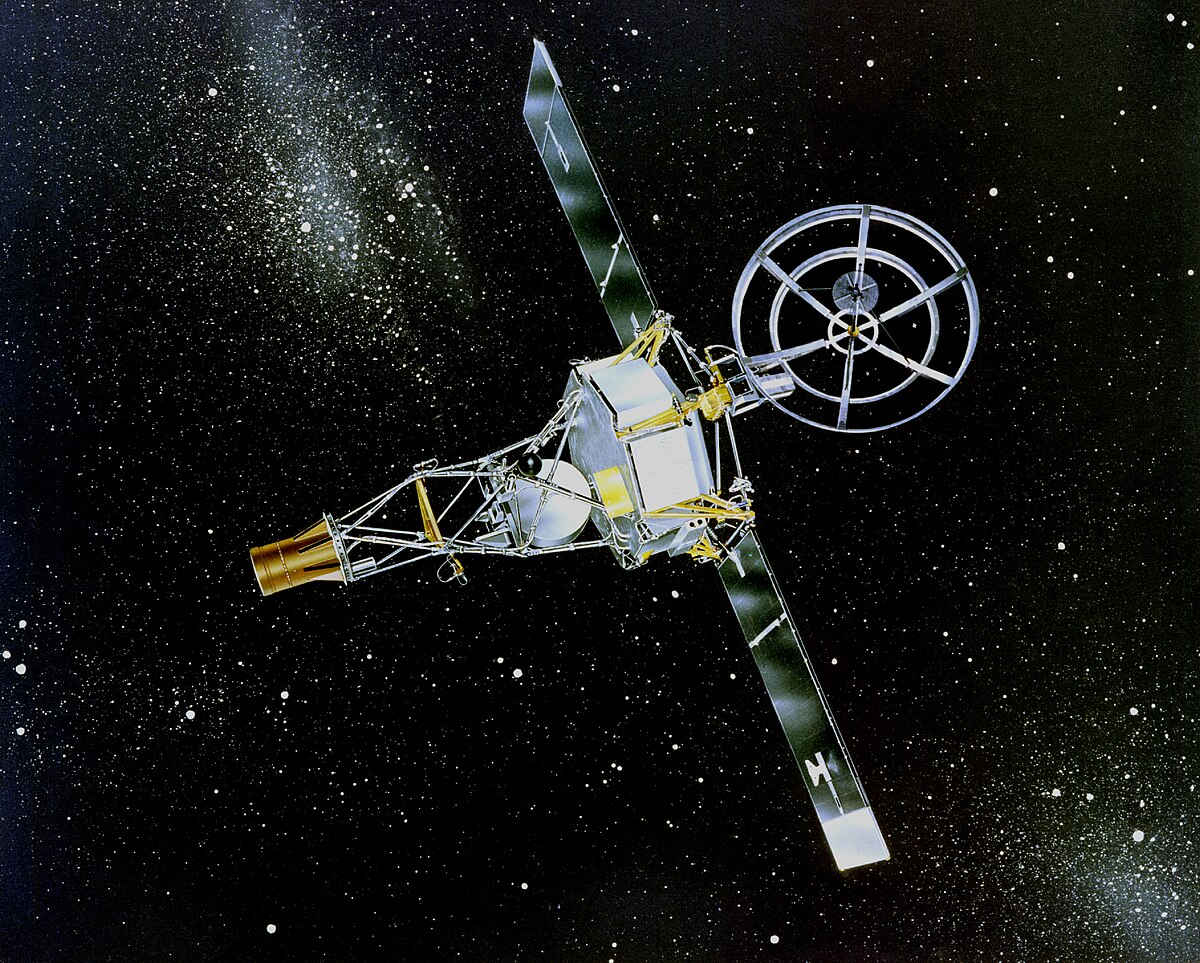
Artist's impression of Mariner 2, the first successful interplanetary spacecraft
Mariner 2 pioneered interplanetary exploration
1963 CE
Valentina Tereshkova First Woman in Space
Soviet cosmonaut Valentina Tereshkova became the first woman in space aboard Vostok 6. Her three-day mission demonstrated that women could perform effectively in space and gave the Soviet Union another space first.
1964 CE
Voskhod 1 First Multi-Person Crew
The Soviet Union launched Voskhod 1 with a three-person crew, achieving the first spaceflight with multiple crew members. This mission beat the American Gemini program to this milestone and demonstrated Soviet spacecraft capabilities.
1965 CE
Alexei Leonov First Spacewalk
Soviet cosmonaut Alexei Leonov performed the first extravehicular activity (spacewalk) during the Voskhod 2 mission. This 12-minute spacewalk demonstrated human capability to work outside spacecraft, though Leonov nearly died when his spacesuit expanded.
Gemini 6 and 7 First Space Rendezvous
Gemini 6A and Gemini 7 achieved the first rendezvous between two crewed spacecraft, coming within one foot of each other. This achievement demonstrated critical technology needed for lunar missions and marked a turning point in American space capabilities.

Rendezvous of Gemini 6 and 7, December 1965
Historic first rendezvous between two crewed spacecraft
1966 CE
Luna 9 First Soft Moon Landing
Luna 9 achieved the first soft landing on the Moon and successfully transmitted photography from the lunar surface. This achievement demonstrated that spacecraft could safely land on the Moon and provided the first close-up images of the lunar surface.

First photo of the surface of the Moon, taken by Luna 9
Historic first photograph from the Moon's surface
Venera 3 First Impact on Another Planet
Venera 3 became the first human-made object to impact another planet when it crashed on Venus. Though contact was lost before impact, this mission marked the beginning of planetary exploration and demonstrated Soviet deep space capabilities.
1967 CE
Apollo 1 Fire Kills Three Astronauts
A fire during a ground test of Apollo 1 killed astronauts Gus Grissom, Ed White, and Roger Chaffee. This tragedy led to major safety improvements in the Apollo program and delayed the first crewed Apollo mission by nearly two years.

Charred interior of the Apollo 1 spacecraft after the fire that killed the crew
The tragic aftermath of the Apollo 1 fire
Outer Space Treaty Signed
The United States, Soviet Union, and United Kingdom signed the Treaty on Principles Governing the Activities of States in the Exploration and Use of Outer Space. This treaty established space as the common heritage of mankind and prohibited weapons of mass destruction in space.
Vladimir Komarov Dies in Soyuz 1
Soviet cosmonaut Vladimir Komarov became the first in-flight spaceflight fatality when Soyuz 1's parachute system failed during reentry. This tragedy highlighted the dangers of space exploration and led to improvements in Soviet spacecraft design.

The remains of Vladimir Komarov
The tragic end of the first in-flight space fatality
1968 CE
Apollo 8 First Humans to Leave Earth Orbit
Apollo 8 carried Frank Borman, James Lovell, and William Anders on the first crewed mission to leave Earth orbit and travel to the Moon. Their Christmas Eve broadcast from lunar orbit was one of the most watched TV programs in history.

Earthrise, as seen from Apollo 8, December 24, 1968 (photograph by astronaut William Anders)
The iconic Earthrise photograph taken during Apollo 8
1969 CE
Apollo 11 Moon Landing
Neil Armstrong and Buzz Aldrin became the first humans to land on the Moon while Michael Collins orbited above. Armstrong's first steps on the lunar surface were watched by an estimated 723 million people worldwide, marking America's victory in the Space Race.
"Buzz" Aldrin facing away from Camera, with the Apollo 11 Lunar Lander
Iconic image of Buzz Aldrin on the Moon's surface
1970 CE
Venera 7 First Data from Another Planet's Surface
Soviet Venera 7 became the first spacecraft to successfully transmit data from the surface of another planet. The probe measured Venus's surface temperature at 475°C and atmospheric pressure at 92 bars, providing crucial data about Venus's hostile environment.
Luna 16 First Robotic Sample Return
Luna 16 became the first uncrewed spacecraft to return samples from the Moon to Earth. This achievement demonstrated that robotic missions could accomplish complex tasks and provided an alternative to crewed lunar exploration.
1971 CE
Mars 2 First Object to Impact Mars
Soviet Mars 2 became the first human-made object to impact Mars, though the lander crashed and was destroyed. This mission marked the beginning of Mars exploration and demonstrated the challenges of landing on the Red Planet.
Salyut 1 First Space Station
The Soviet Union launched Salyut 1, the world's first space station. Though the first crew died during reentry due to cabin depressurization, this achievement marked the beginning of long-duration spaceflight and orbital laboratories.
1973 CE
Skylab Launched
The United States launched Skylab, its first and only space station, using a Saturn V rocket. Despite initial damage during launch, Skylab hosted three crews and conducted valuable scientific research, demonstrating American capability in long-duration spaceflight.
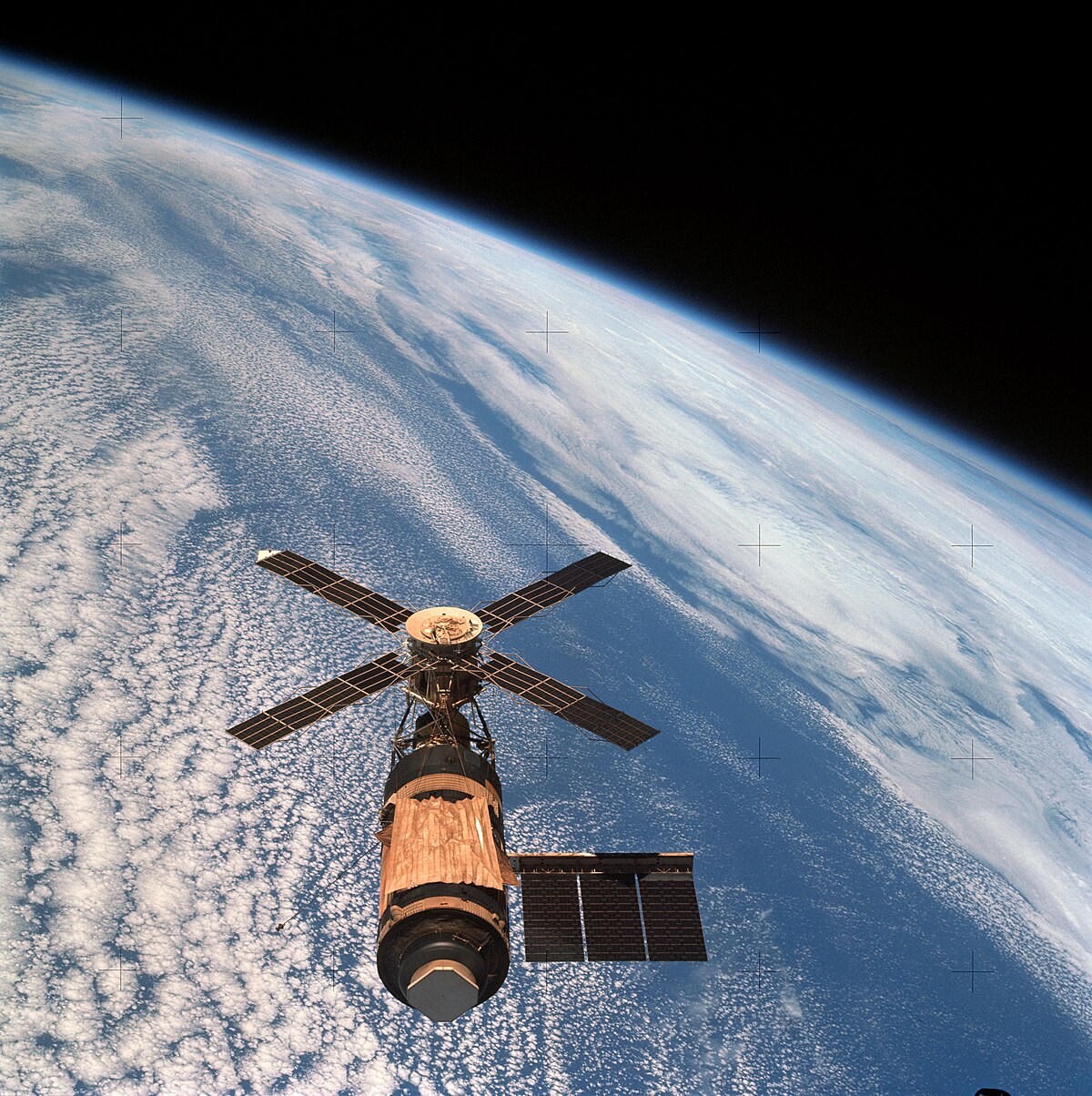
Skylab Orbital Workshop as photographed by the Skylab 4 CSM during the final fly-around by the CSM before returning home.
America's first space station in orbit
1975 CE
Apollo-Soyuz Test Project
American and Soviet spacecraft docked in orbit for the first time, with crews shaking hands in space. This joint mission marked the symbolic end of the Space Race and the beginning of international cooperation in space exploration.

American Stafford and Russian Leonov shake hands in space aboard the Apollo–Soyuz docking adapter.
Historic handshake symbolizing the end of the Space Race
1976 CE
Viking 1 and 2 Land on Mars
NASA successfully landed two Viking spacecraft on Mars, taking the first photographs from the Martian surface and conducting extensive scientific analysis. These missions provided detailed information about Mars and demonstrated American leadership in planetary exploration.

Surface of Mars taken by Viking 1.
First detailed photographs from the Martian surface
1981 CE
First Space Shuttle Flight
NASA's Space Shuttle Columbia completed its first orbital test flight, marking the beginning of the reusable spacecraft era. The Space Shuttle program represented a new approach to space access, though it proved more expensive and dangerous than initially planned.
1983 CE
Sally Ride First American Woman in Space
Sally Ride became the first American woman in space aboard Space Shuttle Challenger on STS-7. Her flight marked a significant milestone in gender equality in space exploration and inspired a generation of women to pursue careers in science and technology.
1986 CE
Mir Space Station Assembly Begins
The Soviet Union began assembling the Mir space station, which would become the largest spacecraft and maintain the longest continuous human presence in space. Mir represented the pinnacle of Soviet space station technology and international cooperation.

Salyut-7 with Kosmos1686 and Soyuz T-15 docked, truss extended, May 31, 1986
Soviet space station technology leading to Mir
1988 CE
Buran Shuttle First Flight
The Soviet Union's Buran space shuttle completed its first and only orbital flight, flying unmanned and landing automatically. This achievement demonstrated Soviet capability to match American shuttle technology, though the program was canceled due to the USSR's collapse.

Soyuz, US Space Shuttle, and Energia-Buran
Comparison of Soviet and American reusable spacecraft
1991 CE
Soviet Union Collapses
The collapse of the Soviet Union effectively ended the Space Race as a competition between superpowers. The Russian Federation inherited most Soviet space assets, leading to increased cooperation with the United States in space exploration.