Comparing Timelines
Exploring the overlapping histories of "World War II" and "The Holocaust".

World War II
1931 - 1945

The Holocaust
1933 - 1948
1931 CE
Japanese Invasion of Manchuria
Japan staged the Mukden incident as a pretext to invade Manchuria and establish the puppet state of Manchukuo. This marked the beginning of Japanese expansion in Asia and is considered by some historians as the true start of World War II. The invasion demonstrated Japan's militaristic ambitions and set the stage for future conflicts in the Pacific.
1933 CE
Nazi Party Seizes Power in Germany
Adolf Hitler was appointed chancellor of Germany in January 1933 through a backroom deal supported by right-wing politicians. Within months, all other political parties were banned, the regime seized control of media, and tens of thousands of political opponents were arrested. This marked the beginning of Nazi control that would lead to the Holocaust.
Anti-Jewish Laws Begin in Germany
In 1933, Jews were banned or restricted from several professions and the civil service. Various German government agencies, Nazi Party organizations, and local authorities instituted about 1,500 anti-Jewish laws. This systematic legal persecution laid the groundwork for later atrocities.
1935 CE
Italian Invasion of Ethiopia
The Second Italo-Ethiopian War began with Italy's invasion of Ethiopia, launched from Italian Somaliland and Eritrea. The war exposed the weakness of the League of Nations and resulted in Ethiopia's annexation into Italian East Africa. This colonial war demonstrated the ineffectiveness of international peacekeeping efforts.
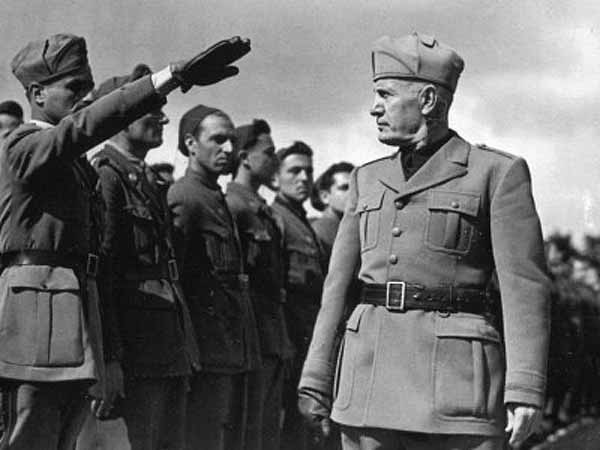
Benito Mussolini inspecting troops during the Italo-Ethiopian War, 1935
Benito Mussolini inspecting troops during the Italo-Ethiopian War, 1935
Nuremberg Laws Enacted
The regime passed the Nuremberg Laws in 1935, which reserved full citizenship rights for those of 'German or related blood', restricted Jews' economic activity, and criminalized new marriages and sexual relationships between Jews and non-Jewish Germans. These laws legally codified racial discrimination.
1936 CE
Spanish Civil War Begins
Civil war broke out in Spain, with Hitler and Mussolini supporting the Nationalist rebels led by Francisco Franco, while the Soviet Union backed the Spanish Republic. This conflict served as a testing ground for new military tactics and weapons that would later be used in World War II.
1937 CE
Marco Polo Bridge Incident
Japan captured Beijing after instigating the Marco Polo Bridge incident, which escalated into the Second Sino-Japanese War. This marked the beginning of full-scale warfare between Japan and China, opening a major theater of what would become World War II in Asia.

Imperial Japanese Army soldiers during the Battle of Shanghai, 1937
Imperial Japanese Army soldiers during the Battle of Shanghai, 1937
Nanjing Massacre
After capturing the Chinese capital of Nanking, Japanese forces committed mass atrocities against Chinese civilians and disarmed combatants. Tens or hundreds of thousands were murdered in what became known as the Nanjing Massacre, one of the most infamous war crimes of the conflict.
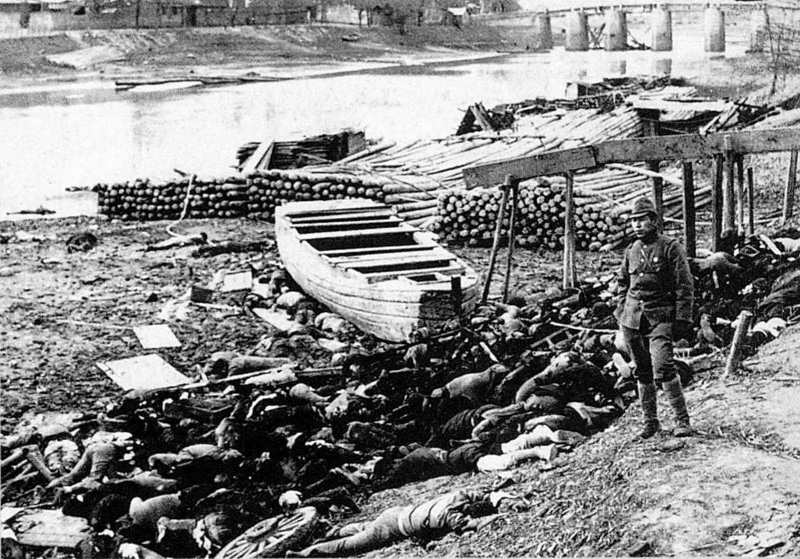
Bodies of Chinese civilians killed by the Imperial Japanese Army during the Nanjing Massacre in December 1937
Bodies of Chinese civilians killed by the Imperial Japanese Army during the Nanjing Massacre in December 1937
1938 CE
German Annexation of Austria
Germany annexed Austria in the Anschluss, encountering little resistance from other European powers. This violation of the Treaty of Versailles demonstrated the policy of appeasement and encouraged Hitler to make further territorial demands in Europe.
Munich Agreement
The United Kingdom and France agreed to Germany's annexation of the Sudetenland from Czechoslovakia in exchange for Hitler's promise of no further territorial demands. This agreement, made without Czechoslovak consent, epitomized the failed policy of appeasement.

Chamberlain, Daladier, Hitler, Mussolini, and Ciano pictured just before signing the Munich Agreement, 29 September 1938
Chamberlain, Daladier, Hitler, Mussolini, and Ciano pictured just before signing the Munich Agreement, 29 September 1938
Kristallnacht - Night of Broken Glass
On November 9-10, 1938, the Nazis organized Kristallnacht, a nationwide pogrom. Over 7,500 Jewish shops were looted, more than 1,000 synagogues were damaged or destroyed, at least 90 Jews were murdered, and as many as 30,000 Jewish men were arrested. This marked a dramatic escalation in anti-Jewish violence.

View of the old synagogue in Aachen after its destruction during Kristallnacht
View of the old synagogue in Aachen after its destruction during Kristallnacht
1939 CE
German Invasion of Czechoslovakia
Germany invaded and occupied the remainder of Czechoslovakia, breaking the Munich Agreement and demonstrating that Hitler's territorial ambitions extended beyond ethnic German areas. This action finally convinced Britain and France that appeasement had failed.
Molotov-Ribbentrop Pact
The Soviet Union and Nazi Germany signed a non-aggression pact with secret protocols dividing Poland and Eastern Europe into spheres of influence. This agreement shocked the world and cleared the way for Germany to invade Poland without fear of a two-front war.
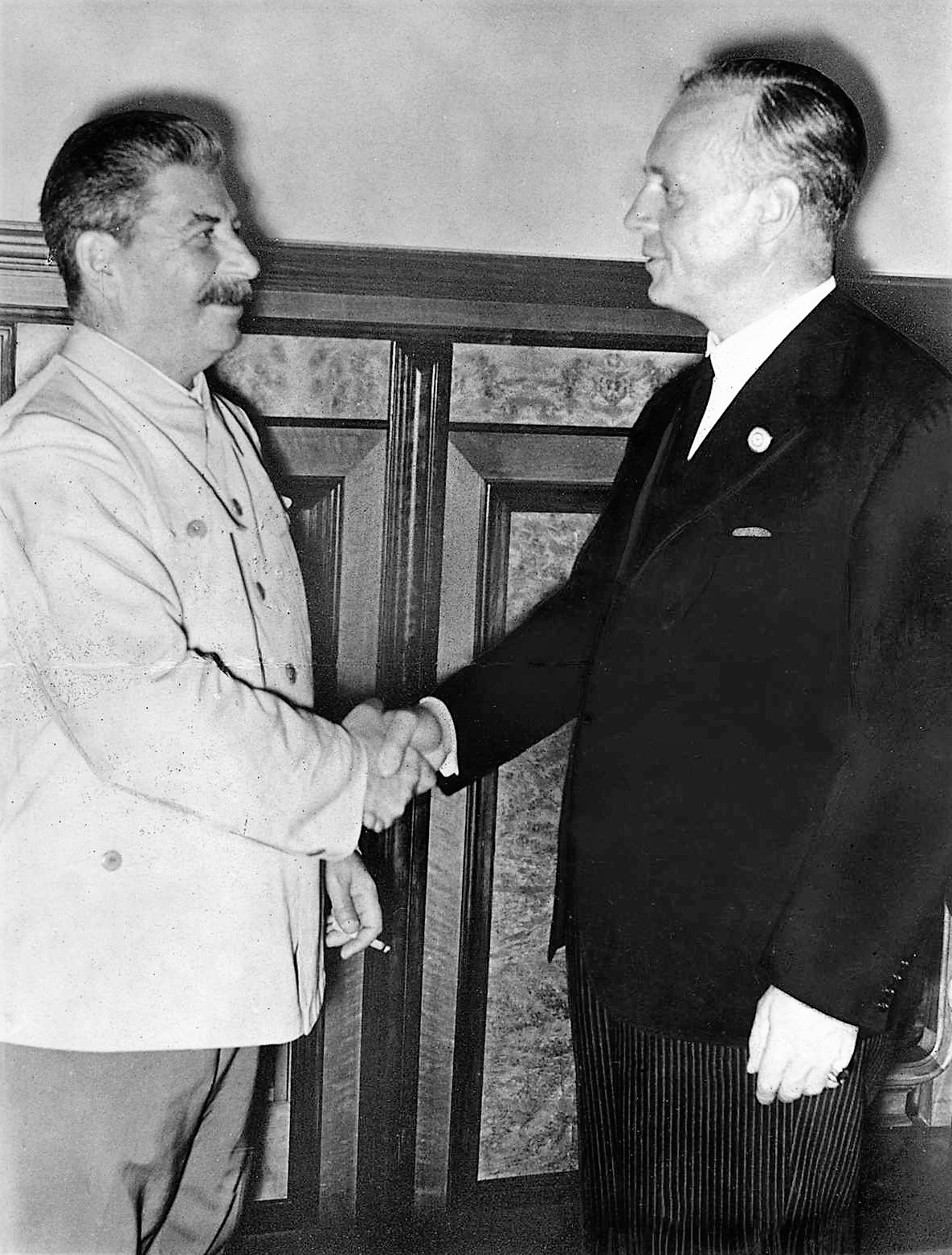
German Foreign Minister Joachim von Ribbentrop (right) and the Soviet leader Joseph Stalin, after signing the Molotov–Ribbentrop Pact, 23 August 1939
German Foreign Minister Joachim von Ribbentrop (right) and the Soviet leader Joseph Stalin, after signing the Molotov–Ribbentrop Pact, 23 August 1939
German Invasion of Poland
Nazi Germany invaded Poland, marking the official beginning of World War II in Europe. The attack on Polish defenses at Westerplatte was the first military action of the war. Britain and France declared war on Germany two days later, honoring their guarantees to Poland.

A German propaganda photograph reenacting the removal of the Polish border crossing in Sopot
A German propaganda photograph reenacting the removal of the Polish border crossing in Sopot
Britain and France Declare War on Germany
Following Germany's invasion of Poland and the expiration of their ultimatum, Britain and France formally declared war on Germany. This marked the beginning of the global conflict, though the Western Allies provided little immediate military support to Poland during the 'Phoney War' period.
Soviet Invasion of Poland
The Soviet Union invaded Poland from the east, implementing the secret protocol of the Molotov-Ribbentrop Pact. This two-front attack sealed Poland's fate and resulted in the country being divided between Germany and the Soviet Union.
Soviet Invasion of Finland
The Soviet Union invaded Finland after Finland refused to cede territory and sign a pact allowing Soviet military bases. Despite overwhelming numerical superiority, Soviet military success was modest during the Winter War, which ended in March 1940 with limited Finnish territorial concessions.
First Nazi Ghettos Established
The first Nazi ghettos were established in the Wartheland and General Governorate in 1939 and 1940 on the initiative of local German administrators. The largest ghettos, such as Warsaw and Łódź, were established in existing residential neighborhoods and closed by fences or walls, concentrating Jewish populations for later deportation.
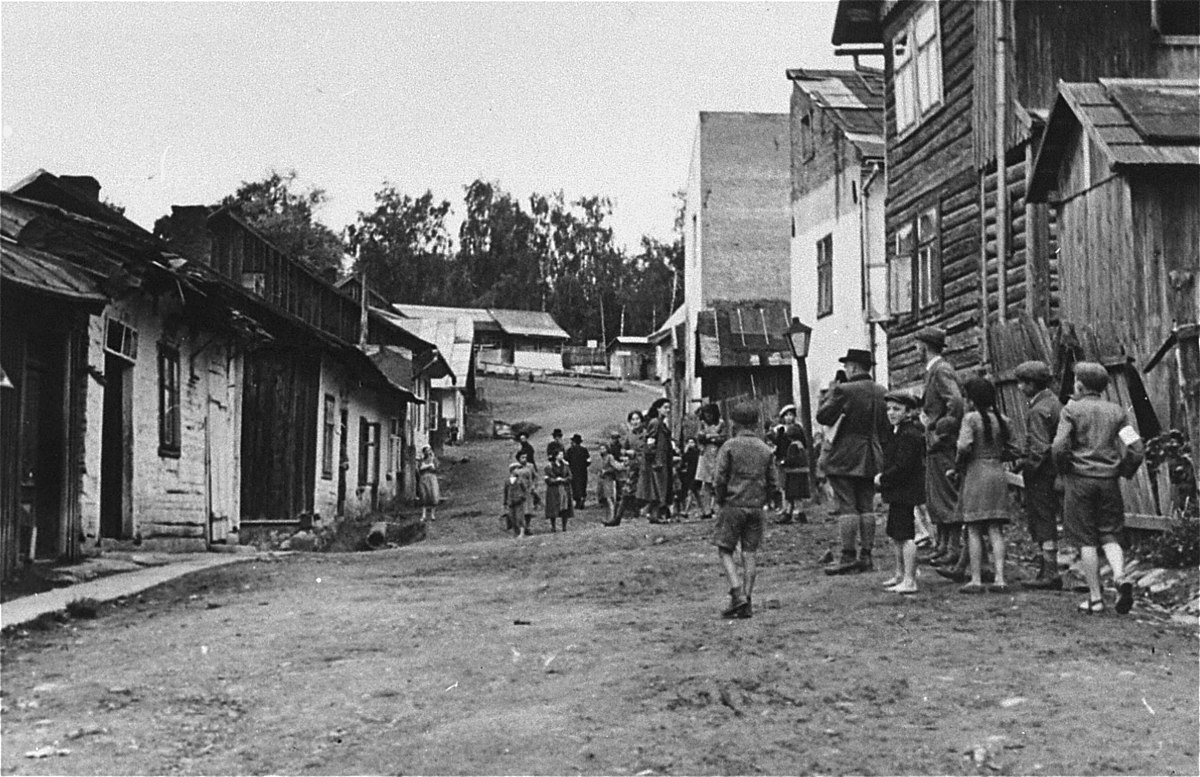
Unpaved street in the Frysztak Ghetto, Krakow District
Unpaved street in the Frysztak Ghetto, Krakow District
Germany Invades Poland - World War II Begins
The German Wehrmacht invaded Poland on September 1, 1939, triggering declarations of war from the United Kingdom and France. This invasion marked the beginning of World War II and brought millions of Polish Jews under Nazi control, setting the stage for the Holocaust's expansion.
1940 CE
End of Winter War
The Winter War between Finland and the Soviet Union ended with the Moscow Peace Treaty. Finland was forced to cede territory including the Karelian Isthmus, but maintained its independence. The war demonstrated Soviet military weaknesses and Finnish resilience.
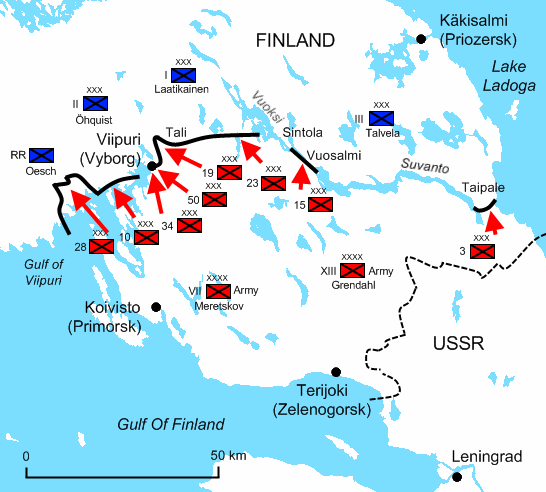
Mannerheim Line and Karelian Isthmus on the last day of the Winter War, 13 March 1940
Mannerheim Line and Karelian Isthmus on the last day of the Winter War, 13 March 1940
German Invasion of Denmark and Norway
Germany launched Operation Weserübung, invading Denmark and Norway to secure iron ore shipments from Sweden and prevent Allied interference. Denmark capitulated within hours, while Norway fell after two months despite Allied support, leading to Chamberlain's resignation.
Churchill Becomes Prime Minister
Winston Churchill replaced Neville Chamberlain as British Prime Minister following the failed Norwegian campaign. Churchill's appointment marked a shift toward more aggressive prosecution of the war and his leadership would prove crucial during Britain's darkest hours.
German Offensive in Western Europe
Germany launched its offensive against France, Belgium, Netherlands, and Luxembourg, circumventing the Maginot Line through the Ardennes. Using innovative Blitzkrieg tactics, German forces rapidly advanced to the English Channel, trapping Allied forces and leading to the Dunkirk evacuation.

German advance into Belgium and Northern France, 10 May4 June 1940, sweeping past the Maginot Line (shown in dark red)
German advance into Belgium and Northern France, 10 May4 June 1940, sweeping past the Maginot Line (shown in dark red)
Italy Declares War
Italy declared war on Britain and France and invaded southern France. Mussolini's entry into the war opened new fronts in the Mediterranean, North Africa, and East Africa, significantly expanding the scope of the conflict.
Fall of Paris
German forces captured Paris, the French capital, after the collapse of French resistance. The fall of Paris symbolized the defeat of France and led to the armistice that divided France into German-occupied and Vichy-controlled zones.
French Armistice
France signed an armistice with Germany, ending active French resistance. The agreement divided France into German-occupied zones and the nominally independent Vichy regime under Marshal Pétain, effectively removing France as an Allied power.
Battle of Britain Begins
The German Luftwaffe began its air campaign against Britain, initially targeting shipping and harbors before focusing on achieving air superiority. The failure to defeat RAF Fighter Command forced the indefinite postponement of the planned German invasion of Britain.
The Blitz Begins
Germany intensified its strategic bombing campaign against British cities, particularly London, in what became known as the Blitz. Despite causing significant civilian casualties and damage, the bombing failed to break British morale or significantly disrupt the war effort.
Tripartite Pact Signed
Japan, Italy, and Germany formally united as the Axis powers by signing the Tripartite Pact. The agreement stipulated that any country attacking one Axis power would face war with all three, creating a global military alliance opposing the Allies.
Italy Invades Greece
Italy launched an invasion of Greece from Albania, but the attack was repulsed with heavy Italian casualties. The failed invasion forced Germany to intervene in the Balkans to assist its ally, delaying the planned invasion of the Soviet Union.
Aktion T4 Euthanasia Program
The war provided cover for 'Aktion T4', the murder of around 70,000 institutionalized Germans with mental or physical disabilities at specialized killing centers using poison gas. The victims included all 4,000 to 5,000 institutionalized Jews. This program served as a testing ground for later mass murder techniques used in the Holocaust.
1941 CE
Operation Barbarossa Begins
Germany launched the largest military operation in history, invading the Soviet Union with over 3 million troops along an 1,800-mile front. The surprise attack initially achieved massive territorial gains but ultimately failed to achieve its objectives before winter, marking the beginning of Germany's two-front war.
European theatre of World War II animation map, 1939–1945 – Red: Western Allies and the Soviet Union after 1941; Green: Soviet Union before 1941; Blue: Axis powers
European theatre of World War II animation map, 1939–1945 – Red: Western Allies and the Soviet Union after 1941; Green: Soviet Union before 1941; Blue: Axis powers
Pearl Harbor Attack
Japan launched a surprise attack on the US Pacific Fleet at Pearl Harbor, Hawaii, sinking or damaging 18 warships and killing over 2,400 Americans. The attack brought the United States into World War II and transformed the conflict into a truly global war.

The was a total loss in the Japanese surprise air attack on the United States Pacific Fleet at Pearl Harbor, Sunday 7 December 1941
The was a total loss in the Japanese surprise air attack on the United States Pacific Fleet at Pearl Harbor, Sunday 7 December 1941
Germany Declares War on United States
Following Pearl Harbor, Germany and the other Axis powers declared war on the United States in solidarity with Japan. This decision brought America's full industrial and military might into the European theater, fundamentally altering the balance of power.
Mass Shootings of Soviet Jews Begin
Following the June 1941 invasion of the Soviet Union, 1.5 to 2 million Jews were shot by German forces and local collaborators. The systematic murder of Jews began in the Soviet Union with Einsatzgruppen and other units conducting mass executions. This marked the transition from persecution to systematic extermination.

Original Nazi propaganda caption: "Too bad even for a bullet... The Jews shown here were shot at once." 28 June 1941 in Rozhanka, Belarus
Original Nazi propaganda caption: "Too bad even for a bullet... The Jews shown here were shot at once." 28 June 1941 in Rozhanka, Belarus
Germany Invades Soviet Union - Operation Barbarossa
Germany and its allies invaded the Soviet Union on June 22, 1941. This invasion was planned as a war of extermination with complete disregard for the laws of war. It brought millions more Jews under Nazi control and marked the beginning of systematic mass murder of Soviet Jews.
Chełmno Extermination Camp Opens
The first extermination camp was Chełmno in the Wartheland, established with Himmler's approval. It began operations in December 1941 using gas vans. This marked the beginning of the systematic use of purpose-built facilities for mass murder, representing a crucial escalation in the Holocaust.

Deportation to Chełmno
Deportation to Chełmno
Hitler's Declaration of War on United States
On December 11, 1941, Hitler declared war on the United States after Japan attacked Pearl Harbor. The next day, he told leading Nazi party officials, referring to his 1939 prophecy, 'The world war is here; the annihilation of the Jews must be the necessary consequence.' This marked a crucial escalation in genocidal intent.
1942 CE
Battle of Midway
The US Navy decisively defeated the Japanese fleet at Midway Atoll, sinking four aircraft carriers and destroying much of Japan's experienced naval aviation force. This victory marked the turning point in the Pacific War, ending Japanese expansion and beginning their long retreat.
Battle of Stalingrad Begins
German forces began their assault on Stalingrad, leading to one of the most brutal and decisive battles of the war. The battle would rage for months in devastating urban combat, ultimately resulting in the encirclement and destruction of the German Sixth Army.

Red Army soldiers on the counterattack during the Battle of Stalingrad, February 1943
Red Army soldiers on the counterattack during the Battle of Stalingrad, February 1943
Wannsee Conference
Reinhard Heydrich, head of the Reich Main Security Office, convened the Wannsee Conference on January 20, 1942. This high-level meeting was intended to coordinate anti-Jewish policy across Nazi-occupied Europe. It represented the bureaucratic organization of continent-wide genocide.
Belzec Extermination Camp Begins Operations
In March 1942, killings began in Belzec, targeting Jews from Lublin who were not capable of work. Belzec was the first purpose-built extermination camp to feature stationary gas chambers using carbon monoxide. This marked the beginning of Operation Reinhard, the systematic murder of Polish Jews.
Sobibor Extermination Camp Opens
Sobibor extermination camp began operations in May 1942 as part of Operation Reinhard. Located in the Lublin District, it used stationary gas chambers with engine exhaust to murder Jews. The camp was part of the systematic effort to eliminate the Jewish population of the General Governorate.
BBC Reports on Holocaust
On June 26, 1942, BBC services in all languages publicized a report by the Jewish Social-Democratic Bund and other resistance groups, transmitted by the Polish government-in-exile, documenting the killing of 700,000 Jews in Poland. This was one of the first major international reports on the systematic murder of Jews.
Peak of Holocaust Killings
The period from late July to early November 1942 saw the most intense killing phase of the Holocaust. Biologist Lewi Stone calculated that around 1.47 million Jews were murdered in Europe in just 100 days during this period. Over 3 million Jews were killed in 1942 alone, making it the deadliest year of the Holocaust.

Cumulative murders of Jews from the General Governorate at Belzec, Sobibor, and Treblinka from January 1942 to February 1943
Cumulative murders of Jews from the General Governorate at Belzec, Sobibor, and Treblinka from January 1942 to February 1943
Warsaw Ghetto Liquidation Begins
The Warsaw Ghetto was cleared between July 22 and September 12, 1942. Of the original population of 350,000 Jews, 250,000 were killed at Treblinka, representing one of the largest single deportation actions of the Holocaust. This marked the beginning of the systematic liquidation of Polish ghettos.
Allied Declaration on Holocaust
In December 1942, the Allies, then known as the United Nations, adopted a joint declaration condemning the systematic murder of Jews. This represented the first official international acknowledgment of the ongoing genocide, though it did not lead to immediate action to stop the killings.
1943 CE
German Surrender at Stalingrad
The German Sixth Army surrendered at Stalingrad after being encircled by Soviet forces. The defeat marked the first major German surrender and the beginning of their long retreat on the Eastern Front. Over 200,000 German and Axis soldiers were killed or captured.
Battle of Kursk
Germany launched Operation Citadel, its last major offensive on the Eastern Front, attempting to eliminate the Soviet salient at Kursk. The massive tank battle ended in German defeat, marking the end of German strategic initiative in the east and beginning the Soviet advance toward Berlin.
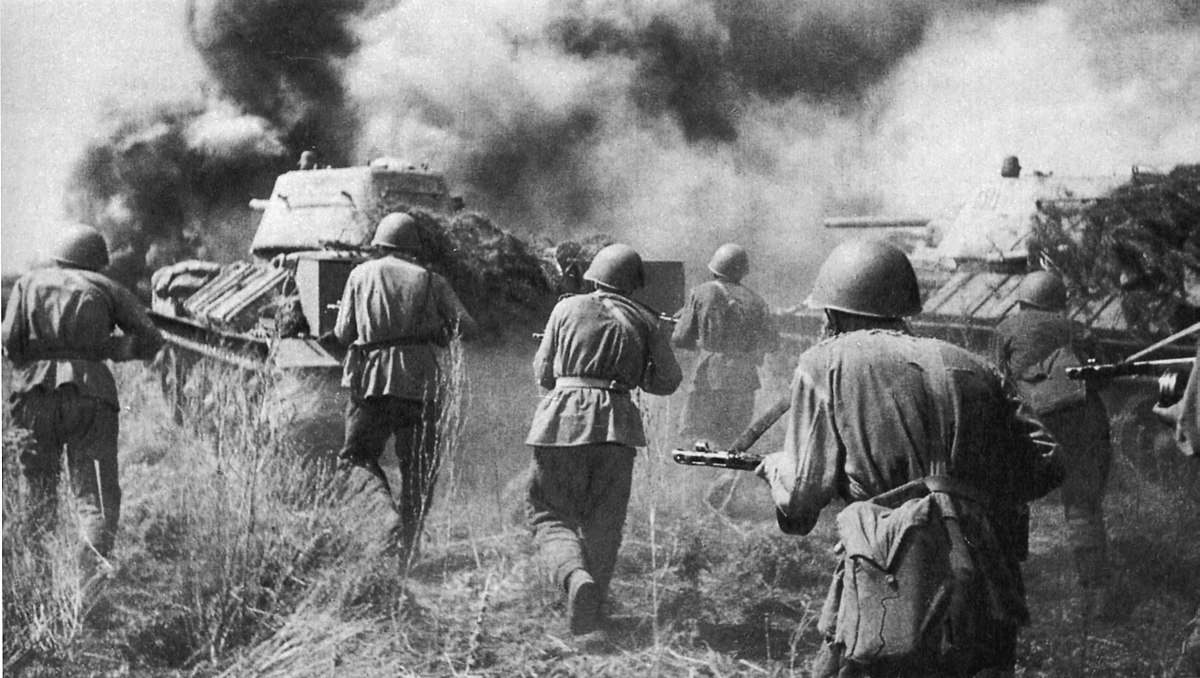
Red Army troops in a counter-offensive on German positions at the Battle of Kursk, July 1943
Red Army troops in a counter-offensive on German positions at the Battle of Kursk, July 1943
Allied Invasion of Sicily
Allied forces launched Operation Husky, the invasion of Sicily, opening the Italian campaign. The successful invasion led to Mussolini's fall from power and Italy's eventual surrender, though German resistance continued in Italy for nearly two more years.
Italy Surrenders
Italy signed an armistice with the Allies, effectively surrendering and switching sides in the war. However, German forces quickly occupied much of Italy and established defensive lines, leading to a prolonged and costly Italian campaign for the Allies.
Warsaw Ghetto Uprising
In 1943, larger uprisings occurred in Warsaw, Białystok, and Glubokoje, necessitating the use of heavy weapons by German forces. The Warsaw Ghetto uprising became significant as a symbol of Jewish resistance against the Nazis, though it ultimately failed to prevent the ghetto's destruction.
The Warsaw Ghetto uprising became significant as a symbol of Jewish resistance against the Nazis.
The Warsaw Ghetto uprising became significant as a symbol of Jewish resistance against the Nazis.
Operation Harvest Festival Massacre
On November 3, 1943, around 18,400 Jews were murdered at Majdanek over the course of nine hours, the largest number ever killed in a death camp on a single day. It was part of Operation Harvest Festival, the murder of some 43,000 Jews from November 3-4, 1943, the single largest massacre of Jews by German forces.
1944 CE
D-Day Normandy Landings
Allied forces launched Operation Overlord, the largest amphibious invasion in history, landing on the beaches of Normandy, France. The successful establishment of a second front in Western Europe marked the beginning of the liberation of Nazi-occupied Western Europe.

American troops approaching Omaha Beach during the invasion of Normandy on D-Day, 6 June 1944
American troops approaching Omaha Beach during the invasion of Normandy on D-Day, 6 June 1944
Operation Bagration
The Soviet Union launched Operation Bagration, a massive offensive that destroyed German Army Group Center and liberated Belarus. The operation was one of the most successful Soviet offensives, advancing 450 miles in five weeks and opening the path to Poland and Germany.
Liberation of Paris
Allied forces liberated Paris from German occupation, with the French Resistance and Free French Forces playing key roles. The liberation of the French capital was a powerful symbol of Nazi Germany's declining fortunes and the success of the Allied advance in Western Europe.
Battle of Leyte Gulf
The largest naval battle in history took place in the Philippines as American forces returned to liberate the islands. The decisive Allied victory effectively ended the Japanese Navy as an offensive force and secured American control of the Pacific sea lanes.

General Douglas MacArthur returns to the Philippines during the Battle of Leyte, 20 October 1944
General Douglas MacArthur returns to the Philippines during the Battle of Leyte, 20 October 1944
Battle of the Bulge
Germany launched its last major offensive in the west, attempting to split Allied forces in the Ardennes. Despite initial success and creating a 'bulge' in Allied lines, the offensive failed to achieve its strategic objectives and depleted Germany's remaining reserves.
Death Marches Begin
Following Allied advances, the SS deported concentration camp prisoners to camps in Germany and Austria, starting in mid-1944 from the Baltics. Weak and sick prisoners were often killed, and others were forced to travel by rail or on foot with inadequate food. Those who could not keep up were shot.
German Occupation of Hungary
Germany occupied Hungary in March 1944, bringing the large Hungarian Jewish population under direct Nazi control. Until this occupation, the Hungarian government had not deported very many of its approximately 846,000 people considered Jewish, making them one of the largest surviving European Jewish populations.
Deportation of Hungarian Jews
Between March 1944 and July 9, 1944, 434,000 of the still 825,000 Hungarian Jews were deported on trains, mostly to Auschwitz where the great majority were murdered immediately. This represented the largest and fastest deportation action of the Holocaust's final phase.

Jews from Carpathian Ruthenia, annexed by Hungary in 1938, on the selection ramp at Auschwitz II in May or June 1944. Men are lined up to the right, women and children to the left. About 25 percent were selected for work and the rest gassed.
Jews from Carpathian Ruthenia, annexed by Hungary in 1938, on the selection ramp at Auschwitz II in May or June 1944. Men are lined up to the right, women and children to the left. About 25 percent were selected for work and the rest gassed.
Auschwitz Gas Chambers Shut Down
The gas chambers at Auschwitz were shut down and destroyed after October 1944 as Soviet forces approached. In January 1945, most of the remaining 67,000 Auschwitz prisoners were sent on a death march westwards. This marked the end of systematic killing at the largest extermination camp.
1945 CE
Yalta Conference
Roosevelt, Churchill, and Stalin met to discuss the post-war reorganization of Europe and the final phase of the war against Japan. The conference established occupation zones for Germany and secured Soviet agreement to enter the war against Japan within three months of Germany's defeat.

Yalta Conference held in February 1945, with Winston Churchill, Franklin D. Roosevelt, and Joseph Stalin
Yalta Conference held in February 1945, with Winston Churchill, Franklin D. Roosevelt, and Joseph Stalin
Death of Franklin D. Roosevelt
President Franklin D. Roosevelt died and was succeeded by Vice President Harry S. Truman. Roosevelt's death removed one of the key Allied leaders just months before the end of the war, and Truman would face crucial decisions about the use of atomic weapons and post-war relations with the Soviet Union.
Death of Adolf Hitler
Adolf Hitler committed suicide in his Berlin bunker as Soviet forces closed in on the Nazi capital. His death effectively ended Nazi resistance and paved the way for Germany's unconditional surrender, though fighting continued for several more days.
Germany Surrenders
Germany signed an unconditional surrender, officially ending the war in Europe. The surrender was signed in Berlin and took effect on May 8, 1945, which became known as Victory in Europe (VE) Day. The Nazi regime was completely defeated after nearly six years of war.
Atomic Bombing of Hiroshima
The United States dropped the first atomic bomb on Hiroshima, Japan, killing approximately 80,000 people instantly and many more from radiation effects. This marked the first use of nuclear weapons in warfare and demonstrated the devastating power of atomic technology.
Soviet Invasion of Manchuria
The Soviet Union declared war on Japan and launched a massive invasion of Japanese-held Manchuria, quickly defeating the Kwantung Army. This invasion, combined with the atomic bombings, convinced Japanese leaders that continued resistance was futile.
Atomic Bombing of Nagasaki
The United States dropped a second atomic bomb on Nagasaki, Japan, killing approximately 40,000 people instantly. The second bombing, combined with the Soviet invasion of Manchuria, finally convinced Emperor Hirohito to surrender unconditionally.
Japan Announces Surrender
Emperor Hirohito announced Japan's surrender in a radio broadcast to the Japanese people, citing the enemy's use of 'a new and most cruel bomb' and the Soviet entry into the war. This announcement effectively ended World War II, though the formal surrender ceremony would follow.
Japanese Formal Surrender
Japan formally surrendered aboard the USS Missouri in Tokyo Bay, officially ending World War II. The ceremony was attended by representatives of all Allied nations and marked the complete victory over the Axis powers after six years of global warfare.

Japanese foreign affairs minister Mamoru Shigemitsu signs the Japanese Instrument of Surrender on board , 2 September 1945
Japanese foreign affairs minister Mamoru Shigemitsu signs the Japanese Instrument of Surrender on board , 2 September 1945
Liberation of Concentration Camps
Many concentration camps were liberated in 1945 during the Western Allied invasion of Germany and the Red Army's march westwards. The liberators found piles of corpses that they had to bulldoze into mass graves. Some survivors were freed at the camps while others had been liberated during the death marches.

A mass grave at Bergen-Belsen after the camp's liberation, April 1945
A mass grave at Bergen-Belsen after the camp's liberation, April 1945
Nuremberg Trials Begin
In 1945 and 1946, the International Military Tribunal tried 23 Nazi leaders primarily for waging wars of aggression. Although the prosecution initially focused on aggressive war as the root of Nazi criminality, the systematic murder of Jews came to take center stage during the proceedings.

alt=Rows of men sitting on benches
Defendants in the dock at the International Military Tribunal, November 1945
1948 CE
UN Genocide Convention
Nazi atrocities led to the United Nations' Genocide Convention in 1948, establishing genocide as an international crime. However, it was not used in Holocaust trials due to the non-retroactivity of criminal laws. This convention became a cornerstone of international human rights law.
Establishment of Israel
The establishment of Israel in 1948 provided a destination for many Holocaust survivors who had remained in displaced persons camps in Germany. Due to the reluctance of other countries to allow Jewish immigration, many survivors had remained in Germany until this point.