Comparing Timelines
Exploring the overlapping histories of "United Nations" and "Space Race".
United Nations
1920 - 2026

Space Race
1921 - 1991
1920 CE
League of Nations Formally Established
The League of Nations formally came into being when the Covenant of the League of Nations, ratified by 42 nations in 1919, took effect. The League Council acted as an executive body directing the Assembly's business, beginning with four permanent members—the United Kingdom, France, Italy, and Japan.
1921 CE
Soviet Gas Dynamics Laboratory Established
The Soviet military sanctioned the Gas Dynamics Laboratory, a small research laboratory to explore solid-fuel rockets, led by Nikolai Tikhomirov. This marked the beginning of organized Soviet rocket development efforts.
1928 CE
First Soviet Solid Fuel Rocket Test
The first test-firing of a solid fuel rocket was carried out by the Soviet Gas Dynamics Laboratory. This represented an early milestone in Soviet rocket technology development.
1933 CE
First Soviet Liquid-Fueled Rocket Launch
Soviet rocket pioneers Sergey Korolev, Friedrich Zander, Mikhail Tikhonravov and Leonid Dushkin launched GIRD-X, the first Soviet liquid-fueled rocket. This achievement demonstrated Soviet progress in advanced rocket technology.
1936 CE
Soviet Rocket Development Damaged by Great Purge
Joseph Stalin's Great Purge severely damaged Soviet rocket technology progress. Many scientists and engineers were imprisoned or executed, setting back the Soviet rocket program significantly.
1941 CE
Declaration of St James's Palace
The first step towards the establishment of the United Nations was the Inter-Allied Conference in London that led to the Declaration of St James's Palace. This declaration marked the beginning of Allied cooperation that would eventually lead to the UN's formation.
Atlantic Charter Drafted
American president Franklin Roosevelt and British prime minister Winston Churchill drafted the Atlantic Charter, which defined goals for the post-war world. This document became a foundational text for the future United Nations organization.
1942 CE
Declaration by United Nations Signed
Roosevelt, Churchill, the Soviet Union's former Foreign Minister Maxim Litvinov, and the Chinese Premier T. V. Soong signed the 'Declaration by United Nations', with representatives of twenty-two other nations adding their signatures the next day. This marked the first official use of the term 'United Nations'.
1943 CE
Moscow Conference and Four Power Declaration
The October 1943 Moscow Conference resulted in the Moscow Declarations, including the Four Power Declaration on General Security. This was the first public announcement that a new international organization was being contemplated to replace the League of Nations.
1944 CE
Dumbarton Oaks Conference
The new international organization was formulated and negotiated amongst the delegations from the Allied Big Four at the Dumbarton Oaks Conference. They agreed on proposals for the aims, structure and functioning of the new organization that would become the United Nations.
1945 CE
UN Conference on International Organization Opens
After months of planning, the UN Conference on International Organization opened in San Francisco. It was attended by 50 nations' governments and a number of non-governmental organizations, with the delegations of the Big Four chairing the plenary meetings.
UN Charter Signed
The Charter of the United Nations was signed by the representatives of the 50 countries after two months of drafting. This document established the legal foundation for the United Nations organization and its operations.
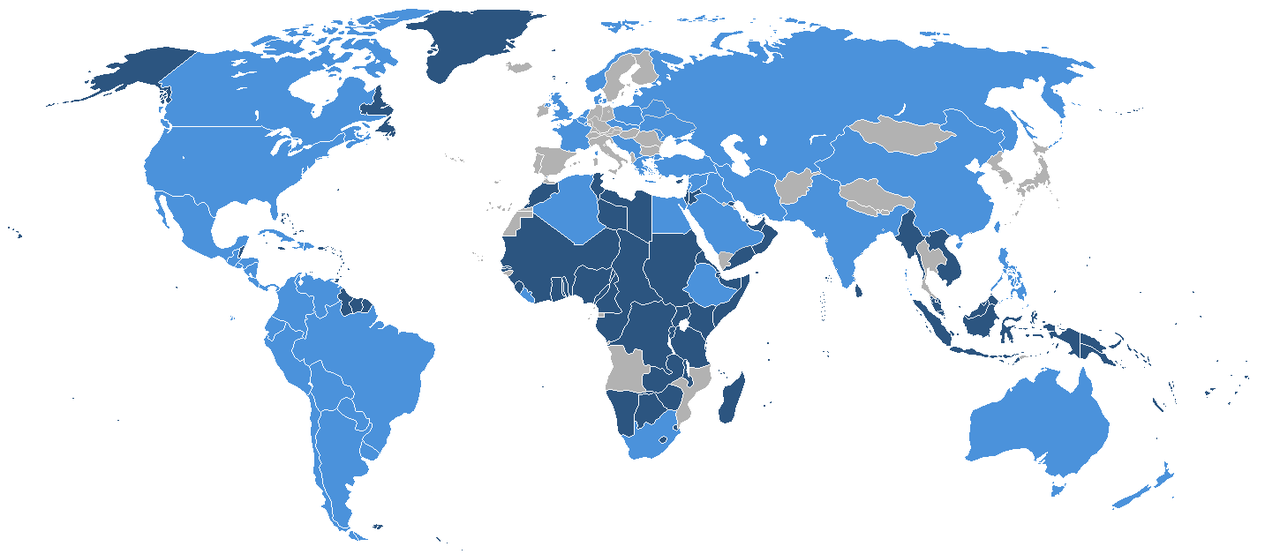
The UN in 1945: founding members in light blue, protectorates and territories of the founding members in dark blue
Map showing the founding members of the United Nations in 1945
United Nations Officially Established
The UN officially came into existence at 20:07 (UTC) upon ratification of the Charter by the five permanent members of the Security Council and by a majority of the other 46 nations. This marked the birth of the modern international organization system.
1946 CE
First UN General Assembly and Security Council Meetings
The first meetings of the General Assembly, with 51 nations represented, and the Security Council took place in London. Debates began at once, covering topical issues such as the presence of Russian troops in Iranian Azerbaijan and British forces in Greece.
1947 CE
UN General Assembly Resolution 181 - Palestine Partition Plan
The General Assembly approved Resolution 181, a proposal to partition British Mandatory Palestine into two states, a Jewish state and an Arab state, with Jerusalem placed under international status. The plan passed 33–13 with 10 abstentions, leading to civil war.
1948 CE
Universal Declaration of Human Rights Adopted
The General Assembly adopted the Universal Declaration of Human Rights, drafted by a committee headed by American diplomat and activist Eleanor Roosevelt. The document proclaimed basic civil, political and economic rights common to all human beings.

Eleanor Roosevelt with the Universal Declaration of Human Rights, 1949
Eleanor Roosevelt holding the Universal Declaration of Human Rights
UN Headquarters Construction Begins
Construction began on the UN headquarters in New York City after the General Assembly selected the city as the site for the headquarters. The facility would be completed on October 9, 1952, establishing the permanent home of the United Nations.
1949 CE
First Mammal in Space
Albert II, a rhesus monkey, became the first mammal in space when launched by the US on a sub-orbital flight. The monkey died on landing due to a parachute malfunction, but the mission demonstrated the possibility of sending living creatures to space.
Soviet Union Becomes Second Nuclear Power
The Soviet Union became the second nuclear power after the United States with the successful RDS-1 nuclear weapon test. This achievement intensified the Cold War arms race and provided the backdrop for the space competition.
1950 CE
Korean War Authorization
A Security Council resolution authorized a US-led coalition to repel the North Korean invasion of South Korea. This resolution was passed in the absence of the Soviet Union, demonstrating how Cold War tensions affected UN operations.
Soviet R-1 Rocket Enters Service
The R-1, a Soviet copy of the German A-4 (V-2) rocket, entered service in the Soviet Army. This marked the beginning of operational Soviet ballistic missile capability.
1951 CE
Public Interest in Space Travel Sparked
Soviet rocketry engineer Mikhail Tikhonravov published 'Flight to the Moon' in the newspaper Pionerskaya pravda, describing a two-person interplanetary spaceship. This article sparked public interest in space travel and predicted space flight within 10-15 years.
1952 CE
UN Headquarters Completed
The UN headquarters facility in New York City was completed, providing a permanent home for the organization's operations. The building became an iconic symbol of international cooperation and diplomacy.
1953 CE
Korean Armistice Agreement Signed
The Korean Armistice Agreement was signed, ending active hostilities in the Korean War. This demonstrated the UN's role in conflict resolution and peacekeeping, though the war technically never ended with a peace treaty.
1955 CE
US Announces Intent to Launch Satellites
James C. Hagerty, President Eisenhower's press secretary, announced that the United States intended to launch 'small Earth circling satellites' as part of the International Geophysical Year. This announcement marked the official beginning of the Space Race.
Soviet Union Responds to US Satellite Announcement
At the Sixth Congress of the International Astronautical Federation in Copenhagen, Soviet scientist Leonid I. Sedov announced the Soviet Union's intention to launch a satellite 'in the near future.' This response escalated the space competition.
Soviet Space Commission Established
Sergei Korolev succeeded in convincing the Soviet Academy of Sciences to establish a commission dedicated to achieving the goal of launching a satellite into Earth orbit before the United States. This can be viewed as the de facto start date of the space race.
1956 CE
First UN Peacekeeping Force Established
The first UN peacekeeping force was established to end the Suez Crisis. However, the UN was unable to intervene against the Soviet Union's simultaneous invasion of Hungary, highlighting the limitations of UN action during the Cold War.
1957 CE
R-7 ICBM First Successful Flight
The Soviet R-7 Semyorka flew 6,000 km and became the world's first intercontinental ballistic missile. This achievement gave the USSR the capability to strike US territory with nuclear weapons and provided the launch vehicle for future space missions.

The Soviet stable of Sputnik, Vostok, Voskhod, and Soyuz launch vehicles were all derivatives of the R-7 Semyorka ICBM.
The R-7 became the basis for the Soviet space program
Sputnik 1 Launched
The Soviet Union launched Sputnik 1, the first artificial satellite, into Earth orbit. This achievement shocked the world and marked the beginning of the Space Age, giving the USSR an early lead in the Space Race.

Soviet stamp commemorating Sputnik 1, 1957
Soviet commemorative stamp celebrating the first artificial satellite
Sputnik 2 Launches with Laika
The Soviet Union launched Sputnik 2 carrying Laika, a dog, making her the first animal to orbit Earth. The mission demonstrated that living creatures could survive in space, though Laika died from stress and overheating during the flight.

Laika on a Romanian post stamp
Commemorative stamp honoring Laika, the first animal in orbit
Project Vanguard Launch Failure
The US Project Vanguard launch failed spectacularly at Cape Canaveral, exploding seconds after launch. The failure became an international joke with nicknames like 'Flopnik' and 'Kaputnik,' highlighting American struggles to match Soviet space achievements.
1958 CE
Explorer 1 Launched
The United States successfully launched Explorer 1, its first satellite, on a Juno I rocket. The satellite discovered the Van Allen radiation belt, marking America's first major scientific achievement in space and its entry into the Space Race.

William Hayward Pickering, James Van Allen, and von Braun display a model of Explorer 1 at a news conference after confirmation the satellite was in orbit.
Key figures celebrating America's first satellite success
NASA Established
President Eisenhower signed the National Aeronautics and Space Act, creating NASA from the National Advisory Committee on Aeronautics. This established a civilian space agency to coordinate America's space efforts and compete with the Soviet Union.
1959 CE
Luna 1 Launched
The Soviet Union launched Luna 1, the first spacecraft to reach the vicinity of the Moon, though it missed its target. This mission marked the beginning of lunar exploration and demonstrated Soviet capability for deep space missions.
Luna 2 Impacts Moon
Luna 2 became the first human-made object to reach the Moon when it successfully impacted the lunar surface. This achievement gave the Soviet Union another space first and demonstrated their growing capability in space exploration.
Luna 3 Photographs Far Side of Moon
Luna 3 successfully flew by the Moon and transmitted the first pictures of its far side. This historic achievement provided humanity's first glimpse of the Moon's hidden hemisphere and demonstrated advanced Soviet space technology.

The first photo of the far side of the Moon, taken by Luna 3
Historic first image of the Moon's far side
1960 CE
UN Operation in the Congo Established
The UN established the United Nations Operation in the Congo (UNOC), the largest military force of its early decades, to bring order to Katanga and restore it to the control of the Democratic Republic of the Congo. The operation lasted until May 11, 1964.
1961 CE
Dag Hammarskjöld Dies in Plane Crash
UN Secretary-General Dag Hammarskjöld, often named as one of the UN's most effective secretaries-general, died in a plane crash while travelling to meet rebel leader Moise Tshombe during the Congo conflict. He was posthumously awarded the Nobel Peace Prize months later.

Dag Hammarskjöld was a particularly active secretary-general from 1953 until he died in 1961.
Portrait of Dag Hammarskjöld, the second UN Secretary-General
Yuri Gagarin First Human in Space
Soviet cosmonaut Yuri Gagarin became the first human to orbit Earth aboard Vostok 1, completing a 108-minute flight. This achievement shocked the world and gave the Soviet Union a major victory in the Space Race, prompting the US to accelerate its space program.

A 1964 Stamp with Yuri Gagarin, and an intentionally inaccurate Vostok
Soviet commemorative stamp celebrating Gagarin's historic flight
Alan Shepard First American in Space
Alan Shepard became the first American in space with a suborbital flight on Mercury-Redstone 3 (Freedom 7). Though not achieving orbit like Gagarin, Shepard demonstrated manual spacecraft control and marked America's entry into human spaceflight.

Alan Shepard, the first American in space, 1961
Alan Shepard preparing for his historic suborbital flight
Kennedy Announces Moon Landing Goal
President John F. Kennedy announced the goal of landing a man on the Moon and returning him safely to Earth before the end of the decade. This bold commitment transformed the Space Race and focused American efforts on the lunar landing mission.
1962 CE
John Glenn First American to Orbit Earth
Astronaut John Glenn became the first American to orbit Earth, completing three orbits in Friendship 7. This achievement helped restore American confidence in the Space Race and demonstrated that the US could match Soviet orbital capabilities.
Mariner 2 First Successful Interplanetary Mission
NASA's Mariner 2 became the first spacecraft to successfully fly by another planet when it passed Venus. This achievement marked the beginning of interplanetary exploration and demonstrated American capability in deep space missions.
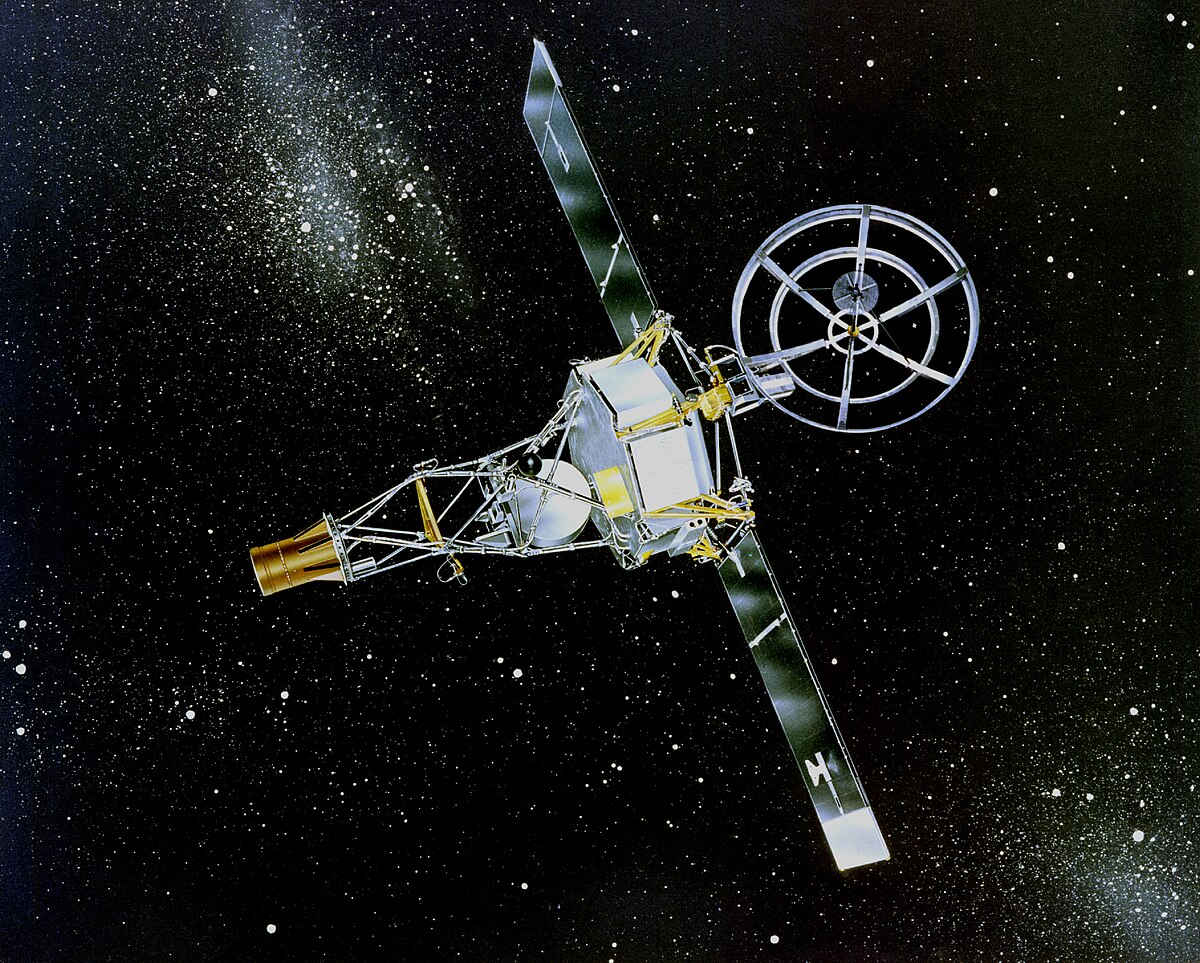
Artist's impression of Mariner 2, the first successful interplanetary spacecraft
Mariner 2 pioneered interplanetary exploration
1963 CE
Valentina Tereshkova First Woman in Space
Soviet cosmonaut Valentina Tereshkova became the first woman in space aboard Vostok 6. Her three-day mission demonstrated that women could perform effectively in space and gave the Soviet Union another space first.
1964 CE
Voskhod 1 First Multi-Person Crew
The Soviet Union launched Voskhod 1 with a three-person crew, achieving the first spaceflight with multiple crew members. This mission beat the American Gemini program to this milestone and demonstrated Soviet spacecraft capabilities.
1965 CE
Alexei Leonov First Spacewalk
Soviet cosmonaut Alexei Leonov performed the first extravehicular activity (spacewalk) during the Voskhod 2 mission. This 12-minute spacewalk demonstrated human capability to work outside spacecraft, though Leonov nearly died when his spacesuit expanded.
Gemini 6 and 7 First Space Rendezvous
Gemini 6A and Gemini 7 achieved the first rendezvous between two crewed spacecraft, coming within one foot of each other. This achievement demonstrated critical technology needed for lunar missions and marked a turning point in American space capabilities.

Rendezvous of Gemini 6 and 7, December 1965
Historic first rendezvous between two crewed spacecraft
1966 CE
Luna 9 First Soft Moon Landing
Luna 9 achieved the first soft landing on the Moon and successfully transmitted photography from the lunar surface. This achievement demonstrated that spacecraft could safely land on the Moon and provided the first close-up images of the lunar surface.

First photo of the surface of the Moon, taken by Luna 9
Historic first photograph from the Moon's surface
Venera 3 First Impact on Another Planet
Venera 3 became the first human-made object to impact another planet when it crashed on Venus. Though contact was lost before impact, this mission marked the beginning of planetary exploration and demonstrated Soviet deep space capabilities.
1967 CE
Apollo 1 Fire Kills Three Astronauts
A fire during a ground test of Apollo 1 killed astronauts Gus Grissom, Ed White, and Roger Chaffee. This tragedy led to major safety improvements in the Apollo program and delayed the first crewed Apollo mission by nearly two years.

Charred interior of the Apollo 1 spacecraft after the fire that killed the crew
The tragic aftermath of the Apollo 1 fire
Outer Space Treaty Signed
The United States, Soviet Union, and United Kingdom signed the Treaty on Principles Governing the Activities of States in the Exploration and Use of Outer Space. This treaty established space as the common heritage of mankind and prohibited weapons of mass destruction in space.
Vladimir Komarov Dies in Soyuz 1
Soviet cosmonaut Vladimir Komarov became the first in-flight spaceflight fatality when Soyuz 1's parachute system failed during reentry. This tragedy highlighted the dangers of space exploration and led to improvements in Soviet spacecraft design.

The remains of Vladimir Komarov
The tragic end of the first in-flight space fatality
1968 CE
Apollo 8 First Humans to Leave Earth Orbit
Apollo 8 carried Frank Borman, James Lovell, and William Anders on the first crewed mission to leave Earth orbit and travel to the Moon. Their Christmas Eve broadcast from lunar orbit was one of the most watched TV programs in history.

Earthrise, as seen from Apollo 8, December 24, 1968 (photograph by astronaut William Anders)
The iconic Earthrise photograph taken during Apollo 8
1969 CE
Apollo 11 Moon Landing
Neil Armstrong and Buzz Aldrin became the first humans to land on the Moon while Michael Collins orbited above. Armstrong's first steps on the lunar surface were watched by an estimated 723 million people worldwide, marking America's victory in the Space Race.
"Buzz" Aldrin facing away from Camera, with the Apollo 11 Lunar Lander
Iconic image of Buzz Aldrin on the Moon's surface
1970 CE
Venera 7 First Data from Another Planet's Surface
Soviet Venera 7 became the first spacecraft to successfully transmit data from the surface of another planet. The probe measured Venus's surface temperature at 475°C and atmospheric pressure at 92 bars, providing crucial data about Venus's hostile environment.
Luna 16 First Robotic Sample Return
Luna 16 became the first uncrewed spacecraft to return samples from the Moon to Earth. This achievement demonstrated that robotic missions could accomplish complex tasks and provided an alternative to crewed lunar exploration.
1971 CE
People's Republic of China Joins UN Security Council
With opposition from the United States but support from many Third World nations, the People's Republic of China was given the Chinese seat on the Security Council in place of the Republic of China (Taiwan). The vote was widely seen as a sign of waning American influence in the organization.
Mars 2 First Object to Impact Mars
Soviet Mars 2 became the first human-made object to impact Mars, though the lander crashed and was destroyed. This mission marked the beginning of Mars exploration and demonstrated the challenges of landing on the Red Planet.
Salyut 1 First Space Station
The Soviet Union launched Salyut 1, the world's first space station. Though the first crew died during reentry due to cabin depressurization, this achievement marked the beginning of long-duration spaceflight and orbital laboratories.
1973 CE
Skylab Launched
The United States launched Skylab, its first and only space station, using a Saturn V rocket. Despite initial damage during launch, Skylab hosted three crews and conducted valuable scientific research, demonstrating American capability in long-duration spaceflight.
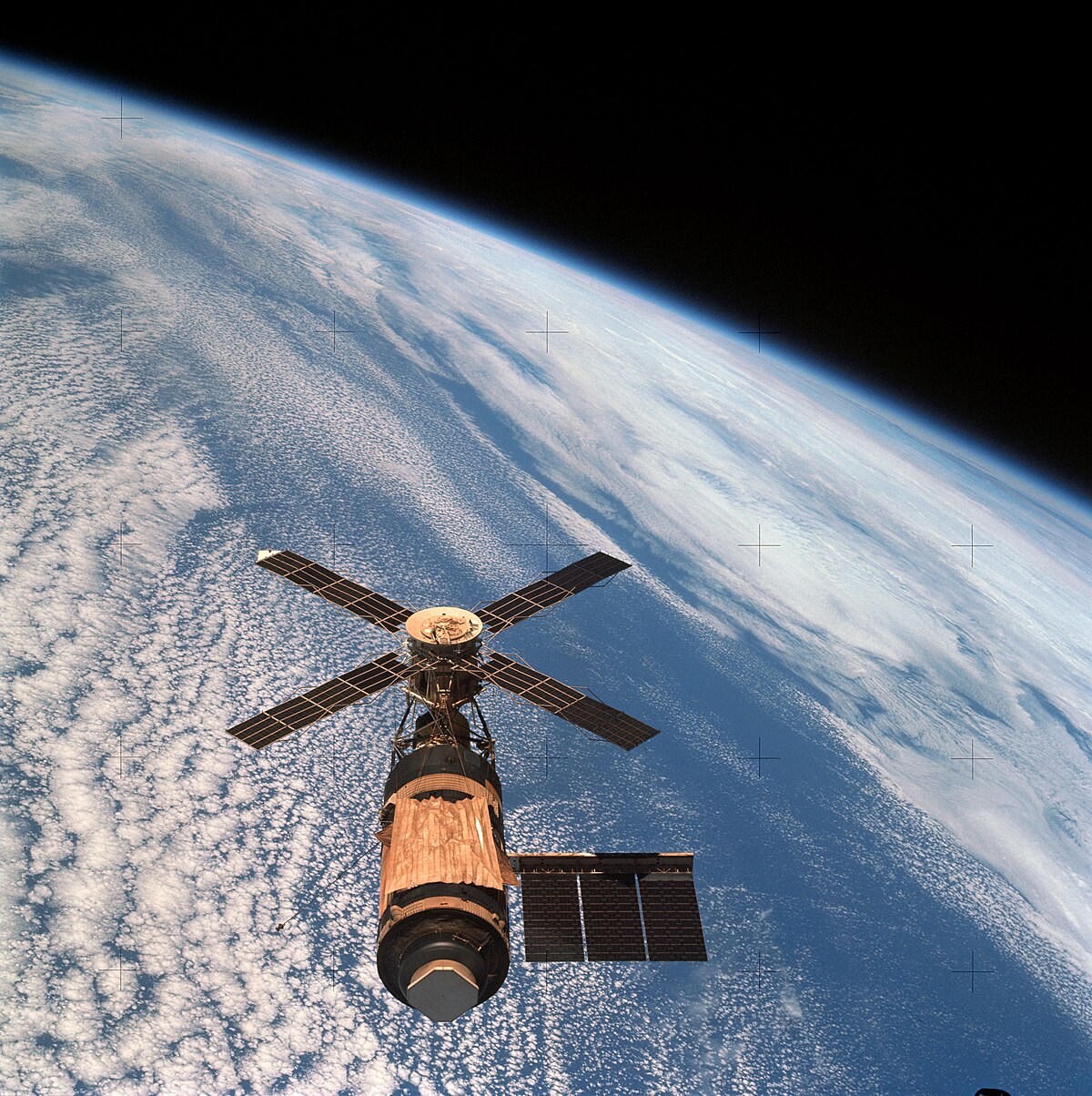
Skylab Orbital Workshop as photographed by the Skylab 4 CSM during the final fly-around by the CSM before returning home.
America's first space station in orbit
1975 CE
Zionism Declared Form of Racism
A bloc comprising the Soviet Union and Third World nations passed a resolution, over strenuous American and Israeli opposition, declaring Zionism to be a form of racism. The resolution was later repealed on December 16, 1991, shortly after the end of the Cold War.
Apollo-Soyuz Test Project
American and Soviet spacecraft docked in orbit for the first time, with crews shaking hands in space. This joint mission marked the symbolic end of the Space Race and the beginning of international cooperation in space exploration.

American Stafford and Russian Leonov shake hands in space aboard the Apollo–Soyuz docking adapter.
Historic handshake symbolizing the end of the Space Race
1976 CE
Viking 1 and 2 Land on Mars
NASA successfully landed two Viking spacecraft on Mars, taking the first photographs from the Martian surface and conducting extensive scientific analysis. These missions provided detailed information about Mars and demonstrated American leadership in planetary exploration.

Surface of Mars taken by Viking 1.
First detailed photographs from the Martian surface
1980 CE
Smallpox Eradication Announced
The World Health Organization announced that the eradication of smallpox had been completed, marking one of the UN's greatest public health achievements. This demonstrated the effectiveness of coordinated international health efforts.
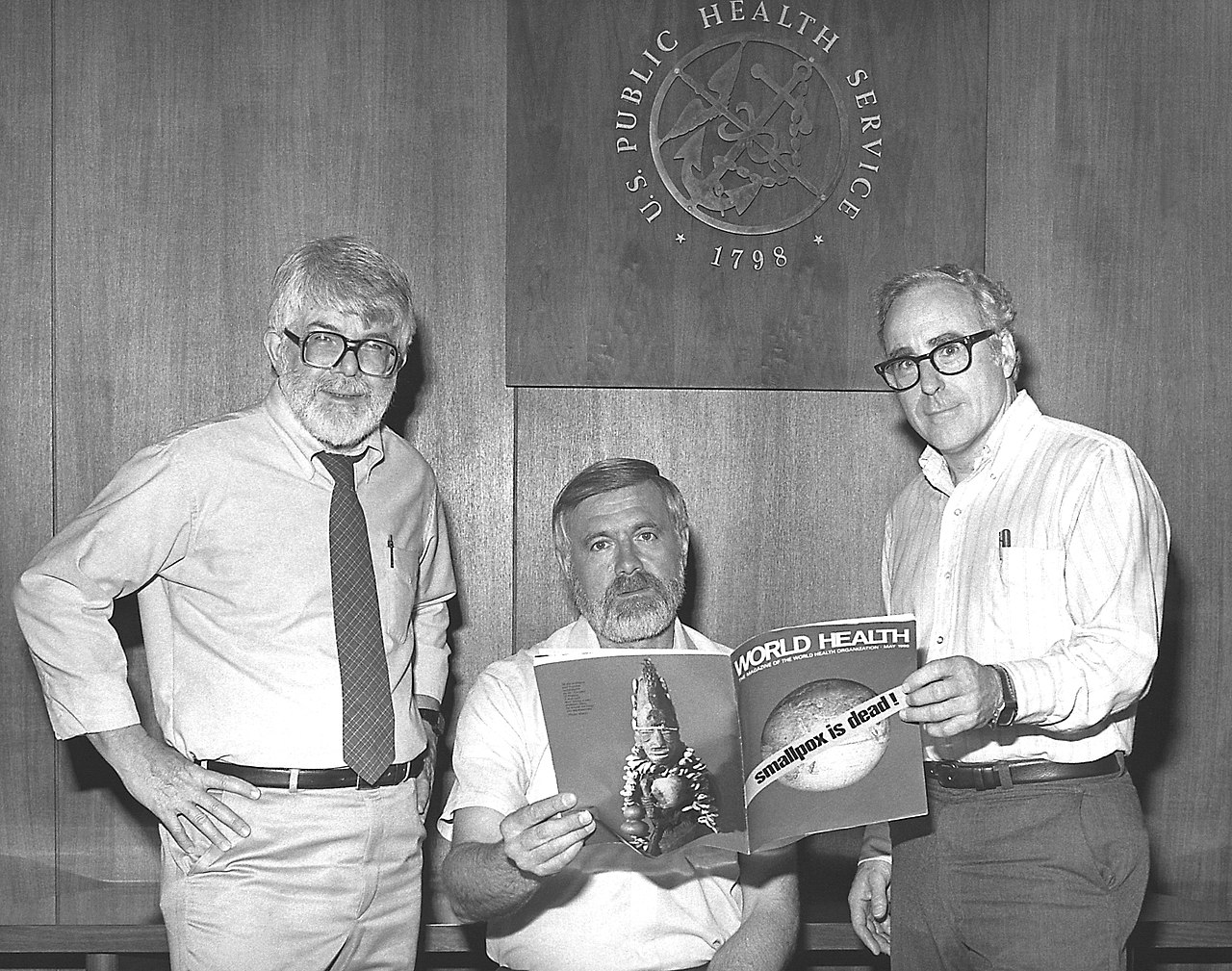
Three former directors of the Global Smallpox Eradication Programme reading the news that smallpox has been globally eradicated in 1980
Three directors celebrating the global eradication of smallpox
1981 CE
First Space Shuttle Flight
NASA's Space Shuttle Columbia completed its first orbital test flight, marking the beginning of the reusable spacecraft era. The Space Shuttle program represented a new approach to space access, though it proved more expensive and dangerous than initially planned.
1983 CE
Sally Ride First American Woman in Space
Sally Ride became the first American woman in space aboard Space Shuttle Challenger on STS-7. Her flight marked a significant milestone in gender equality in space exploration and inspired a generation of women to pursue careers in science and technology.
1986 CE
Mir Space Station Assembly Begins
The Soviet Union began assembling the Mir space station, which would become the largest spacecraft and maintain the longest continuous human presence in space. Mir represented the pinnacle of Soviet space station technology and international cooperation.

Salyut-7 with Kosmos1686 and Soyuz T-15 docked, truss extended, May 31, 1986
Soviet space station technology leading to Mir
1988 CE
Buran Shuttle First Flight
The Soviet Union's Buran space shuttle completed its first and only orbital flight, flying unmanned and landing automatically. This achievement demonstrated Soviet capability to match American shuttle technology, though the program was canceled due to the USSR's collapse.

Soyuz, US Space Shuttle, and Energia-Buran
Comparison of Soviet and American reusable spacecraft
1991 CE
Gulf War Coalition Authorized
The UN authorized a US-led coalition that repulsed Iraq's invasion of Kuwait. This marked a significant post-Cold War use of UN authority to authorize military action against aggression.
Zionism-Racism Resolution Repealed
The controversial 1975 resolution declaring Zionism to be a form of racism was repealed, shortly after the end of the Cold War. This reflected changing geopolitical dynamics and improved relations between various UN member states.
Soviet Union Collapses
The collapse of the Soviet Union effectively ended the Space Race as a competition between superpowers. The Russian Federation inherited most Soviet space assets, leading to increased cooperation with the United States in space exploration.
1994 CE
Trusteeship Council Suspends Operations
The Trusteeship Council, one of the six principal organs established by the UN Charter, suspended its operations upon the independence of Palau, the last remaining UN trustee territory. This marked the end of the UN trusteeship system.
1999 CE
Kosovo Force Authorized
United Nations Security Council Resolution 1244 authorized the NATO-led Kosovo Force beginning in 1999. This represented a new form of international intervention in the post-Cold War era.
2000 CE
Millennium Summit and Development Goals
The Millennium Summit was held to discuss the UN's role in the 21st century. The three-day meeting was the largest gathering of world leaders in history, culminating in the adoption of the Millennium Development Goals (MDGs) by all member states.
2001 CE
UN and Kofi Annan Win Nobel Peace Prize
The UN as a whole was awarded the Nobel Peace Prize, sharing it with Secretary-General Kofi Annan. This recognition highlighted the organization's contributions to international peace and security.

The 2001 Nobel Peace Prize to the UN—diploma in the lobby of the UN Headquarters in New York City
Nobel Peace Prize diploma awarded to the United Nations in 2001
2010 CE
Haiti Earthquake Kills 101 UN Personnel
The organization suffered the worst loss of life in its history when 101 personnel died in the Haiti earthquake. This tragedy highlighted the risks faced by UN personnel in humanitarian operations.
2011 CE
South Sudan Joins UN
South Sudan joined the United Nations, becoming the most recent addition and bringing the total to 193 UN member states. This marked the end of a long process of independence and international recognition.
2015 CE
Sustainable Development Goals Launched
The Sustainable Development Goals (SDGs) were launched to succeed the Millennium Development Goals. These 17 goals represented a comprehensive agenda for global development and environmental sustainability through 2030.
2017 CE
António Guterres Becomes Secretary-General
Portuguese diplomat António Guterres, who had previously served as the UN High Commissioner for Refugees, became the ninth secretary-general. He emphasized diplomacy for preventing conflicts, more effective peacekeeping efforts, and streamlining the organization.

António Guterres, the current secretary-general
Portrait of António Guterres, the ninth UN Secretary-General
2019 CE
UN-World Economic Forum Partnership
The UN signed a Strategic Partnership Framework with the World Economic Forum to 'jointly accelerate' the implementation of the 2030 Agenda for Sustainable Development. This partnership aimed to leverage private sector engagement in global development goals.
2025 CE
UN Financial Crisis Deepens
The UN began facing a severe financial crisis resulting from delays in member state due payments and refusal to pay assessed amounts. Only 61 countries paid their dues on time and in full, causing massive budget cuts and putting millions of lives at risk.
2026 CE
Guterres Warns of 'Imminent Financial Collapse'
Secretary-General Guterres sent a letter to all members warning of an 'imminent financial collapse' of the UN. This represented the culmination of ongoing financial difficulties that had been building since 2020.