Comparing Timelines
Exploring the overlapping histories of "United Nations" and "World War II".
United Nations
1920 - 2026

World War II
1931 - 1945
1920 CE
League of Nations Formally Established
The League of Nations formally came into being when the Covenant of the League of Nations, ratified by 42 nations in 1919, took effect. The League Council acted as an executive body directing the Assembly's business, beginning with four permanent members—the United Kingdom, France, Italy, and Japan.
1931 CE
Japanese Invasion of Manchuria
Japan staged the Mukden incident as a pretext to invade Manchuria and establish the puppet state of Manchukuo. This marked the beginning of Japanese expansion in Asia and is considered by some historians as the true start of World War II. The invasion demonstrated Japan's militaristic ambitions and set the stage for future conflicts in the Pacific.
1935 CE
Italian Invasion of Ethiopia
The Second Italo-Ethiopian War began with Italy's invasion of Ethiopia, launched from Italian Somaliland and Eritrea. The war exposed the weakness of the League of Nations and resulted in Ethiopia's annexation into Italian East Africa. This colonial war demonstrated the ineffectiveness of international peacekeeping efforts.
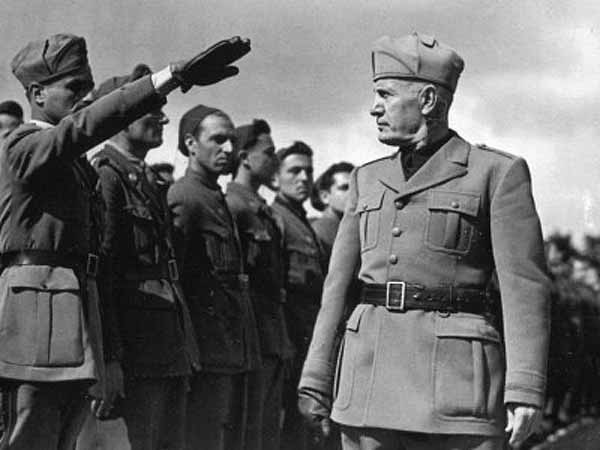
Benito Mussolini inspecting troops during the Italo-Ethiopian War, 1935
Benito Mussolini inspecting troops during the Italo-Ethiopian War, 1935
1936 CE
Spanish Civil War Begins
Civil war broke out in Spain, with Hitler and Mussolini supporting the Nationalist rebels led by Francisco Franco, while the Soviet Union backed the Spanish Republic. This conflict served as a testing ground for new military tactics and weapons that would later be used in World War II.
1937 CE
Marco Polo Bridge Incident
Japan captured Beijing after instigating the Marco Polo Bridge incident, which escalated into the Second Sino-Japanese War. This marked the beginning of full-scale warfare between Japan and China, opening a major theater of what would become World War II in Asia.

Imperial Japanese Army soldiers during the Battle of Shanghai, 1937
Imperial Japanese Army soldiers during the Battle of Shanghai, 1937
Nanjing Massacre
After capturing the Chinese capital of Nanking, Japanese forces committed mass atrocities against Chinese civilians and disarmed combatants. Tens or hundreds of thousands were murdered in what became known as the Nanjing Massacre, one of the most infamous war crimes of the conflict.
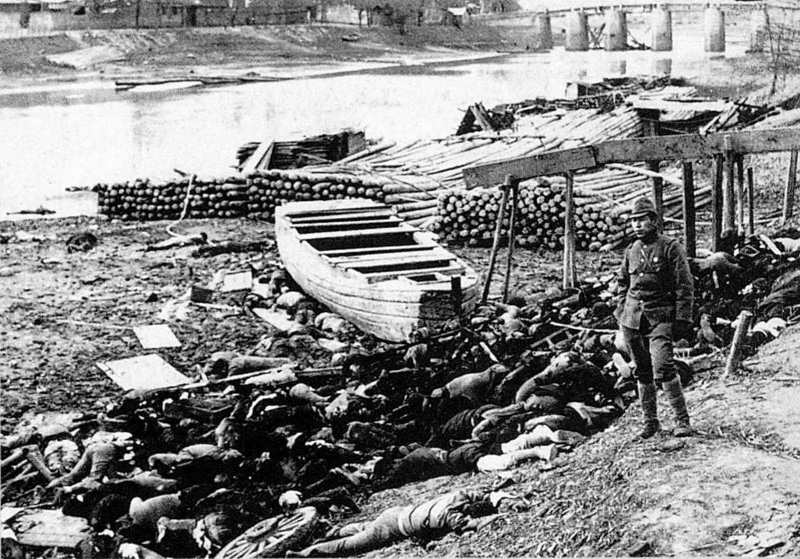
Bodies of Chinese civilians killed by the Imperial Japanese Army during the Nanjing Massacre in December 1937
Bodies of Chinese civilians killed by the Imperial Japanese Army during the Nanjing Massacre in December 1937
1938 CE
German Annexation of Austria
Germany annexed Austria in the Anschluss, encountering little resistance from other European powers. This violation of the Treaty of Versailles demonstrated the policy of appeasement and encouraged Hitler to make further territorial demands in Europe.
Munich Agreement
The United Kingdom and France agreed to Germany's annexation of the Sudetenland from Czechoslovakia in exchange for Hitler's promise of no further territorial demands. This agreement, made without Czechoslovak consent, epitomized the failed policy of appeasement.

Chamberlain, Daladier, Hitler, Mussolini, and Ciano pictured just before signing the Munich Agreement, 29 September 1938
Chamberlain, Daladier, Hitler, Mussolini, and Ciano pictured just before signing the Munich Agreement, 29 September 1938
1939 CE
German Invasion of Czechoslovakia
Germany invaded and occupied the remainder of Czechoslovakia, breaking the Munich Agreement and demonstrating that Hitler's territorial ambitions extended beyond ethnic German areas. This action finally convinced Britain and France that appeasement had failed.
Molotov-Ribbentrop Pact
The Soviet Union and Nazi Germany signed a non-aggression pact with secret protocols dividing Poland and Eastern Europe into spheres of influence. This agreement shocked the world and cleared the way for Germany to invade Poland without fear of a two-front war.
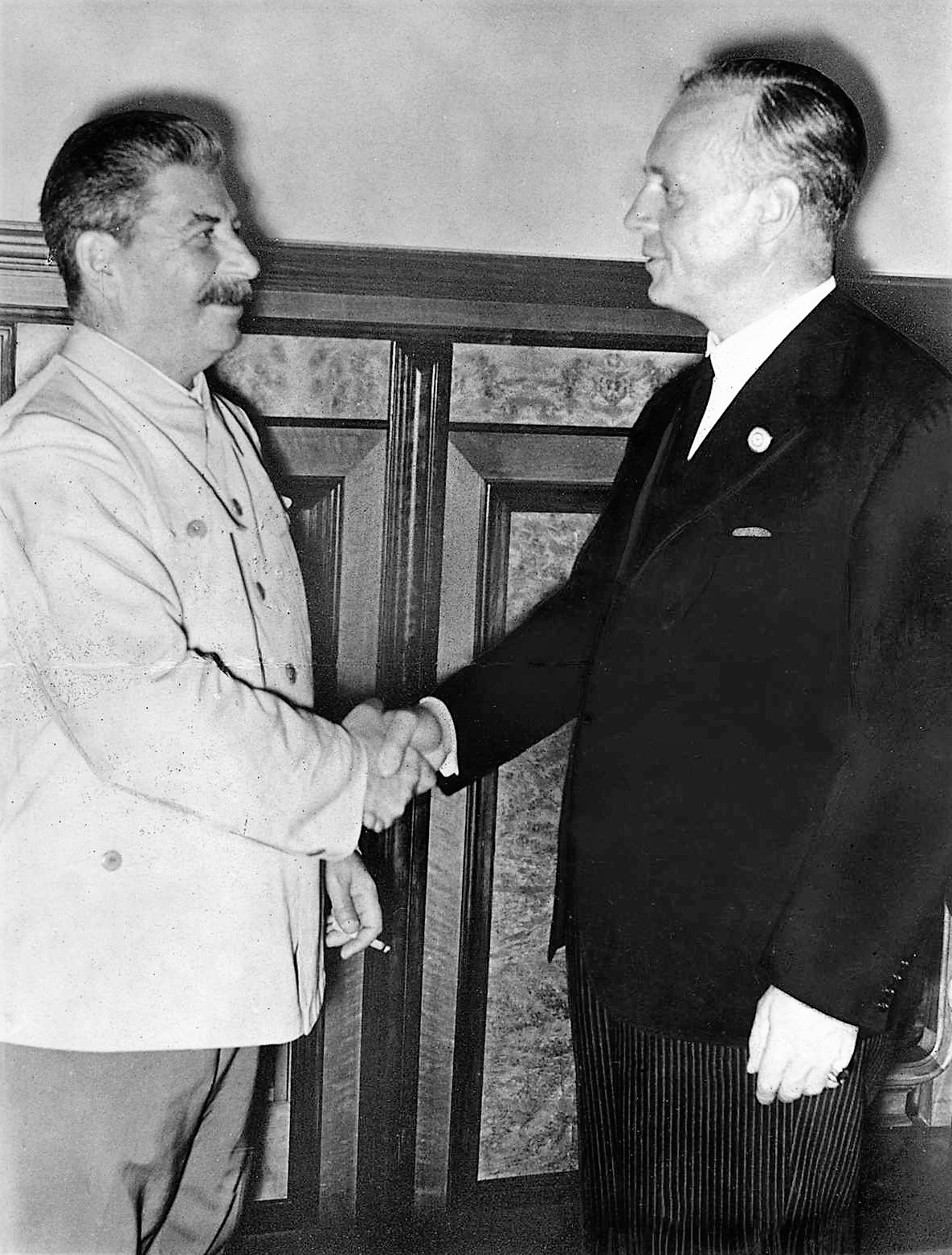
German Foreign Minister Joachim von Ribbentrop (right) and the Soviet leader Joseph Stalin, after signing the Molotov–Ribbentrop Pact, 23 August 1939
German Foreign Minister Joachim von Ribbentrop (right) and the Soviet leader Joseph Stalin, after signing the Molotov–Ribbentrop Pact, 23 August 1939
German Invasion of Poland
Nazi Germany invaded Poland, marking the official beginning of World War II in Europe. The attack on Polish defenses at Westerplatte was the first military action of the war. Britain and France declared war on Germany two days later, honoring their guarantees to Poland.

A German propaganda photograph reenacting the removal of the Polish border crossing in Sopot
A German propaganda photograph reenacting the removal of the Polish border crossing in Sopot
Britain and France Declare War on Germany
Following Germany's invasion of Poland and the expiration of their ultimatum, Britain and France formally declared war on Germany. This marked the beginning of the global conflict, though the Western Allies provided little immediate military support to Poland during the 'Phoney War' period.
Soviet Invasion of Poland
The Soviet Union invaded Poland from the east, implementing the secret protocol of the Molotov-Ribbentrop Pact. This two-front attack sealed Poland's fate and resulted in the country being divided between Germany and the Soviet Union.
Soviet Invasion of Finland
The Soviet Union invaded Finland after Finland refused to cede territory and sign a pact allowing Soviet military bases. Despite overwhelming numerical superiority, Soviet military success was modest during the Winter War, which ended in March 1940 with limited Finnish territorial concessions.
1940 CE
End of Winter War
The Winter War between Finland and the Soviet Union ended with the Moscow Peace Treaty. Finland was forced to cede territory including the Karelian Isthmus, but maintained its independence. The war demonstrated Soviet military weaknesses and Finnish resilience.
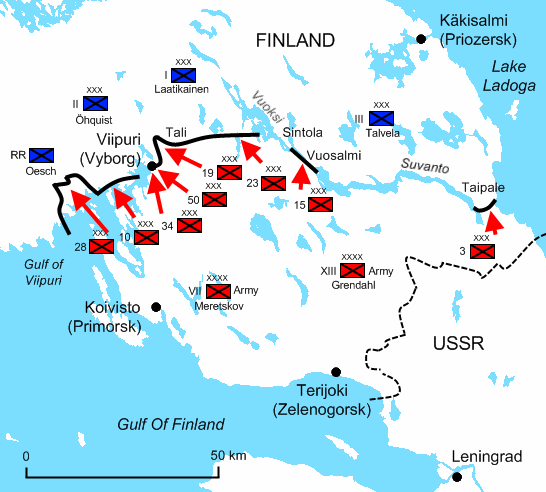
Mannerheim Line and Karelian Isthmus on the last day of the Winter War, 13 March 1940
Mannerheim Line and Karelian Isthmus on the last day of the Winter War, 13 March 1940
German Invasion of Denmark and Norway
Germany launched Operation Weserübung, invading Denmark and Norway to secure iron ore shipments from Sweden and prevent Allied interference. Denmark capitulated within hours, while Norway fell after two months despite Allied support, leading to Chamberlain's resignation.
Churchill Becomes Prime Minister
Winston Churchill replaced Neville Chamberlain as British Prime Minister following the failed Norwegian campaign. Churchill's appointment marked a shift toward more aggressive prosecution of the war and his leadership would prove crucial during Britain's darkest hours.
German Offensive in Western Europe
Germany launched its offensive against France, Belgium, Netherlands, and Luxembourg, circumventing the Maginot Line through the Ardennes. Using innovative Blitzkrieg tactics, German forces rapidly advanced to the English Channel, trapping Allied forces and leading to the Dunkirk evacuation.

German advance into Belgium and Northern France, 10 May4 June 1940, sweeping past the Maginot Line (shown in dark red)
German advance into Belgium and Northern France, 10 May4 June 1940, sweeping past the Maginot Line (shown in dark red)
Italy Declares War
Italy declared war on Britain and France and invaded southern France. Mussolini's entry into the war opened new fronts in the Mediterranean, North Africa, and East Africa, significantly expanding the scope of the conflict.
Fall of Paris
German forces captured Paris, the French capital, after the collapse of French resistance. The fall of Paris symbolized the defeat of France and led to the armistice that divided France into German-occupied and Vichy-controlled zones.
French Armistice
France signed an armistice with Germany, ending active French resistance. The agreement divided France into German-occupied zones and the nominally independent Vichy regime under Marshal Pétain, effectively removing France as an Allied power.
Battle of Britain Begins
The German Luftwaffe began its air campaign against Britain, initially targeting shipping and harbors before focusing on achieving air superiority. The failure to defeat RAF Fighter Command forced the indefinite postponement of the planned German invasion of Britain.
The Blitz Begins
Germany intensified its strategic bombing campaign against British cities, particularly London, in what became known as the Blitz. Despite causing significant civilian casualties and damage, the bombing failed to break British morale or significantly disrupt the war effort.
Tripartite Pact Signed
Japan, Italy, and Germany formally united as the Axis powers by signing the Tripartite Pact. The agreement stipulated that any country attacking one Axis power would face war with all three, creating a global military alliance opposing the Allies.
Italy Invades Greece
Italy launched an invasion of Greece from Albania, but the attack was repulsed with heavy Italian casualties. The failed invasion forced Germany to intervene in the Balkans to assist its ally, delaying the planned invasion of the Soviet Union.
1941 CE
Declaration of St James's Palace
The first step towards the establishment of the United Nations was the Inter-Allied Conference in London that led to the Declaration of St James's Palace. This declaration marked the beginning of Allied cooperation that would eventually lead to the UN's formation.
Atlantic Charter Drafted
American president Franklin Roosevelt and British prime minister Winston Churchill drafted the Atlantic Charter, which defined goals for the post-war world. This document became a foundational text for the future United Nations organization.
Operation Barbarossa Begins
Germany launched the largest military operation in history, invading the Soviet Union with over 3 million troops along an 1,800-mile front. The surprise attack initially achieved massive territorial gains but ultimately failed to achieve its objectives before winter, marking the beginning of Germany's two-front war.
European theatre of World War II animation map, 1939–1945 – Red: Western Allies and the Soviet Union after 1941; Green: Soviet Union before 1941; Blue: Axis powers
European theatre of World War II animation map, 1939–1945 – Red: Western Allies and the Soviet Union after 1941; Green: Soviet Union before 1941; Blue: Axis powers
Pearl Harbor Attack
Japan launched a surprise attack on the US Pacific Fleet at Pearl Harbor, Hawaii, sinking or damaging 18 warships and killing over 2,400 Americans. The attack brought the United States into World War II and transformed the conflict into a truly global war.

The was a total loss in the Japanese surprise air attack on the United States Pacific Fleet at Pearl Harbor, Sunday 7 December 1941
The was a total loss in the Japanese surprise air attack on the United States Pacific Fleet at Pearl Harbor, Sunday 7 December 1941
Germany Declares War on United States
Following Pearl Harbor, Germany and the other Axis powers declared war on the United States in solidarity with Japan. This decision brought America's full industrial and military might into the European theater, fundamentally altering the balance of power.
1942 CE
Declaration by United Nations Signed
Roosevelt, Churchill, the Soviet Union's former Foreign Minister Maxim Litvinov, and the Chinese Premier T. V. Soong signed the 'Declaration by United Nations', with representatives of twenty-two other nations adding their signatures the next day. This marked the first official use of the term 'United Nations'.
Battle of Midway
The US Navy decisively defeated the Japanese fleet at Midway Atoll, sinking four aircraft carriers and destroying much of Japan's experienced naval aviation force. This victory marked the turning point in the Pacific War, ending Japanese expansion and beginning their long retreat.
Battle of Stalingrad Begins
German forces began their assault on Stalingrad, leading to one of the most brutal and decisive battles of the war. The battle would rage for months in devastating urban combat, ultimately resulting in the encirclement and destruction of the German Sixth Army.

Red Army soldiers on the counterattack during the Battle of Stalingrad, February 1943
Red Army soldiers on the counterattack during the Battle of Stalingrad, February 1943
1943 CE
Moscow Conference and Four Power Declaration
The October 1943 Moscow Conference resulted in the Moscow Declarations, including the Four Power Declaration on General Security. This was the first public announcement that a new international organization was being contemplated to replace the League of Nations.
German Surrender at Stalingrad
The German Sixth Army surrendered at Stalingrad after being encircled by Soviet forces. The defeat marked the first major German surrender and the beginning of their long retreat on the Eastern Front. Over 200,000 German and Axis soldiers were killed or captured.
Battle of Kursk
Germany launched Operation Citadel, its last major offensive on the Eastern Front, attempting to eliminate the Soviet salient at Kursk. The massive tank battle ended in German defeat, marking the end of German strategic initiative in the east and beginning the Soviet advance toward Berlin.
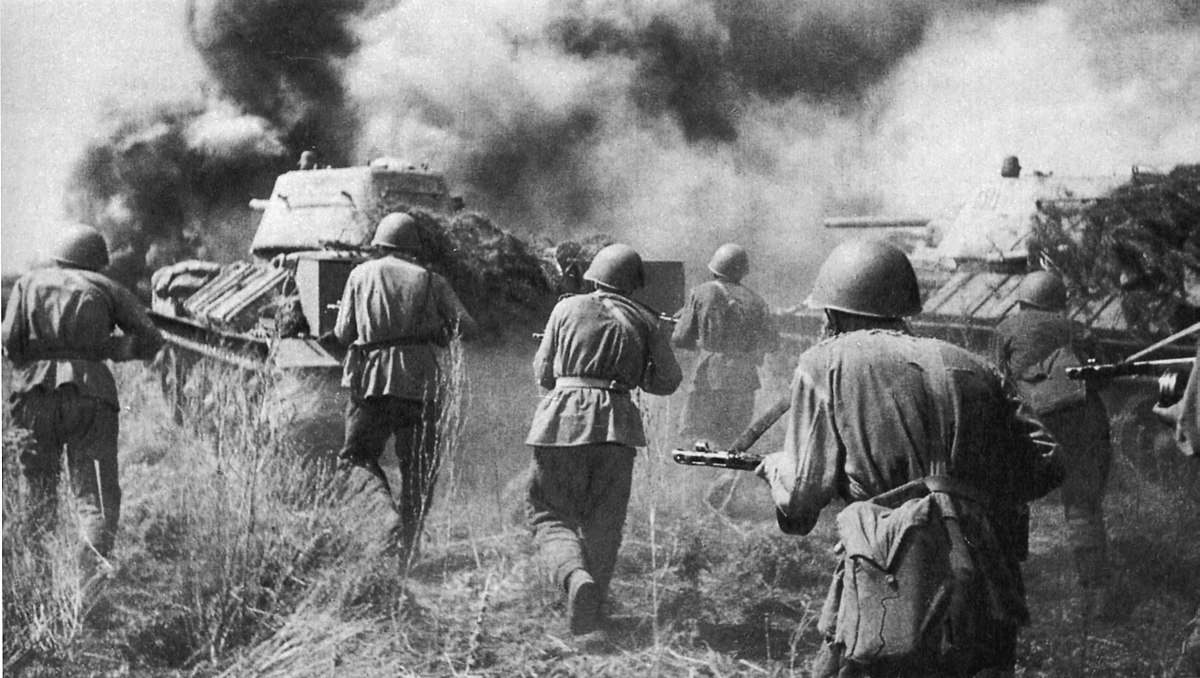
Red Army troops in a counter-offensive on German positions at the Battle of Kursk, July 1943
Red Army troops in a counter-offensive on German positions at the Battle of Kursk, July 1943
Allied Invasion of Sicily
Allied forces launched Operation Husky, the invasion of Sicily, opening the Italian campaign. The successful invasion led to Mussolini's fall from power and Italy's eventual surrender, though German resistance continued in Italy for nearly two more years.
Italy Surrenders
Italy signed an armistice with the Allies, effectively surrendering and switching sides in the war. However, German forces quickly occupied much of Italy and established defensive lines, leading to a prolonged and costly Italian campaign for the Allies.
1944 CE
Dumbarton Oaks Conference
The new international organization was formulated and negotiated amongst the delegations from the Allied Big Four at the Dumbarton Oaks Conference. They agreed on proposals for the aims, structure and functioning of the new organization that would become the United Nations.
D-Day Normandy Landings
Allied forces launched Operation Overlord, the largest amphibious invasion in history, landing on the beaches of Normandy, France. The successful establishment of a second front in Western Europe marked the beginning of the liberation of Nazi-occupied Western Europe.

American troops approaching Omaha Beach during the invasion of Normandy on D-Day, 6 June 1944
American troops approaching Omaha Beach during the invasion of Normandy on D-Day, 6 June 1944
Operation Bagration
The Soviet Union launched Operation Bagration, a massive offensive that destroyed German Army Group Center and liberated Belarus. The operation was one of the most successful Soviet offensives, advancing 450 miles in five weeks and opening the path to Poland and Germany.
Liberation of Paris
Allied forces liberated Paris from German occupation, with the French Resistance and Free French Forces playing key roles. The liberation of the French capital was a powerful symbol of Nazi Germany's declining fortunes and the success of the Allied advance in Western Europe.
Battle of Leyte Gulf
The largest naval battle in history took place in the Philippines as American forces returned to liberate the islands. The decisive Allied victory effectively ended the Japanese Navy as an offensive force and secured American control of the Pacific sea lanes.

General Douglas MacArthur returns to the Philippines during the Battle of Leyte, 20 October 1944
General Douglas MacArthur returns to the Philippines during the Battle of Leyte, 20 October 1944
Battle of the Bulge
Germany launched its last major offensive in the west, attempting to split Allied forces in the Ardennes. Despite initial success and creating a 'bulge' in Allied lines, the offensive failed to achieve its strategic objectives and depleted Germany's remaining reserves.
1945 CE
UN Conference on International Organization Opens
After months of planning, the UN Conference on International Organization opened in San Francisco. It was attended by 50 nations' governments and a number of non-governmental organizations, with the delegations of the Big Four chairing the plenary meetings.
UN Charter Signed
The Charter of the United Nations was signed by the representatives of the 50 countries after two months of drafting. This document established the legal foundation for the United Nations organization and its operations.
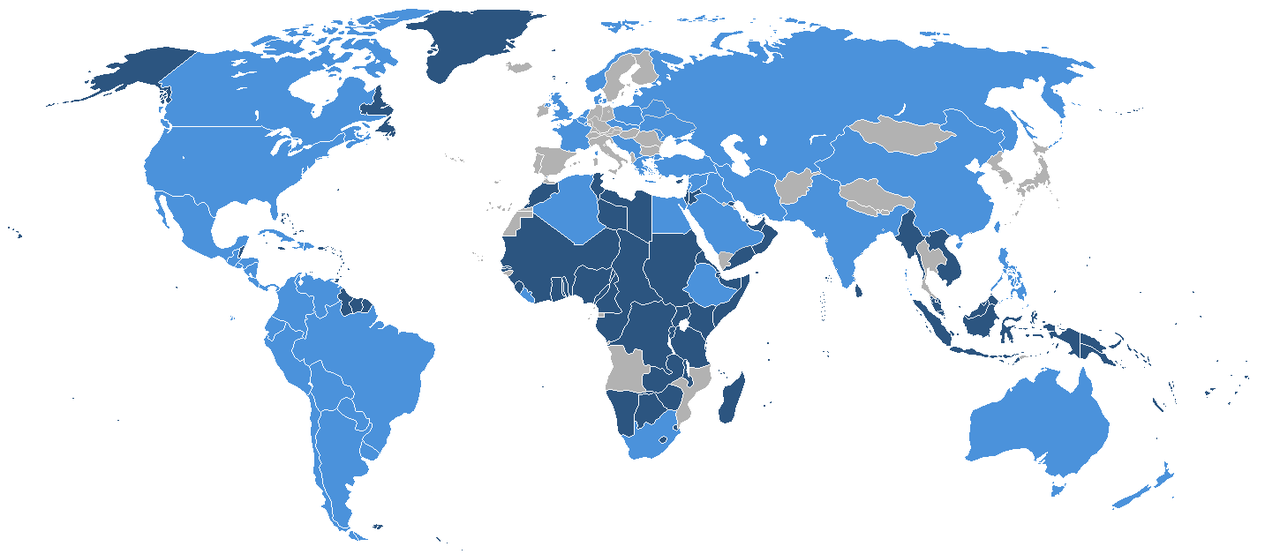
The UN in 1945: founding members in light blue, protectorates and territories of the founding members in dark blue
Map showing the founding members of the United Nations in 1945
United Nations Officially Established
The UN officially came into existence at 20:07 (UTC) upon ratification of the Charter by the five permanent members of the Security Council and by a majority of the other 46 nations. This marked the birth of the modern international organization system.
Yalta Conference
Roosevelt, Churchill, and Stalin met to discuss the post-war reorganization of Europe and the final phase of the war against Japan. The conference established occupation zones for Germany and secured Soviet agreement to enter the war against Japan within three months of Germany's defeat.

Yalta Conference held in February 1945, with Winston Churchill, Franklin D. Roosevelt, and Joseph Stalin
Yalta Conference held in February 1945, with Winston Churchill, Franklin D. Roosevelt, and Joseph Stalin
Death of Franklin D. Roosevelt
President Franklin D. Roosevelt died and was succeeded by Vice President Harry S. Truman. Roosevelt's death removed one of the key Allied leaders just months before the end of the war, and Truman would face crucial decisions about the use of atomic weapons and post-war relations with the Soviet Union.
Death of Adolf Hitler
Adolf Hitler committed suicide in his Berlin bunker as Soviet forces closed in on the Nazi capital. His death effectively ended Nazi resistance and paved the way for Germany's unconditional surrender, though fighting continued for several more days.
Germany Surrenders
Germany signed an unconditional surrender, officially ending the war in Europe. The surrender was signed in Berlin and took effect on May 8, 1945, which became known as Victory in Europe (VE) Day. The Nazi regime was completely defeated after nearly six years of war.
Atomic Bombing of Hiroshima
The United States dropped the first atomic bomb on Hiroshima, Japan, killing approximately 80,000 people instantly and many more from radiation effects. This marked the first use of nuclear weapons in warfare and demonstrated the devastating power of atomic technology.
Soviet Invasion of Manchuria
The Soviet Union declared war on Japan and launched a massive invasion of Japanese-held Manchuria, quickly defeating the Kwantung Army. This invasion, combined with the atomic bombings, convinced Japanese leaders that continued resistance was futile.
Atomic Bombing of Nagasaki
The United States dropped a second atomic bomb on Nagasaki, Japan, killing approximately 40,000 people instantly. The second bombing, combined with the Soviet invasion of Manchuria, finally convinced Emperor Hirohito to surrender unconditionally.
Japan Announces Surrender
Emperor Hirohito announced Japan's surrender in a radio broadcast to the Japanese people, citing the enemy's use of 'a new and most cruel bomb' and the Soviet entry into the war. This announcement effectively ended World War II, though the formal surrender ceremony would follow.
Japanese Formal Surrender
Japan formally surrendered aboard the USS Missouri in Tokyo Bay, officially ending World War II. The ceremony was attended by representatives of all Allied nations and marked the complete victory over the Axis powers after six years of global warfare.

Japanese foreign affairs minister Mamoru Shigemitsu signs the Japanese Instrument of Surrender on board , 2 September 1945
Japanese foreign affairs minister Mamoru Shigemitsu signs the Japanese Instrument of Surrender on board , 2 September 1945
1946 CE
First UN General Assembly and Security Council Meetings
The first meetings of the General Assembly, with 51 nations represented, and the Security Council took place in London. Debates began at once, covering topical issues such as the presence of Russian troops in Iranian Azerbaijan and British forces in Greece.
1947 CE
UN General Assembly Resolution 181 - Palestine Partition Plan
The General Assembly approved Resolution 181, a proposal to partition British Mandatory Palestine into two states, a Jewish state and an Arab state, with Jerusalem placed under international status. The plan passed 33–13 with 10 abstentions, leading to civil war.
1948 CE
Universal Declaration of Human Rights Adopted
The General Assembly adopted the Universal Declaration of Human Rights, drafted by a committee headed by American diplomat and activist Eleanor Roosevelt. The document proclaimed basic civil, political and economic rights common to all human beings.

Eleanor Roosevelt with the Universal Declaration of Human Rights, 1949
Eleanor Roosevelt holding the Universal Declaration of Human Rights
UN Headquarters Construction Begins
Construction began on the UN headquarters in New York City after the General Assembly selected the city as the site for the headquarters. The facility would be completed on October 9, 1952, establishing the permanent home of the United Nations.
1950 CE
Korean War Authorization
A Security Council resolution authorized a US-led coalition to repel the North Korean invasion of South Korea. This resolution was passed in the absence of the Soviet Union, demonstrating how Cold War tensions affected UN operations.
1952 CE
UN Headquarters Completed
The UN headquarters facility in New York City was completed, providing a permanent home for the organization's operations. The building became an iconic symbol of international cooperation and diplomacy.
1953 CE
Korean Armistice Agreement Signed
The Korean Armistice Agreement was signed, ending active hostilities in the Korean War. This demonstrated the UN's role in conflict resolution and peacekeeping, though the war technically never ended with a peace treaty.
1956 CE
First UN Peacekeeping Force Established
The first UN peacekeeping force was established to end the Suez Crisis. However, the UN was unable to intervene against the Soviet Union's simultaneous invasion of Hungary, highlighting the limitations of UN action during the Cold War.
1960 CE
UN Operation in the Congo Established
The UN established the United Nations Operation in the Congo (UNOC), the largest military force of its early decades, to bring order to Katanga and restore it to the control of the Democratic Republic of the Congo. The operation lasted until May 11, 1964.
1961 CE
Dag Hammarskjöld Dies in Plane Crash
UN Secretary-General Dag Hammarskjöld, often named as one of the UN's most effective secretaries-general, died in a plane crash while travelling to meet rebel leader Moise Tshombe during the Congo conflict. He was posthumously awarded the Nobel Peace Prize months later.

Dag Hammarskjöld was a particularly active secretary-general from 1953 until he died in 1961.
Portrait of Dag Hammarskjöld, the second UN Secretary-General
1971 CE
People's Republic of China Joins UN Security Council
With opposition from the United States but support from many Third World nations, the People's Republic of China was given the Chinese seat on the Security Council in place of the Republic of China (Taiwan). The vote was widely seen as a sign of waning American influence in the organization.
1975 CE
Zionism Declared Form of Racism
A bloc comprising the Soviet Union and Third World nations passed a resolution, over strenuous American and Israeli opposition, declaring Zionism to be a form of racism. The resolution was later repealed on December 16, 1991, shortly after the end of the Cold War.
1980 CE
Smallpox Eradication Announced
The World Health Organization announced that the eradication of smallpox had been completed, marking one of the UN's greatest public health achievements. This demonstrated the effectiveness of coordinated international health efforts.
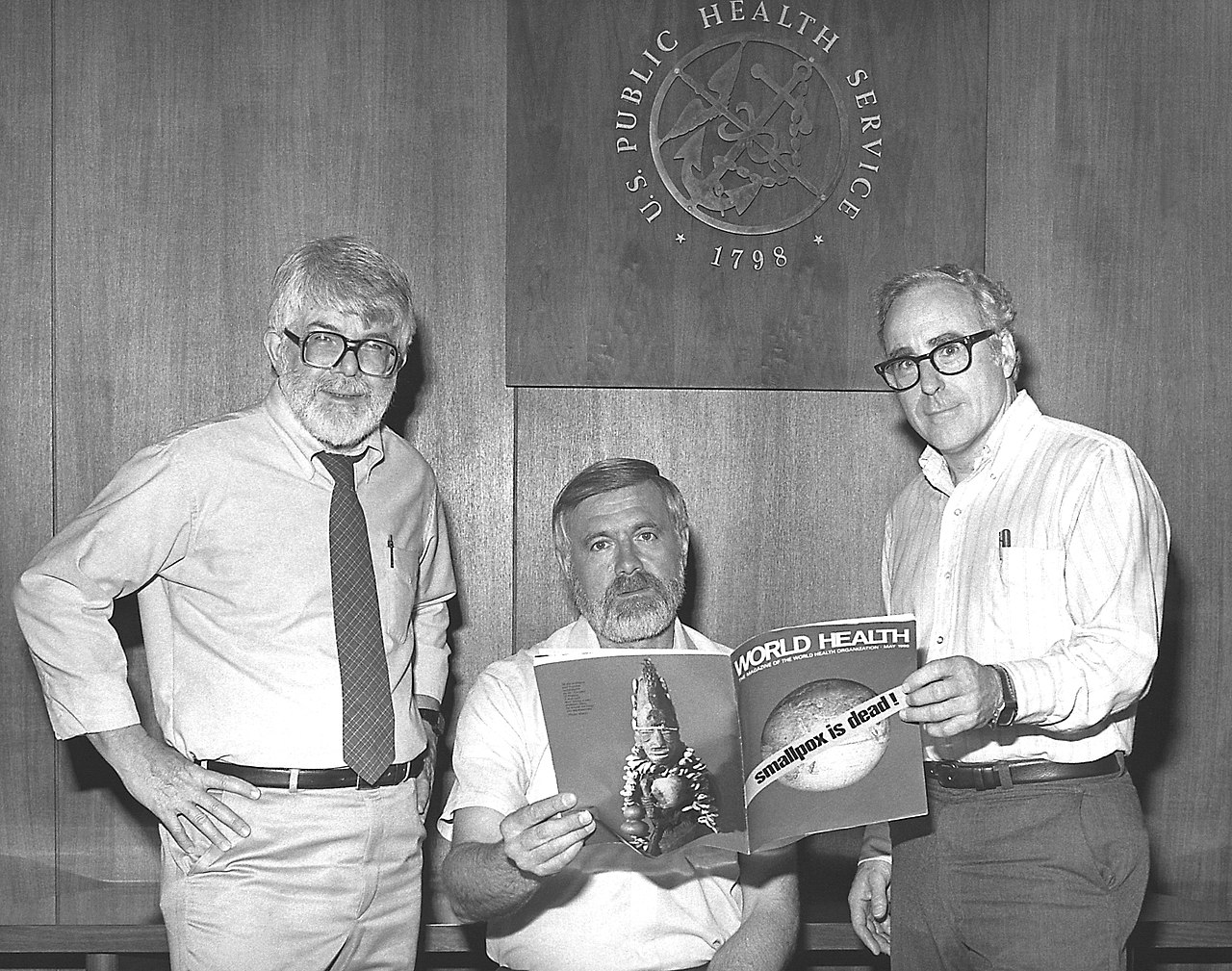
Three former directors of the Global Smallpox Eradication Programme reading the news that smallpox has been globally eradicated in 1980
Three directors celebrating the global eradication of smallpox
1991 CE
Gulf War Coalition Authorized
The UN authorized a US-led coalition that repulsed Iraq's invasion of Kuwait. This marked a significant post-Cold War use of UN authority to authorize military action against aggression.
Zionism-Racism Resolution Repealed
The controversial 1975 resolution declaring Zionism to be a form of racism was repealed, shortly after the end of the Cold War. This reflected changing geopolitical dynamics and improved relations between various UN member states.
1994 CE
Trusteeship Council Suspends Operations
The Trusteeship Council, one of the six principal organs established by the UN Charter, suspended its operations upon the independence of Palau, the last remaining UN trustee territory. This marked the end of the UN trusteeship system.
1999 CE
Kosovo Force Authorized
United Nations Security Council Resolution 1244 authorized the NATO-led Kosovo Force beginning in 1999. This represented a new form of international intervention in the post-Cold War era.
2000 CE
Millennium Summit and Development Goals
The Millennium Summit was held to discuss the UN's role in the 21st century. The three-day meeting was the largest gathering of world leaders in history, culminating in the adoption of the Millennium Development Goals (MDGs) by all member states.
2001 CE
UN and Kofi Annan Win Nobel Peace Prize
The UN as a whole was awarded the Nobel Peace Prize, sharing it with Secretary-General Kofi Annan. This recognition highlighted the organization's contributions to international peace and security.

The 2001 Nobel Peace Prize to the UN—diploma in the lobby of the UN Headquarters in New York City
Nobel Peace Prize diploma awarded to the United Nations in 2001
2010 CE
Haiti Earthquake Kills 101 UN Personnel
The organization suffered the worst loss of life in its history when 101 personnel died in the Haiti earthquake. This tragedy highlighted the risks faced by UN personnel in humanitarian operations.
2011 CE
South Sudan Joins UN
South Sudan joined the United Nations, becoming the most recent addition and bringing the total to 193 UN member states. This marked the end of a long process of independence and international recognition.
2015 CE
Sustainable Development Goals Launched
The Sustainable Development Goals (SDGs) were launched to succeed the Millennium Development Goals. These 17 goals represented a comprehensive agenda for global development and environmental sustainability through 2030.
2017 CE
António Guterres Becomes Secretary-General
Portuguese diplomat António Guterres, who had previously served as the UN High Commissioner for Refugees, became the ninth secretary-general. He emphasized diplomacy for preventing conflicts, more effective peacekeeping efforts, and streamlining the organization.

António Guterres, the current secretary-general
Portrait of António Guterres, the ninth UN Secretary-General
2019 CE
UN-World Economic Forum Partnership
The UN signed a Strategic Partnership Framework with the World Economic Forum to 'jointly accelerate' the implementation of the 2030 Agenda for Sustainable Development. This partnership aimed to leverage private sector engagement in global development goals.
2025 CE
UN Financial Crisis Deepens
The UN began facing a severe financial crisis resulting from delays in member state due payments and refusal to pay assessed amounts. Only 61 countries paid their dues on time and in full, causing massive budget cuts and putting millions of lives at risk.
2026 CE
Guterres Warns of 'Imminent Financial Collapse'
Secretary-General Guterres sent a letter to all members warning of an 'imminent financial collapse' of the UN. This represented the culmination of ongoing financial difficulties that had been building since 2020.