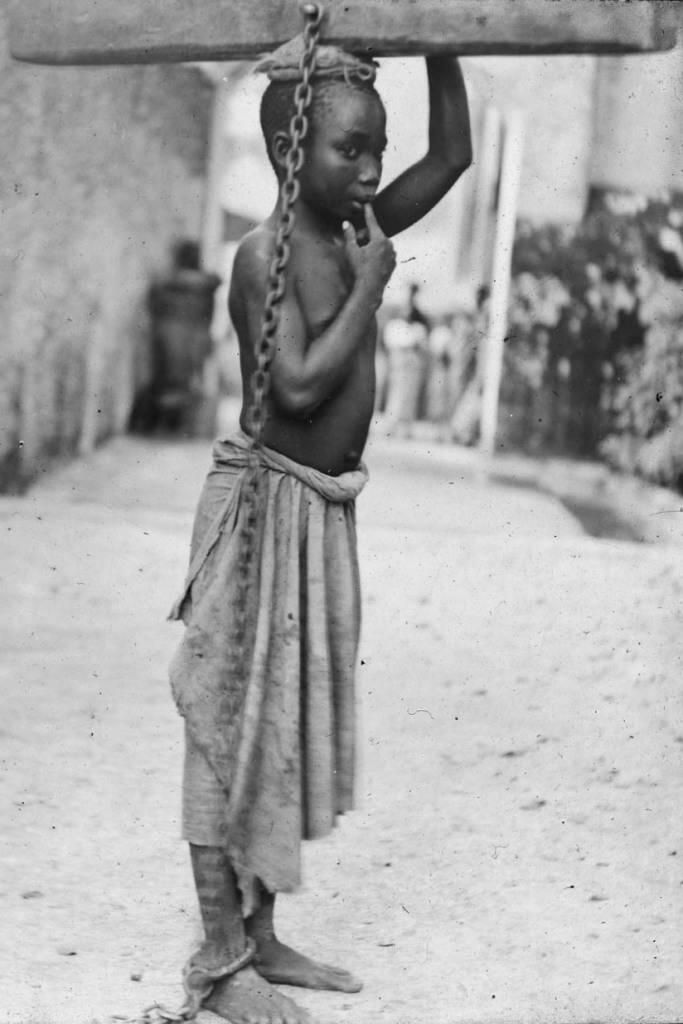
Photograph of a slave boy in the Sultanate of Zanzibar
This powerful photograph from circa 1890 represents the abolitionist movement's use of visual evidence to expose the brutality of slavery and galvanize public opinion against the institution.
Abolitionism
This timeline chronicles the global abolitionist movement from medieval times through the modern era, documenting the legal, political, and social efforts to end slavery and human trafficking worldwide.
Source: Wikipedia1315 CE - 1350 CE
France Outlaws Slavery in Metropolitan Territory
Louis X, king of France, published a decree proclaiming that 'France signifies freedom' and that any slave setting foot on French soil should be freed. This was the first country to fully outlaw slavery, though it was later used in French colonies. The decree established the principle that French soil was incompatible with slavery.
1531 CE - 1566 CE
Spain Enacts New Laws Abolishing Indigenous Slavery
Spain passed the New Laws in 1542, which abolished native slavery for the first time in European colonial history. This legislation was influenced by Bartolomé de las Casas' advocacy for indigenous rights and his book 'A Short Account of the Destruction of the Indies'. The laws represented the first systematic attempt to protect indigenous peoples from enslavement.
1567 CE - 1602 CE
English Court Rules Against Slavery Recognition
An English court considered the case of Cartwright, who had bought a slave from Russia, and ruled that English law could not recognize slavery as it was never established officially. This early legal precedent challenged the legitimacy of slavery under English common law, though it was later overshadowed by subsequent developments.
Japan Abolishes Chattel Slavery
Under the actions of Toyotomi Hideyoshi, chattel slavery was abolished across Japan. This made Japan one of the earliest countries to systematically eliminate slavery, though other forms of forced labor continued to be used, particularly during World War II. The abolition represented a significant shift in Japanese social policy.
1675 CE - 1710 CE
Lord Chief Justice Holt Upholds Anti-Slavery Ruling
Lord Chief Justice John Holt ruled that a slave became free as soon as he arrived in England, upholding the earlier 1569 precedent. This decision reinforced the principle that English common law did not recognize slavery, setting important legal groundwork for future abolitionist arguments in British courts.
1747 CE - 1782 CE
First Scottish Freedom Suit Filed
The case of Montgomery v. Sheddan took place in Scotland, representing one of the first freedom suits in the British Isles to challenge the legality of slavery. The slave had been baptized in Scotland and challenged his enslavement, setting important legal precedents for future cases, though the case ended before a court decision due to the plaintiff's death.
Second Scottish Freedom Suit
The case of Spens v. Dalrymple was heard in Scotland, continuing the legal challenges to slavery in Scottish courts. Like the previous case, the enslaved person had been baptized in Scotland and challenged the legality of their bondage. These cases established important legal procedures that would later lead to successful outcomes for plaintiffs in similar situations.
Somerset's Case Establishes Anti-Slavery Precedent
Lord Mansfield delivered his landmark judgment in Somerset's Case, declaring that slavery had no basis in English common law. The case involved James Somerset, a fugitive slave whose master attempted to ship him to Jamaica. Mansfield's decision was widely interpreted as prohibiting slavery in England, though it did not apply to British overseas territories.

Lord Mansfield (1705–1793)
Lord Mansfield, whose opinion in Somerset's Case (1772) was widely taken to have held that there was no basis in law for slavery in England
Vermont Abolishes Adult Slavery
Vermont became the first state in what would become the United States to abolish adult slavery through its constitution. As an independent republic from 1777 to 1791, Vermont's action preceded its joining the Union and represented the first systematic abolition of slavery in North America by a political entity.
Knight v. Wedderburn Extends Anti-Slavery Law to Scotland
The Court of Session of Scotland ruled in Knight v. Wedderburn that chattel slavery was not recognized under Scottish law. Joseph Knight, an enslaved African brought from Jamaica, successfully argued for his freedom. The court declared that slaves could seek court protection to leave a master or avoid being forcibly removed from Scotland.
Pennsylvania Passes Gradual Emancipation Act
Pennsylvania became the first U.S. state to pass legislation for the gradual abolition of slavery. The act provided that no new slaves could be imported and that children born to enslaved mothers would eventually be freed, though existing slaves remained in bondage. This pioneering legislation served as a model for other northern states.
1783 CE - 1818 CE
Society for Effecting the Abolition of the Slave Trade Founded
The Society for Effecting the Abolition of the Slave Trade was formed in London, marking the beginning of organized British abolitionist activism. This society would become instrumental in the parliamentary campaign against the slave trade, with members like William Wilberforce and Thomas Clarkson leading the movement.
Society of the Friends of the Blacks Established
Jacques Pierre Brissot founded the Society of the Friends of the Blacks (Société des Amis des Noirs) in Paris to work for the abolition of slavery. This organization played a crucial role in building anti-slavery sentiment in France and would influence the revolutionary government's decision to abolish slavery in 1794.

Jacques Pierre Brissot (1754–1793)
Jacques Pierre Brissot, who organized the Society of the Friends of the Blacks in 1788
Haitian Revolution Begins
The slave revolt in Saint-Domingue began, marking the start of what would become the Haitian Revolution. Led by formerly enslaved people like Georges Biassou, Toussaint L'Ouverture, and Jean-Jacques Dessalines, this revolution would ultimately lead to Haiti becoming the first nation to achieve independence through a successful slave revolt.
Denmark Decrees End to Transatlantic Slave Trade
Denmark became the first country to issue a decree to abolish their transatlantic slave trade, effective from the start of 1803. While this was a significant step, Denmark would not abolish slavery in the Danish West Indies until 1848. The decree represented the first national commitment to ending participation in the Atlantic slave trade.
France Grants Citizenship to Free People of Color
Following the French Revolution, France granted free people of color full citizenship on April 4, 1792. This significant step toward racial equality preceded the complete abolition of slavery and represented a major advancement in civil rights for people of African descent in French territories.
Upper Canada Passes Act Against Slavery
Upper Canada passed the Act Against Slavery under Lieutenant Governor John Graves Simcoe, becoming the first legislation against slavery in the British Empire. The act prohibited the importation of new slaves and provided for the gradual emancipation of existing slaves, with children of enslaved mothers to be freed at age 25.
First Modern Emancipation Proclamation Issued
French Civil Commissioners Léger-Félicité Sonthonax and Étienne Polverel issued the first emancipation proclamation of the modern world (Decree of 16 Pluviôse An II) in Saint-Domingue. This proclamation was a crucial military strategy that brought most black troops into the French fold during the Haitian Revolution.
France Abolishes Slavery in All Territories
The French National Convention, under the leadership of Maximilien Robespierre, abolished slavery in law in France and its colonies on February 4, 1794. This was the first general abolition of slavery by a major European power, though Napoleon would later restore it in 1802. The law provided for compensation to slave owners.
Colonel Delgrès Leads Guadeloupe Rebellion
Colonel Delgrès launched a rebellion in Guadeloupe against Napoleon's representative, General Richepanse, in response to the re-establishment of slavery. The rebellion was ultimately repressed, and slavery was re-established in the colony. This resistance demonstrated the fierce opposition to the restoration of bondage.
Napoleon Re-establishes Slavery in French Colonies
Napoleon Bonaparte promulgated the law of May 20, 1802, re-establishing slavery in French colonies after becoming First Consul. This decision was influenced by pressure from planters, concerns about colonial revenues, and his wife's slaveholder family connections. Military governors and troops were sent to enforce the restoration of slavery.
Haiti Declares Independence and Abolishes Slavery
Haiti formally declared independence from France, becoming the first nation in the Western Hemisphere to permanently eliminate slavery in the modern era following the successful Haitian Revolution. This achievement made Haiti the first and only country to self-liberate from slavery through revolution, establishing a precedent for anti-colonial movements worldwide.
All Northern U.S. States Abolish Slavery
By 1804, all northern states in the United States had passed legislation abolishing slavery, though this did not immediately free all enslaved people. Some had to continue working as indentured servants for up to two more decades, and the process of gradual emancipation varied by state. This created a clear geographical division between free and slave states.
British Parliament Passes Slave Trade Act
The British Parliament passed the Slave Trade Act on March 25, 1807, making the slave trade illegal throughout the British Empire. While this did not immediately free existing slaves, it marked a crucial step toward complete abolition and established Britain as a leader in the international campaign against the slave trade.
United States Outlaws Slave Importation
The United States outlawed the importation of slaves, joining the international movement to end the Atlantic slave trade. However, this law did not affect the domestic slave trade or free existing slaves, and slavery continued to expand westward. The law represented a compromise between anti-slavery and pro-slavery factions.
Chile Declares Freedom of Wombs
Chile declared freedom of wombs, meaning that children born to enslaved mothers would be free. This represented an early step toward gradual emancipation in Latin America during the wars of independence. The policy was part of broader liberal reforms implemented by the new republican government.
United Provinces of River Plate Enacts Freedom of Wombs
The United Provinces of the River Plate (modern-day Argentina) followed Chile's example by declaring freedom of wombs in 1813. This policy ensured that children born to enslaved mothers would be free, representing a significant step toward gradual emancipation in the region during the independence period.
1819 CE - 1854 CE
Colombia and Venezuela Declare Freedom of Wombs
Colombia and Venezuela implemented freedom of womb laws, continuing the pattern of gradual emancipation across newly independent Latin American republics. These laws were part of the broader liberal agenda of the independence movements, though complete abolition would take several more decades to achieve.
Chile Completely Abolishes Slavery
Chile became one of the first Latin American countries to completely abolish slavery, moving beyond the gradual emancipation policies of the previous decade. This decisive action reflected the influence of liberal ideology and the practical needs of building a new republican society based on principles of equality.
First Anti-Slavery Society Founded in Britain
The Society for the Mitigation and Gradual Abolition of Slavery Throughout the British Dominions was founded, marking the revival of the abolitionist movement to campaign against the institution of slavery itself, not just the slave trade. Many members had previously campaigned against the slave trade and now focused on complete emancipation.
France Recognizes Haiti and Imposes Indemnity
France finally recognized Haiti's independence but forced the nation to pay substantial reparations for losses during the revolution. This indemnity, which Haiti could ill afford, became a major cause of the country's enduring poverty and was not fully paid off until 1947. The recognition came with a heavy economic price.
Slavery Abolition Act Passed in Britain
The British Parliament passed the Slavery Abolition Act on August 28, 1833, which purchased slaves from their masters and paved the way for the abolition of slavery throughout the British Empire by 1838. This landmark legislation represented the culmination of decades of abolitionist campaigning and established Britain as a global leader in emancipation.
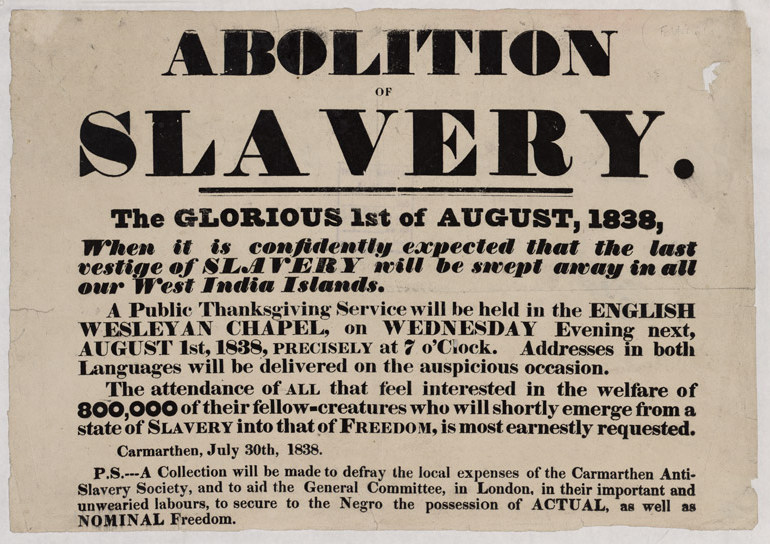
A poster advertising a special chapel service to celebrate the Abolition of Slavery in 1838
Commemorative poster celebrating the implementation of the Slavery Abolition Act
Elijah Parish Lovejoy Murdered by Pro-Slavery Mob
Abolitionist newspaper editor Elijah Parish Lovejoy was murdered by a pro-slavery mob in Alton, Illinois, on November 7, 1837. His death was covered in newspapers nationwide and caused a significant rise in membership in abolitionist societies. Lovejoy became a martyr for the anti-slavery cause and galvanized Northern opposition to slavery.
British and Foreign Anti-Slavery Society Founded
Joseph Sturge founded the British and Foreign Anti-Slavery Society, which attempted to outlaw slavery worldwide and pressure the government to help enforce the suppression of the slave trade. This organization, which continues today as Anti-Slavery International, became the world's oldest international human rights organization.
World Anti-Slavery Convention Held in London
The British and Foreign Anti-Slavery Society organized the World Anti-Slavery Convention at Exeter Hall in London from June 12-23, 1840. This was the first international attempt to address the abolition of slavery, bringing together delegates from around the world. Thomas Clarkson was the key speaker at this historic gathering.

The 1840 Anti-Slavery Convention at Exeter Hall
Historic painting depicting the first international anti-slavery convention
Wallachia and Moldavia Begin Roma Emancipation
The principalities of Wallachia and Moldavia began the process of emancipating all 250,000 enslaved Roma people between 1843 and 1855. This progressive pro-European and anti-Ottoman movement worked systematically to abolish the legal slavery of the Roma population, representing a significant human rights achievement in Eastern Europe.
Denmark Abolishes Slavery in West Indies
Denmark finally abolished slavery in the Danish West Indies in 1848, completing the process that began with the 1792 decree to end the slave trade. This action eliminated one of the last remaining European slave systems in the Caribbean and demonstrated the continuing international pressure for complete emancipation.
France Permanently Abolishes Slavery
Under the Second Republic, France permanently abolished slavery in its remaining colonies on April 27, 1848, through a decree-law written by Victor Schœlcher. The state purchased the slaves from the colonists and then freed them, ensuring that this abolition would be permanent and comprehensive across all French territories.

Proclamation of the Abolition of Slavery in the French Colonies, 27 April 1848, by Biard (1849)
Artistic depiction of the permanent abolition of slavery in French colonies
Colombia Abolishes Slavery
Colombia completely abolished slavery in 1851, moving beyond the gradual emancipation policies implemented during the independence period. This decisive action reflected the growing influence of liberal ideology and international pressure for complete emancipation throughout Latin America.
Argentina Abolishes Slavery
Argentina abolished slavery with the signing of the Argentine Constitution of 1853, completing the gradual emancipation process that began during the independence period. This constitutional provision ensured that slavery would be permanently prohibited throughout the Argentine Republic.
Peru Abolishes Slavery
Peru abolished slavery in 1854, joining the growing number of Latin American republics that had eliminated the institution. This action was part of the broader liberal reforms sweeping across the region and reflected the influence of international abolitionist movements on Latin American politics.
Venezuela Abolishes Slavery
José Gregorio Monagas abolished slavery in Venezuela in 1854, completing the emancipation process that began with freedom of womb laws in 1821. This action eliminated one of the last remaining slave systems in northern South America and demonstrated the continuing influence of liberal ideology in the region.

José Gregorio Monagas abolished slavery in Venezuela in 1854
Historical depiction of the abolition of slavery in Venezuela
1855 CE - 1890 CE
Wallachia and Moldavia Complete Roma Emancipation
The principalities of Wallachia and Moldavia completed the emancipation of all 250,000 enslaved Roma people by 1855. This systematic process, which began in 1843, represented one of the most comprehensive ethnic emancipation programs in European history and eliminated a centuries-old system of Roma bondage.
Russia Emancipates the Serfs
Russia emancipated its serfs in 1861, ending centuries of feudal bondage for millions of peasants. This major social reform was implemented by Tsar Alexander II and represented one of the largest emancipation programs in history, though it failed to fully address rural and industrial unrest that would contribute to future revolutions.
District of Columbia Compensated Emancipation Act
Abraham Lincoln signed the District of Columbia Compensated Emancipation Act on April 16, 1862, abolishing slavery in Washington D.C. This act provided compensation to slave owners and represented the first federal legislation to free slaves in the United States, setting a precedent for broader emancipation measures.
Second Confiscation Act Frees Rebel-Owned Slaves
Congress passed the second Confiscation Act on July 17, 1862, stating that escaped or liberated slaves belonging to anyone who participated in or supported the rebellion 'shall be deemed captives of war, and shall be forever free of their servitude.' This act significantly expanded the scope of emancipation during the Civil War.
Lincoln Issues Emancipation Proclamation
Abraham Lincoln issued the Emancipation Proclamation on January 1, 1863, changing the legal status of 3 million slaves in the Confederacy from 'slave' to 'free.' Though limited in scope, this executive order transformed the Civil War into a war for freedom and allowed freed slaves to join the Union army.
Maryland Abolishes Slavery
The state of Maryland abolished slavery on October 13, 1864, as part of the broader emancipation process during the American Civil War. Maryland was one of the border states that remained in the Union but maintained slavery until state-level abolition measures were implemented.
Missouri Abolishes Slavery
Missouri abolished slavery on January 11, 1865, eliminating bondage in another border state that had remained in the Union during the Civil War. This action preceded the ratification of the 13th Amendment and demonstrated the momentum toward complete emancipation throughout the United States.
West Virginia Fully Abolishes Slavery
West Virginia, which had been admitted to the Union in 1863 as a slave state with the condition of gradual emancipation, fully abolished slavery on February 3, 1865. This action completed the emancipation process in the state and eliminated slavery in another border region.
Juneteenth - Union Army Liberates Texas Slaves
On June 19, 1865, known as 'Juneteenth,' the Union Army gained control of Texas and liberated the last enslaved people in the Confederacy. This date became a symbol of emancipation and is now celebrated as a federal holiday commemorating the end of slavery in the United States.
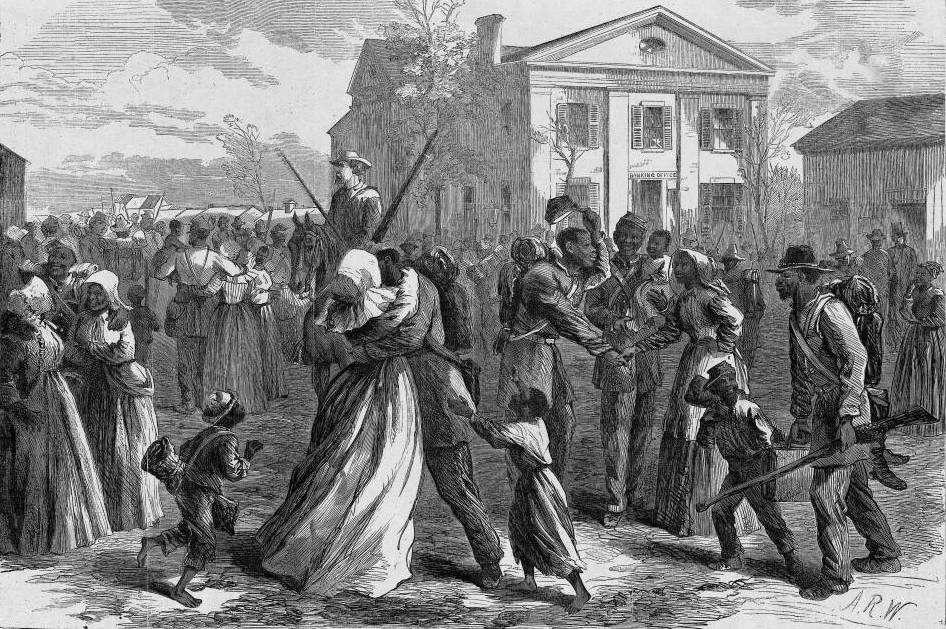
United States Union black volunteer soldiers muster out to their first freedom at Little Rock, Arkansas, Harper's Weekly, 1866
Illustration showing freed slaves and Union soldiers celebrating emancipation
13th Amendment Ratified
The 13th Amendment to the U.S. Constitution took effect in December 1865, finally ending slavery for non-criminals throughout the United States. The amendment also abolished slavery among Indian tribes and represented the constitutional culmination of the American abolitionist movement, though it included an exception for punishment of crime.
Puerto Rico Abolishes Slavery
Puerto Rico abolished slavery in 1873, eliminating bondage in one of the last Spanish Caribbean colonies to maintain the institution. This action was part of Spain's gradual retreat from slavery in its remaining colonial territories and reflected growing international pressure for complete emancipation.
Cuba Abolishes Slavery
Cuba abolished slavery in 1886, eliminating bondage in one of the last major slave societies in the Americas. The abolition came after years of gradual emancipation policies and represented the end of Spanish colonial slavery in the Caribbean, leaving only Brazil as the final holdout in the Western Hemisphere.
Brazil Abolishes Slavery - Last in the Americas
Brazil abolished slavery in 1888 with the Lei Áurea (Golden Law), becoming the last country in the Americas to outlaw the institution. This action eliminated the largest slave system in the Western Hemisphere and marked the complete end of legal slavery in the Americas, concluding nearly four centuries of Atlantic slavery.

Punishing slaves at Calabouço, in Rio de Janeiro
Historical illustration showing the harsh conditions of slavery in Brazil before abolition
Brussels Conference Act Addresses Global Slavery
The Brussels Anti-Slavery Conference concluded with the Brussels Conference Act of 1890, representing the first major international governmental effort to address slavery on a semi-global level. The conference brought together representatives of colonial powers to coordinate anti-slavery efforts and establish international protocols.
1891 CE - 1926 CE
France Abolishes Slavery in West Africa
France abolished slavery in most of French West Africa in 1905, though the abolition was not strictly enforced and some territories continued practicing slavery until later dates. This action was part of France's broader colonial policy but faced practical challenges in implementation across diverse African societies.
League of Nations Establishes Temporary Slavery Commission
The League of Nations founded the Temporary Slavery Commission (TSC) in 1924 to conduct a global investigation of slavery and slave trade worldwide. This commission represented the first systematic international effort to document and address slavery on a global scale, leading to important international treaties.
1926 Slavery Convention Adopted
The 1926 Slavery Convention was adopted based on the investigation of the Temporary Slavery Commission, representing a turning point in banning global slavery. This international treaty established legal frameworks for combating slavery worldwide and created binding obligations for signatory nations to eliminate the institution.
1927 CE - 1962 CE
League Forms Committee of Experts on Slavery
The League of Nations formed the Committee of Experts on Slavery (CES) in 1932 to review the results and enforcement of the 1926 Slavery Convention. This committee conducted new international investigations and led to the establishment of the first permanent slavery committee, demonstrating continued international commitment to abolition.
Advisory Committee of Experts on Slavery Established
The Advisory Committee of Experts on Slavery (ACE) was established in 1934 as the first permanent international slavery committee. Between 1934 and 1939, the ACE conducted major international investigations on slavery and slave trade, inspecting all colonial empires and territories under their control.
UN Universal Declaration Bans Slavery
Article 4 of the Universal Declaration of Human Rights, adopted in 1948 by the UN General Assembly, explicitly banned slavery worldwide. This declaration established slavery prohibition as a fundamental human right and created the moral and legal foundation for modern anti-slavery efforts.
UN Ad Hoc Committee on Slavery Inaugurated
The Ad Hoc Committee on Slavery of the United Nations was inaugurated in February 1950, continuing the investigation of global slavery conducted by the League of Nations. This committee worked to develop new international instruments to combat slavery and ultimately led to the 1956 Supplementary Convention.
UN Supplementary Convention on Abolition of Slavery
The United Nations 1956 Supplementary Convention on the Abolition of Slavery was convened to outlaw and ban slavery worldwide, including child slavery. This comprehensive treaty expanded the definition of slavery and created stronger international mechanisms for enforcement and cooperation in anti-slavery efforts.
Saudi Arabia and Yemen Abolish Slavery
In November 1962, Faisal of Saudi Arabia prohibited the owning of slaves, followed by the abolition of slavery in Yemen in 1962. These actions eliminated some of the last legal slave systems in the world and marked the end of institutional chattel slavery in most of the Arabian Peninsula.
1963 CE - 1998 CE
Dubai Abolishes Slavery
Dubai abolished slavery in 1963, continuing the process of eliminating the last legal slave systems in the Arabian Peninsula. This action was part of the broader modernization efforts in the Gulf region and international pressure to end all forms of legal bondage.
International Covenant on Civil and Political Rights
The UN General Assembly adopted the International Covenant on Civil and Political Rights in December 1966, with Article 4 banning slavery. The treaty came into force in March 1976 after ratification by 35 nations and created binding legal obligations for states to prohibit slavery and ensure civil rights.
Oman Abolishes Slavery
Oman abolished slavery in 1970, becoming one of the last countries in the world to legally end the institution. This action eliminated one of the final remaining legal slave systems and marked the near-complete global abolition of institutional chattel slavery, with only a few countries remaining.
Mauritania Officially Abolishes Slavery
Mauritania became the latest country to officially abolish slavery with a presidential decree in 1981, making it the last country in the world to legally prohibit the institution. However, slavery continues to persist illegally in Mauritania, with estimates suggesting that up to 20% of the population remains enslaved.
1999 CE - 2018 CE
United States Passes Trafficking Victims Protection Act
The United States passed the Victims of Trafficking and Violence Protection Act (TVPA) in 2000 'to combat trafficking in persons, especially into the sex trade, slavery, and involuntary servitude.' The TVPA created new law enforcement tools and made human trafficking a federal crime with severe penalties.
France Recognizes Slavery as Crime Against Humanity
The Taubira law, passed on May 10, 2001, officially acknowledged slavery and the Atlantic slave trade as a crime against humanity in France. May 10 was chosen as the day dedicated to recognition of the crime of slavery, establishing an annual commemoration and formal acknowledgment of historical injustices.
UN Declares International Year Against Slavery
The United Nations General Assembly declared 2004 the International Year to Commemorate the Struggle against Slavery and its Abolition, marking the bicentenary of Haiti's independence. This proclamation led to numerous exhibitions, events, and research programs worldwide to commemorate abolitionist movements.
Religious Leaders Unite Against Modern Slavery
For the first time in history, major Anglican, Catholic, and Orthodox Christian leaders, as well as Jewish, Muslim, Hindu, and Buddhist leaders, met in 2014 to sign a shared commitment against modern-day slavery. Their declaration called for the elimination of slavery and human trafficking by 2020.
Colorado Removes Prison Labor Exception
In 2018, Colorado became the first state to remove language in its state constitution allowing slavery 'as punishment for crime' through a legislatively referred ballot referendum. This action began a movement to eliminate the 13th Amendment's exception for prison labor from state constitutions across the United States.

Map of states where slave prison labor is permitted in the state constitution as of November 2022
Map showing the ongoing legal framework for prison labor in various U.S. states