
File:Parthenon (30276156187).jpg
The Parthenon represents the pinnacle of Classical Greek civilization and serves as the most iconic symbol of Ancient Greece's cultural and architectural achievement.
Ancient Greece
This timeline covers the history of Ancient Greece from the Greek Dark Ages through the Hellenistic period and into Roman Greece, spanning roughly the 12th century BC to the 6th century AD. It encompasses major political, military, cultural, and scientific developments of one of the most influential civilizations in Western history.
Source: Wikipedia12th Century BCE
Greek Dark Ages Begin
Following the Bronze Age collapse, Mycenaean Greece declined and the Greek Dark Ages began, lasting from approximately the 12th to 9th centuries BC. This period was archaeologically characterized by protogeometric and geometric styles of designs on pottery. The collapse of Mycenaean power left a power vacuum that would eventually give rise to the independent city-states of the Archaic period.
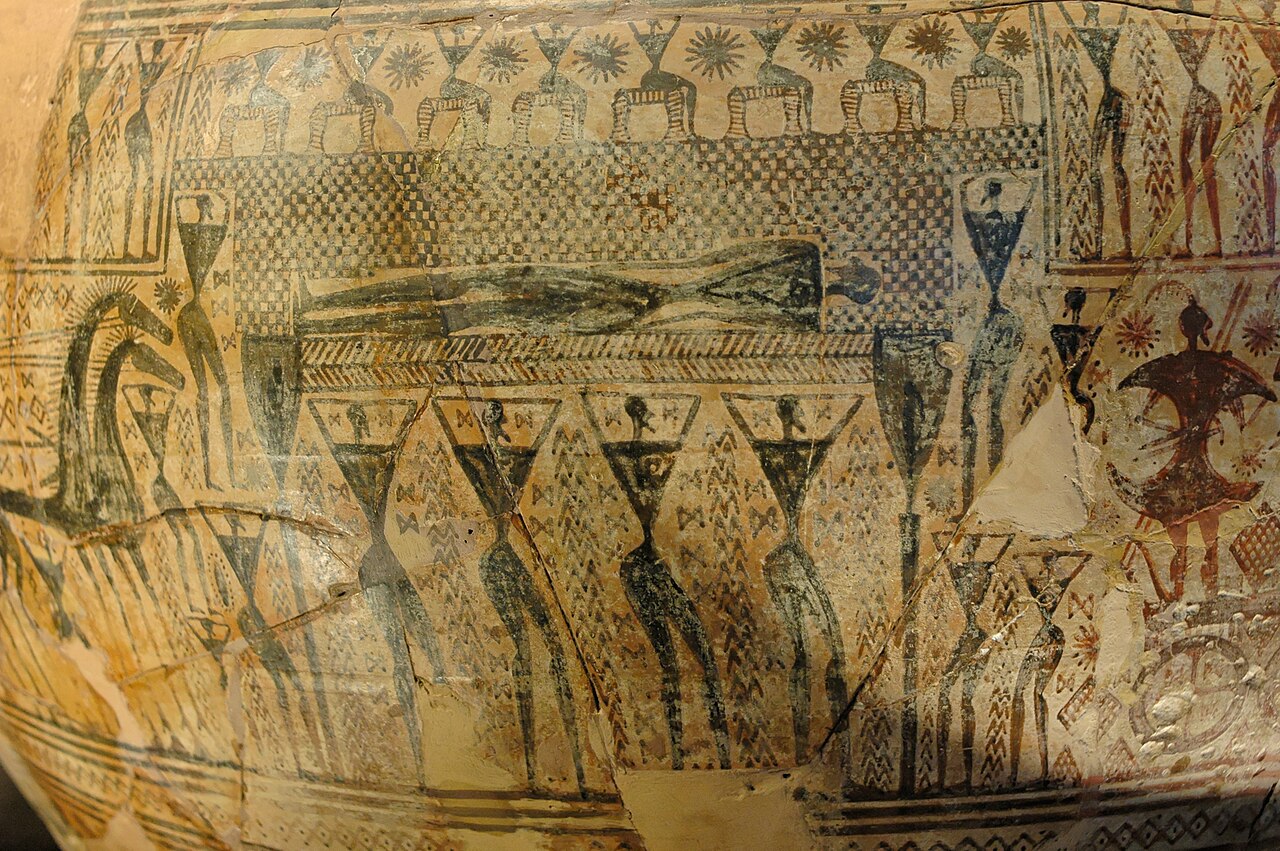
File:Prothesis Dipylon Painter A517.jpg
Dipylon Vase of the late Geometric period, representing the artistic style of the Dark Ages transitioning into the Archaic period.
8th Century BCE
Euboean Settlement at Al-Mina
Greek colonists from Euboea established settlements at Al-Mina in the east as early as 800 BC, marking some of the earliest Greek colonial activity. This contact with non-Greek peoples, especially in the Near East, inspired developments in art and architecture, the adoption of coinage, and the development of the Greek alphabet. These early colonies were important trading posts that facilitated cultural exchange.

File:Greek Colonies in the 8th-6th centuries BC.png
Map of ancient Greek colonies in the archaic period, showing the extent of Greek colonization including settlements in the east.
Archaic Period Begins
The Archaic period of ancient Greece began around 800 BC, following the Greek Dark Ages. This era saw the culmination of political and social developments, with the polis (city-state) becoming the most important unit of political organisation in Greece. The period was marked by the founding of Greek colonies around the Mediterranean and increasing contact with non-Greek peoples.
File:Prothesis Dipylon Painter A517.jpg
Dipylon Vase of the late Geometric period, representing the transition into the Archaic period of ancient Greece.
Euboean Settlement at Ischia
Greek colonists from Euboea established a settlement at Ischia in the west by 775 BC, one of the earliest Greek colonies in the western Mediterranean. This was part of a broader wave of Greek colonization that spread Greek culture and influence throughout the Mediterranean basin. These western colonies would eventually develop into important city-states in their own right.
File:Greek Colonies in the 8th-6th centuries BC.png
Map showing ancient Greek colonies in the archaic period, including western settlements.
7th Century BCE
Tyranny Established at Corinth
Corinth became one of the most famous examples of tyranny in the Greek world when tyrants rose to power there from 657 BC. This was part of a broader pattern across the Greek world during the Archaic period, where tyrants seized control of city-states, often with populist agendas. The rise of tyrants was frequently a response to social unrest caused by the domination of politics by small groups of aristocratic families.
Failed Coup by Cylon of Athens
Around 636 BC, Cylon of Athens led a failed coup attempt to seize power in Athens. In the aftermath, Draco was appointed to establish a code of laws in 621 BC to address the political tensions that had made such a coup possible. Draco's laws were famously harsh, giving rise to the modern term 'draconian,' but they failed to reduce the political tension between the poor and the elites.
Draco Establishes Code of Laws in Athens
In 621 BC, Draco was appointed to establish a code of laws in Athens following the failed coup by Cylon. This was one of the earliest written legal codes in Athens, and while it established the right of all citizen men to attend the assembly, it was famously harsh. The laws failed to reduce political tension between the poor and the elites, eventually necessitating further reforms.
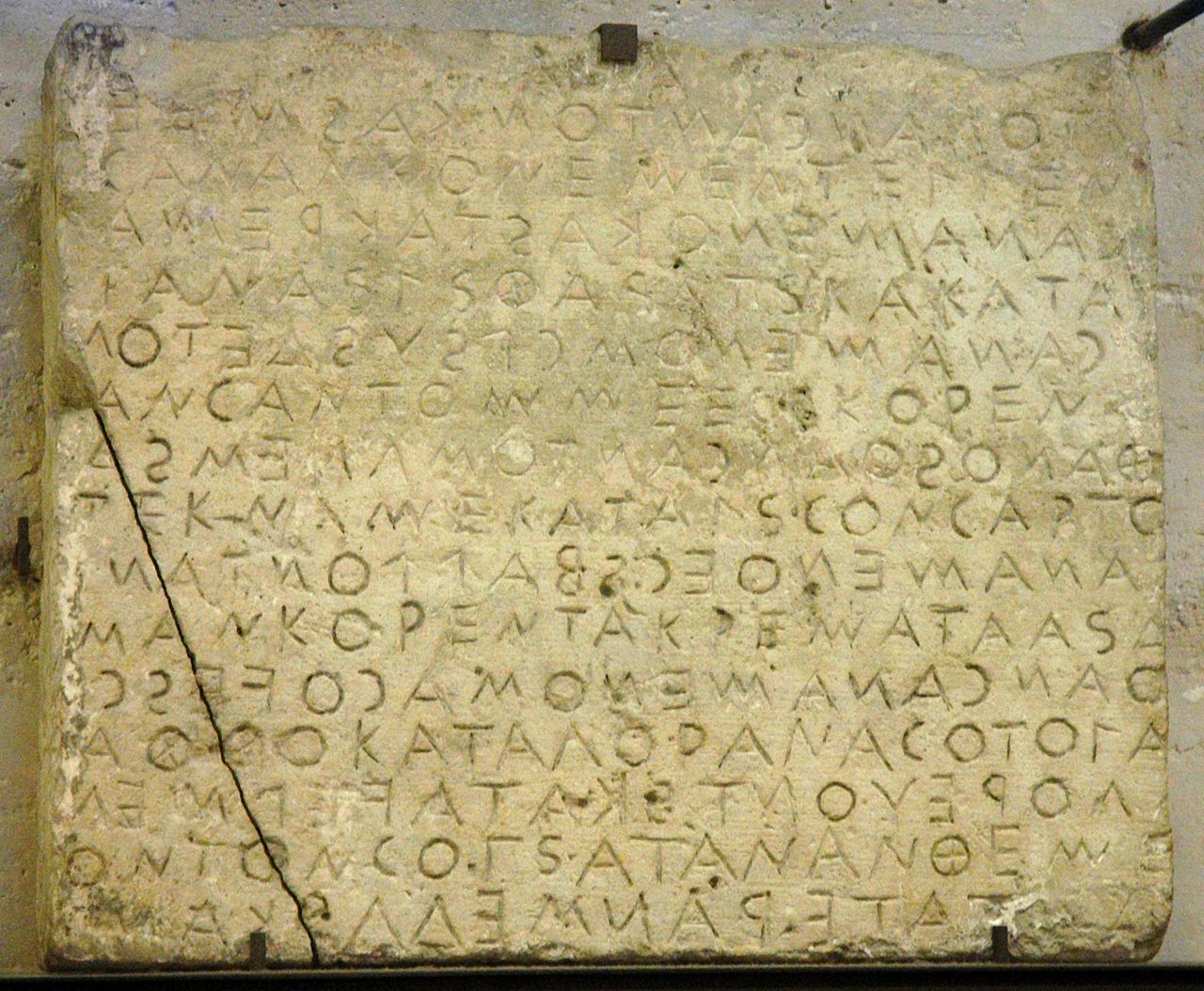
File:Law Code Gortyn Louvre Ma703.jpg
An example of ancient Greek law code, representing the tradition of written legal codes in ancient Greece.
6th Century BCE
Solon's Reforms in Athens
In 594 BC, Solon was given the authority to enact a set of reforms in Athens that attempted to balance the power of the rich and the poor. These reforms allowed all citizens to attend the assembly, though the poorest citizens could not address the assembly or run for office. Solon's reforms were a crucial step in the development of Athenian democracy, laying the groundwork for later democratic institutions.

File:Bust Pericles Chiaramonti.jpg
Bust of Pericles, a key figure in Athenian democracy, representing the tradition of democratic reform in Athens.
Pisistratus Establishes Tyranny in Athens
In the middle of the 6th century BC, Pisistratus established himself as tyrant of Athens. His rule represented a period of relative stability and prosperity for Athens, though it was a departure from the democratic reforms of Solon. After his death in 527 BC, his son Hippias inherited his position, continuing the tyranny until it was overthrown by the end of the 6th century.
Death of Pisistratus and Succession of Hippias
Pisistratus, the tyrant of Athens, died in 527 BC and was succeeded by his son Hippias. Hippias continued his father's tyrannical rule but was eventually overthrown by the end of the 6th century BC. Following the overthrow of Hippias, Cleisthenes carried out further democratizing reforms that established the foundations of Athenian democracy.
Cleisthenes' Democratic Reforms in Athens
Following the overthrow of Hippias, Cleisthenes carried out further democratizing reforms in Athens at the end of the 6th century BC. These reforms established the assembly (Ecclesia) as the de jure mechanism of government, giving all citizens equal privileges. This marked the founding of the world's first democracy, a radical solution to prevent the aristocracy from regaining power.
File:Bust Pericles Chiaramonti.jpg
Bust of Pericles, representing the Athenian democratic tradition that Cleisthenes helped establish.
5th Century BCE
Ionian Revolt Against Persia
In 499 BC, the Ionian city-states under Persian rule rebelled against their Persian-supported tyrant rulers. Supported by troops sent from Athens and Eretria, they advanced as far as Sardis and burnt the city before being driven back by a Persian counterattack. The revolt continued until 494 BC, when the rebelling Ionians were defeated, setting the stage for Persian retaliation against Athens.
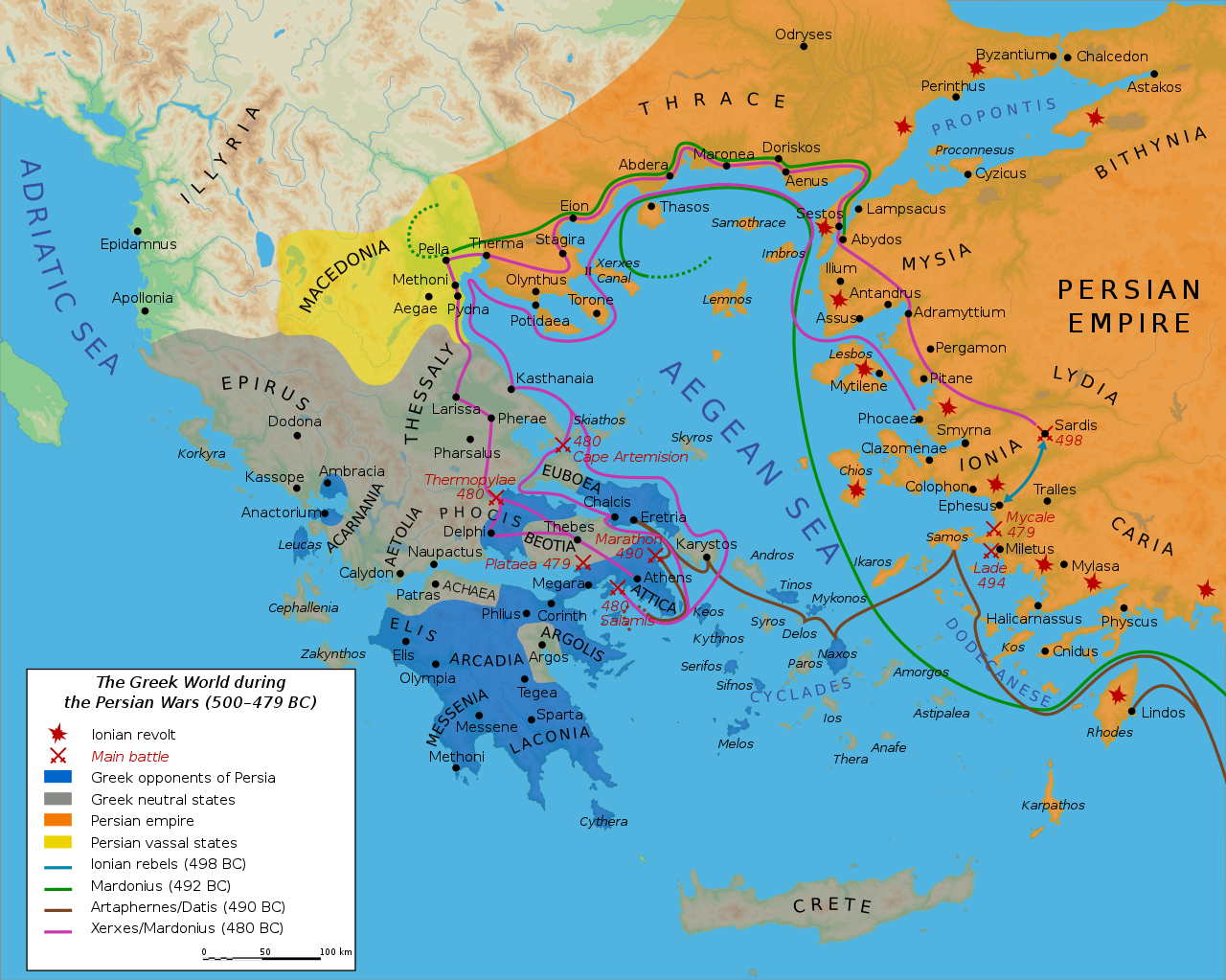
File:Map Greco-Persian Wars-en.svg
Map showing events of the first phases of the Greco-Persian Wars, including the Ionian Revolt.
Battle of Marathon
In 490 BC, Darius I of Persia assembled an armada to retaliate against Athens for its support of the Ionian revolt. Though heavily outnumbered, the Athenians—supported by their Plataean allies—defeated the Persian forces at the Battle of Marathon, and the Persian fleet turned back. This victory was a defining moment for Athens and demonstrated that the Persian Empire could be defeated.
File:Map Greco-Persian Wars-en.svg
Map showing events of the first phases of the Greco-Persian Wars, including the Battle of Marathon.
Battle of Thermopylae and Battle of Himera
In 480 BC, Xerxes launched a second Persian invasion of Greece. At Thermopylae, a small rearguard of Greeks led by three hundred Spartans held a crucial pass for several days against the massive Persian army. Simultaneously, Gelon, tyrant of Syracuse, defeated the Carthaginian invasion of Sicily at the Battle of Himera, securing the western Greek world.
File:Map Greco-Persian Wars-en.svg
Map showing events of the Greco-Persian Wars, including the second Persian invasion.
Battle of Salamis
The Persians were decisively defeated at sea by a primarily Athenian naval force at the Battle of Salamis in 480 BC. This naval victory was a turning point in the Greco-Persian Wars, effectively ending the Persian threat to Greece. The battle demonstrated the power of Athenian naval forces and contributed to Athens' growing dominance in the Greek world.
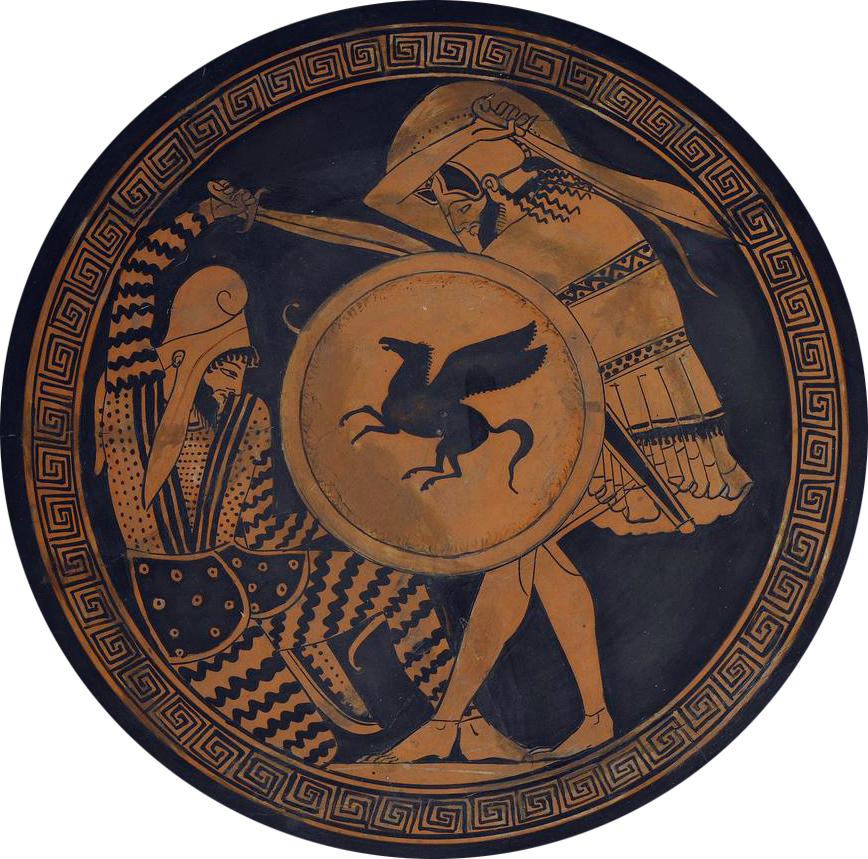
File:Greek-Persian duel.jpg
Greek hoplite and Persian warrior depicted fighting, representing the conflict of the Greco-Persian Wars.
Battle of Plataea
In 479 BC, the Greek alliance decisively defeated the Persian land forces at the Battle of Plataea, effectively ending the Persian invasion of Greece. This victory, combined with the naval victory at Salamis, secured Greek independence from Persian domination. The alliance against Persia continued, initially led by the Spartan Pausanias but from 477 BC by Athens.
File:Greek-Persian duel.jpg
Greek hoplite and Persian warrior depicted fighting, representing the battles of the Greco-Persian Wars.
Formation of the Delian League
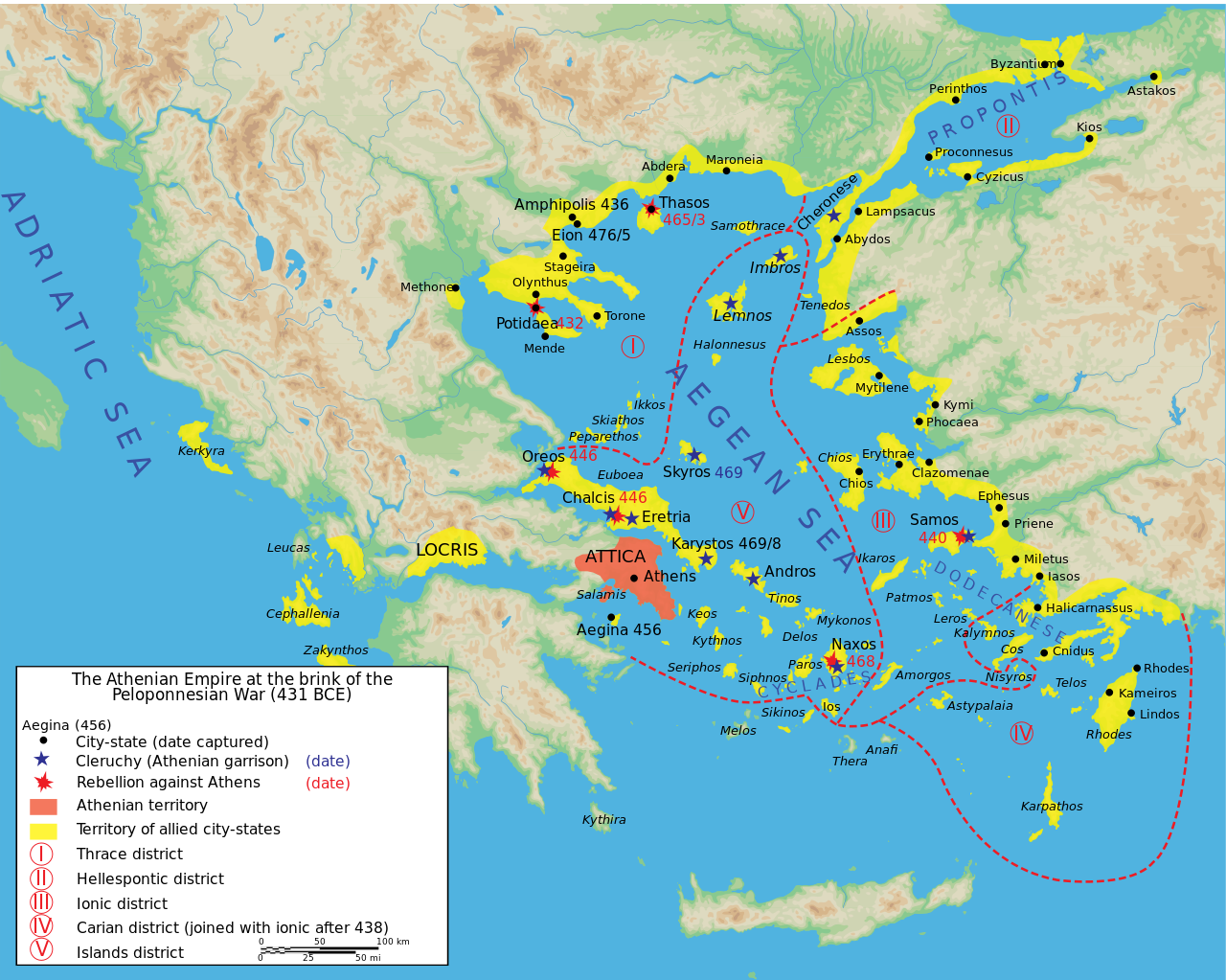
From 477 BC, Athens took leadership of the alliance against Persia, which gradually transformed into the Delian League. Over time, this defensive alliance of Greek states transformed into an Athenian empire, as Athens' growing naval power intimidated the other league states. The Delian League became the foundation of Athenian imperial power during the Classical period.
File:Map athenian empire 431 BC-en.svg
Map of the Delian League immediately before the Peloponnesian War, showing the extent of Athenian imperial power.
Athens Rejected Spartan Aid Request
In 462 BC, Athens sent a force to aid Sparta in overcoming a helot revolt, but this aid was rejected by the Spartans. This rejection exacerbated tensions between Athens and Sparta, contributing to the growing rivalry between the two city-states. The incident marked a significant deterioration in Athenian-Spartan relations that would eventually lead to the Peloponnesian War.
Athens Ends Campaigns Against Persia
Athens ended its campaigns against Persia in 450 BC, following a disastrous defeat in Egypt in 454 BC and the death of Cimon in action against the Persians on Cyprus in 450 BC. This marked the effective end of the Greco-Persian Wars and allowed Athens to focus on its growing rivalry with Sparta. The Peace of Callias, reportedly negotiated around this time, formalized the end of hostilities with Persia.
Thirty Years' Peace Between Athens and Sparta
Athens and Sparta signed the Thirty Years' Peace in the winter of 446/445 BC, ending a period of conflict between the two powers. Despite the treaty, Athenian relations with Sparta declined again in the 430s, and the peace ultimately lasted only about fifteen years. The treaty represented a temporary resolution of the tensions that had been building between the two dominant Greek city-states.
Peloponnesian War Begins
In 431 BC, the Peloponnesian War began between Athens and Sparta, representing one of the most destructive conflicts in ancient Greek history. The first phase saw a series of fruitless annual invasions of Attica by Sparta, while Athens successfully fought the Corinthian empire in northwest Greece. A plague struck Athens during this period, killing the leading Athenian statesman Pericles.
File:Map athenian empire 431 BC-en.svg
Map of the Delian League immediately before the Peloponnesian War in 431 BC.
Peace of Nicias
After the deaths of Cleon and Brasidas, the strongest proponents of war on each side, a peace treaty was negotiated in 421 BC by the Athenian general Nicias. This peace was intended to end the first phase of the Peloponnesian War, but it proved short-lived. The peace did not last, as in 418 BC allied forces of Athens and Argos were defeated by Sparta at Mantinea.
Athenian Expedition to Sicily
In 415 BC, Athens launched an ambitious naval expedition to dominate Sicily. The expedition ended in complete disaster at the harbor of Syracuse, with almost the entire army killed and the ships destroyed. This catastrophic defeat severely weakened Athens and emboldened its enemies, marking a turning point in the Peloponnesian War.
Battle of Aegospotami and Athenian Surrender
In 405 BC, the Spartan Lysander defeated Athens in the Battle of Aegospotami and began to blockade Athens' harbour. Driven by hunger, Athens sued for peace, agreeing to surrender their fleet and join the Spartan-led Peloponnesian League. Following the Athenian surrender, Sparta installed an oligarchic regime, the Thirty Tyrants, in Athens.
Overthrow of the Thirty Tyrants
Following the Athenian surrender, Sparta installed an oligarchic regime known as the Thirty Tyrants in Athens. However, after only a year, the Thirty had been overthrown, and Athens restored its democratic government. This episode demonstrated the resilience of Athenian democracy and the limits of Spartan power to impose lasting political change.
4th Century BCE
Battle of Leuctra
By 371 BC, Thebes was in the ascendancy, defeating Sparta at the Battle of Leuctra, killing the Spartan king Cleombrotus I, and invading Laconia. This battle marked the end of Spartan military dominance in Greece and shifted the balance of power to Thebes. Further Theban successes against Sparta in 369 BC led to Messenia gaining independence, from which Sparta never fully recovered.
Messenia Gains Independence from Sparta
In 369 BC, following further Theban successes against Sparta, Messenia gained independence from Spartan control. Sparta never recovered from the loss of Messenia's fertile land and the helot workforce it provided. This marked the effective end of Spartan hegemony in Greece and the liberation of the Messenian helots who had been enslaved for centuries.
Battle of Mantinea (362 BC)
In 362 BC, Thebes defeated a combined force of Sparta and Athens at the Battle of Mantinea. Though Thebes won the battle, their general Epaminondas was killed, and in the aftermath none of the major Greek states were able to dominate. This power vacuum would eventually be filled by Macedon under Philip II.
Philip II Defeats Greek Alliance at Chaeronea
In 338 BC, Philip II of Macedon defeated a Greek alliance at the Battle of Chaeronea, effectively ending Greek independence. He subsequently formed the League of Corinth, unifying most of the Greek city-states under Macedonian leadership. This was the only time prior to the Roman period that most Greek regions were officially unified under a single power.
Assassination of Philip II of Macedon
Philip II of Macedon was murdered in 336 BC, leaving his ambitious plans to invade Persia unfulfilled. His son Alexander the Great inherited the throne and was left to fulfill his father's ambitions. Philip's assassination was a pivotal moment that set the stage for Alexander's extraordinary conquests.
Alexander the Great Begins Persian Campaign
In 334 BC, Alexander the Great began his campaign against Persia after consolidating his power in Macedonia and Greece. He conquered Persia, defeating Darius III at the Battle of Issus in 333 BC, and after the Battle of Gaugamela in 331 BC proclaimed himself king of Asia. His conquests spread Hellenistic civilization across the Middle East and as far as India.

File:Alexander the Great mosaic.jpg
Alexander Mosaic from the National Archaeological Museum, Naples, depicting Alexander the Great in battle.
Battle of Issus
In 333 BC, Alexander the Great defeated Darius III of Persia at the Battle of Issus, a decisive victory that opened the way for the conquest of the Persian Empire. This battle demonstrated Alexander's military genius and the superiority of the Macedonian phalanx. The victory allowed Alexander to proceed to conquer Egypt and the rest of the Persian Empire.
File:Alexander the Great mosaic.jpg
Alexander Mosaic depicting the Battle of Issus between Alexander the Great and Darius III.
Battle of Gaugamela and Alexander Proclaimed King of Asia
After the Battle of Gaugamela in 331 BC, Alexander the Great proclaimed himself king of Asia, completing his conquest of the Persian Empire. This victory effectively ended the Achaemenid Empire and established Macedonian dominance over the entire Near East. The spread of Hellenistic civilization that followed would transform the cultural landscape of the ancient world.
File:Alexander the Great mosaic.jpg
Alexander Mosaic representing Alexander's conquests and proclamation as King of Asia.
Death of Alexander the Great
Alexander the Great died in 323 BC, ending his extraordinary campaign of conquest that had stretched from Greece to India. His death marked the end of the Classical period and the beginning of the Hellenistic period. Without a clear successor, his empire was divided among his generals, the Diadochi, leading to the formation of the Hellenistic kingdoms.
File:Alexander the Great mosaic.jpg
Alexander Mosaic, representing the legacy of Alexander the Great whose death marked the transition to the Hellenistic period.
Battle of Ipsus and Death of Antigonus I
Antigonus I attempted to expand his territory by attacking the other successor kingdoms until they joined against him, and he was killed at the Battle of Ipsus in 301 BC. This battle was a decisive moment in the Wars of the Diadochi, settling the division of Alexander's empire among his successors. The battle established the major Hellenistic kingdoms that would dominate the eastern Mediterranean for the next two centuries.

File:Diadochen1.png
Map of the major Hellenistic realms including the Diadochi kingdoms after the Wars of the Successors.
3rd Century BCE
Antigonus II Reclaims Macedonian Throne
Around 276 BC, Antigonus II reclaimed the Macedonian throne after his father Demetrius had spent many years in Seleucid captivity. This stabilized the Macedonian kingdom and established the Antigonid dynasty that would rule Macedonia until the Roman conquest. By the mid-3rd century, the kingdoms of Alexander's successors were mostly stable.
File:Diadochen1.png
Map of the major Hellenistic realms including the Antigonid Kingdom of Macedonia.
Aristarchus Proposes Heliocentric System
In the 3rd century BC, Aristarchus of Samos was the first to suggest a heliocentric system, proposing that the Earth revolves around the Sun. This revolutionary idea was far ahead of its time and was not widely accepted in antiquity. Archimedes later revived Aristarchus' hypothesis in his treatise The Sand Reckoner.

File:0142 - Archaeological Museum, Athens - Antikythera mechanism
The Antikythera mechanism, representing the advanced astronomical knowledge of ancient Greece.
First Macedonian War with Rome
The Antigonid Kingdom became involved in a war with the Roman Republic in the late 3rd century BC. Although the First Macedonian War was inconclusive, it marked the beginning of Roman involvement in Greek affairs. The Romans would continue to fight Macedon until it was completely absorbed into the Roman Republic by 149 BC.
2nd Century BCE
Battle of Corinth and Roman Conquest of Greece
In 146 BC, Rome achieved a decisive victory over the Corinthians at the Battle of Corinth, marking the effective end of Greek independence. The Achaean League was defeated and absorbed by the Romans, and Macedonia became a Roman province. This event marked the beginning of the Roman Greece period and the end of the Hellenistic era in mainland Greece.
1st Century BCE
Antikythera Mechanism Created
The Antikythera mechanism, a device for calculating the movements of planets, dates from about 80 BC and was the first ancestor of the astronomical computer. It was discovered in an ancient shipwreck off the Greek island of Antikythera. The device became famous for its use of a differential gear and the miniaturization and complexity of its parts, comparable to a clock made in the 18th century.
File:0142 - Archaeological Museum, Athens - Antikythera mechanism
The Antikythera mechanism, an analog computer from 150 to 100 BC designed to calculate the positions of astronomical objects.
Athens and Greek Cities Revolt Against Rome
In 88 BC, Athens and other Greek cities revolted against Roman rule. The revolt was crushed by the Roman general Sulla, who devastated the peninsula. The Roman civil wars that followed further devastated the land, until Augustus organized the peninsula as the province of Achaea in 27 BC.
Seleucid Empire Ends
The unwieldy Seleucid Empire gradually disintegrated, with a rump surviving until 64 BC when it was finally absorbed by Rome. The Seleucid Empire had been one of the major Hellenistic kingdoms founded by Alexander's successors, controlling Syria and the former Persian empire. Its end marked the final dissolution of the major Hellenistic kingdoms in the east.
Ptolemaic Egypt Annexed by Rome
In 30 BC, the last Hellenistic kingdom, Ptolemaic Egypt, was annexed by the Roman Republic following the death of Cleopatra, the last Macedonian ruler of Egypt. This event is considered to mark the end of the Hellenistic period. With the annexation of Egypt, Rome had absorbed all of the successor kingdoms of Alexander the Great.
Augustus Organizes Greece as Province of Achaea
In 27 BC, Augustus organized the Greek peninsula as the Roman province of Achaea, following the devastation caused by the Roman civil wars. This formalized Roman control over Greece and integrated it into the Roman imperial system. Greece remained a key eastern province of the Roman Empire, with Greek culture and language serving as a lingua franca in the East.
4th Century
Constantine Establishes Byzantium as Capital
In 330 AD, Constantine established Byzantium (Constantinople) as the capital of the Roman Empire, marking a significant shift in the center of power. This event is considered the end of the Roman Greece period and the beginning of the Byzantine era. The Byzantine Empire would go on to inherit Classical Greek-Hellenistic culture directly, preserving it through the medieval period.
6th Century
Justinian I Closes the Academy of Athens
In 529 AD, the Byzantine Emperor Justinian I ordered the closure of the Academy of Athens, the famous philosophical school founded by Plato. This event is considered to mark the end of Late Antiquity and the classical tradition in Greece. The closure symbolized the triumph of Christianity over pagan philosophy and the end of the ancient Greek intellectual tradition.

File:Plato's Academy mosaic from Pompeii.jpg
Mosaic from Pompeii depicting Plato's Academy, the institution that Justinian I ordered closed in 529 CE.