
Augustus of Prima Porta
The statue of Augustus, the first Roman Emperor, represents the transformation of Rome from Republic to Empire, one of the most pivotal moments in the timeline.
Ancient Rome
This timeline covers the history of Ancient Rome from its legendary founding in 753 BC to the fall of the Western Roman Empire in 476 AD, and briefly extends to the fall of Constantinople in 1453 AD. It encompasses the Roman Kingdom, Republic, and Empire, tracing major political, military, and cultural events that shaped Western civilization.
Source: Wikipedia8th Century BCE
Traditional Founding of Rome
According to Roman tradition, the city of Rome was founded in 753 BC by Romulus, who killed his twin brother Remus after a dispute and became the city's sole founder. The settlement was established on the Palatine Hill beside the River Tiber in the Italian Peninsula. The Roman antiquarian Marcus Terentius Varro placed the city's foundation at this date, which became the basis for Roman dating systems.

Lupa Capitolina
The Capitoline Wolf, symbol of the founding myth of Rome featuring Romulus and Remus
Roman Kingdom Established
Rome was initially governed as a monarchy with seven legendary kings who were largely unrelated by blood. The Romans believed their monarchy was elective, and literary and archaeological evidence confirms the existence of kings in Rome, attested in fragmentary 6th-century BC texts. The kingdom saw early expansion, with Rome controlling a territory of some size with a population perhaps as high as 35,000 by the end of the 6th century BC.

Rome in 753 BC
Map of Rome at its founding in 753 BC
Numa Pompilius Introduces January and February
Numa Pompilius, the second king of Rome, is credited with introducing the months of January and February to the Roman calendar, creating the 12-month calendar still in use today. Previously, the Roman year had only ten months from Martius (March) to December, with the winter period not included. This calendar reform was a significant cultural and administrative achievement.
6th Century BCE
Etruscan Cultural Influence on Rome
During the 6th century BC, Rome was significantly influenced by Etruscan culture, as evidenced by Etruscan paintings and artifacts found in the region. The Romans constructed the Temple of Jupiter Optimus Maximus on the Capitoline and expanded to the Forum Boarium. Rome also began assimilating Etruscan cultural practices while extending its control over Latin neighbors.

Etruscan painting from the Tomb of the Leopards
Etruscan painting of dancer and musicians from the Tomb of the Leopards in Tarquinia, illustrating the cultural context of Rome's Etruscan neighbors
Founding of the Roman Republic
According to tradition and later writers such as Livy, the Roman Republic was established when the last of the seven kings of Rome, Tarquin the Proud, was deposed. A system based on annually elected magistrates and various representative assemblies was established, with a constitution setting checks and balances and a separation of powers. The most important magistrates were the two consuls, who together exercised executive authority.
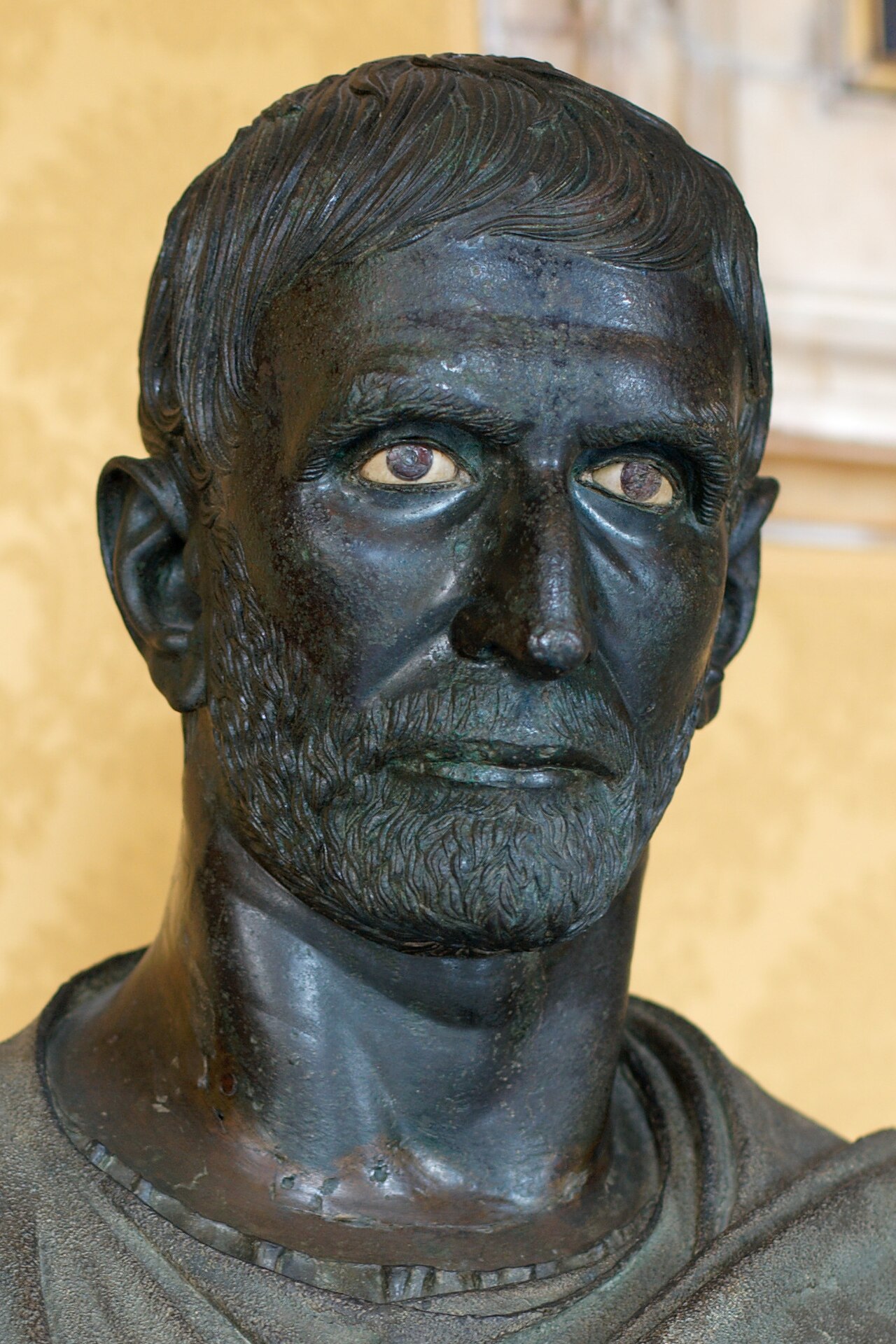
Capitoline Brutus
Bust traditionally identified as Lucius Junius Brutus, who led the overthrow of the last Roman king
5th Century BCE
Law of the Twelve Tables Promulgated
The Law of the Twelve Tables was promulgated in 449 BC, forming the roots of Roman legal principles and practices. This codification of law was a foundational document of the Roman Republic, establishing written laws accessible to all citizens. Roman law as preserved in later codes continued into the Byzantine Roman Empire and formed the basis of similar codifications in continental Western Europe.
4th Century BCE
Battle of the Allia and Gallic Sack of Rome
On 16 July 390 BC, a Gallic army under the tribal chieftain Brennus defeated the Romans at the Battle of the Allia and marched to Rome. The Gauls looted and burned the city, then laid siege to the Capitoline Hill for seven months. The Romans eventually paid 1,000 pounds of gold for peace, though later legend claimed the Roman general Camillus defeated the Gauls militarily, declaring 'With iron, not with gold, Rome buys her freedom.'

Italy 400 BC
Map of Italy around 400 BC showing the political landscape during the Gallic invasions
3rd Century BCE
Pyrrhus of Epirus Aids Tarentum Against Rome
In 281 BC, Tarentum, a major Greek colony in southern Italy, enlisted the aid of Pyrrhus of Epirus in resisting Roman expansion. This was the last major threat to Roman hegemony in Italy, but the effort ultimately failed. Following this victory, the Romans secured their conquests by founding Roman colonies in strategic areas, establishing stable control over the entire Italian peninsula.
First Punic War Begins
The First Punic War began in 264 BC when the city of Messana asked for Carthage's help in conflicts with Hiero II of Syracuse, and then asked Rome to expel the Carthaginians. Rome entered the war to prevent Carthage from gaining a foothold too close to its newly conquered Greek cities of Southern Italy. Despite Rome's lack of naval experience, after more than 20 years of war, Rome defeated Carthage and a peace treaty was signed.

Territorial changes during the Punic Wars
Map showing territorial changes over the course of the Punic Wars between Rome and Carthage
Second Punic War: Hannibal Invades Italy
The Second Punic War began with Hannibal's audacious invasion of Hispania and march through the Italian Alps into Italy. Hannibal's invasion lasted over 16 years, ravaging Italy, but ultimately Carthage was defeated in the decisive Battle of Zama in October 202 BC. The war resulted from Carthage's resentment over war reparations imposed after the First Punic War.
Territorial changes during the Punic Wars
Map showing territorial changes over the course of the Punic Wars
Battle of Zama: Rome Defeats Carthage
In October 202 BC, the decisive Battle of Zama ended the Second Punic War with a Roman victory over Carthage. Scipio Africanus defeated Hannibal's forces, ending Carthage's status as a major Mediterranean power. This victory established Rome as the dominant power in the western Mediterranean and led to significant war reparations being imposed on Carthage.
2nd Century BCE
Rome Defeats Macedonian and Seleucid Empires
After defeating the Macedonian and Seleucid Empires in the 2nd century BC, the Romans became the dominant people of the Mediterranean Sea. The conquest of the Hellenistic kingdoms brought Roman and Greek cultures into closer contact, and the Roman elite, once rural, became cosmopolitan. This expansion marked Rome's transformation into a true Mediterranean superpower.
Third Punic War and Destruction of Carthage
The Third Punic War began when Rome declared war against Carthage in 149 BC. Carthage resisted initially but could not withstand the attack of Scipio Aemilianus, who entirely destroyed the city, enslaved all the citizens, and gained control of the region, which became the province of Africa. This marked the end of Carthage as a civilization and Rome's acquisition of its first overseas provinces.
Territorial changes during the Punic Wars
Map showing the final territorial changes after the Third Punic War
Siege of Numantia
In 133 BC, Rome besieged the Celtiberian stronghold of Numantia in Spain, marking a significant episode in Rome's conquest of Hispania. The siege was part of Rome's broader effort to consolidate control over the Iberian Peninsula following the Punic Wars. The fall of Numantia effectively ended organized resistance to Roman rule in much of Hispania.

Siege of Numantia
Illustration of the Roman siege of the Celtiberian stronghold of Numantia in Spain in 133 BC
Gracchi Brothers' Land Reform Attempts
In the late 2nd century BC, the Gracchi brothers, a pair of tribunes, attempted to pass land reform legislation that would redistribute major patrician landholdings among the plebeians. Both brothers were killed and the Senate passed reforms reversing their actions. This led to a growing divide between plebeian groups and equestrian classes, marking the beginning of the late Republic's political instability.
Gaius Marius Holds First Consulship and Military Reforms
Gaius Marius became a leader of the Republic, holding the first of his seven consulships in 107 BC by arguing his patron could not defeat the Numidian king Jugurtha. Marius then started significant military reforms, levying the very poor and allowing landless men to enter the army. He was elected for five consecutive consulships from 104 to 100 BC as Rome needed military leadership against the Cimbri and Teutones.

Marius and the Ambassadors of the Cimbri
Painting depicting Gaius Marius and the Cimbri ambassadors, illustrating his military campaigns
1st Century BCE
Social War: Italian Allies Revolt
After Marius's retirement, Rome had a brief peace during which Italian allies requested Roman citizenship and voting rights. The reformist Marcus Livius Drusus supported their legal process but was assassinated, and the allies revolted against the Romans in the Social War. At one point both consuls were killed, and Marius was appointed to command the army together with Lucius Julius Caesar and Lucius Cornelius Sulla.
Sulla's First March on Rome
In 88 BC, Sulla was elected for his first consulship and assigned to defeat Mithridates VI of Pontus. When Marius's partisans managed his installation to the military command, Sulla conducted a surprising and illegal action: he marched to Rome with his legions, killing all those who showed support to Marius's cause. This was the first time a Roman general had marched his army against Rome itself.

Coin depicting Sulla
Roman denarius depicting Sulla, who marched on Rome in 88 BC
Marius Seizes Power and Achieves Seventh Consulship
In 87 BC, Marius returned to Rome while Sulla was campaigning in Greece, seized power along with the consul Lucius Cornelius Cinna, and killed the other consul Gnaeus Octavius, achieving his seventh consulship. Marius and Cinna revenged their partisans by conducting a massacre. Marius died in 86 BC due to age and poor health, just a few months after seizing power.
Sulla's Second March on Rome and Dictatorship
In 83 BC, Sulla made his second march on Rome and began a time of terror in which thousands of nobles, knights, and senators were executed. Sulla held two dictatorships and one more consulship, which began the crisis and decline of the Roman Republic. His constitutional reforms removed powers that had supported populist approaches, including those of the tribune of the plebs.
Formation of the First Triumvirate
Julius Caesar reconciled the two most powerful men in Rome: Marcus Licinius Crassus and Gnaeus Pompeius Magnus (Pompey), forming them into a new informal alliance including himself, the First Triumvirate. Caesar's daughter died in childbirth in 54 BC, and in 53 BC Crassus was killed in the Battle of Carrhae, causing the Triumvirate to disintegrate. Caesar had meanwhile conquered Gaul, obtaining immense wealth and the loyalty of battle-hardened legions.
Caesar's Invasion of Britain
In 55 BC, Julius Caesar with 100 ships and two legions made an opposed landing in Britain, probably near Deal. After pressing a little way inland against fierce opposition and losing ships in a storm, he retired back across the English Channel to Gaul from what was a reconnaissance in force. He returned the following year for a more serious invasion, marking the first Roman contact with Britain.

Landing of the Romans in Kent
Painting depicting Caesar's landing in Kent, 55 BC
Caesar Crosses the Rubicon
To avoid being stripped of his legions and facing trial, impoverishment, and exile, Caesar crossed the Rubicon River and invaded Rome in 49 BC. The Battle of Pharsalus was a brilliant victory for Caesar, and in this and other campaigns he destroyed all of the optimates leaders including Metellus Scipio, Cato the Younger, and Pompey's son. Pompey was murdered in Egypt in 48 BC.
Month of July Named After Julius Caesar
In 44 BC, the month Quintilis was renamed to Julius (July) in honor of Julius Caesar. This was one of Caesar's lasting cultural legacies, as he had also continued reforms to the calendar. The renaming reflected Caesar's enormous influence on Roman culture and politics even after his death.
Assassination of Julius Caesar
Julius Caesar was murdered on the Ides of March (March 15) in 44 BC by the Liberatores, a group of senators who feared his growing power. In five years he had held four consulships, two ordinary dictatorships, and two special dictatorships, one for perpetuity. His assassination caused political and social turmoil in Rome and set off a new round of civil wars.
Formation of the Second Triumvirate
In 43 BC, Octavian, along with Mark Antony and Marcus Aemilius Lepidus, legally established the Second Triumvirate. Upon its formation, 130–300 senators were executed and their property confiscated due to their supposed support for the Liberatores. In 42 BC, the Senate deified Caesar as Divus Iulius, making Octavian the son of the deified.
Battle of Philippi: Defeat of Caesar's Assassins
In 42 BC, Octavian and Antony defeated both Caesar's assassins and the leaders of the Liberatores, Marcus Junius Brutus and Gaius Cassius Longinus, in the Battle of Philippi. The Second Triumvirate was marked by the proscriptions of many senators and equites. The Triumvirate then divided the Empire among the triumvirs: Lepidus was given Africa, Antony the eastern provinces, and Octavian controlled Italia, Hispania, and Gaul.
Battle of Actium: Octavian Defeats Antony and Cleopatra
Octavian annihilated Egyptian forces in the Battle of Actium in 31 BC, ending the conflict with Mark Antony and Cleopatra VII. Antony and Cleopatra committed suicide following their defeat, and Egypt was conquered by the Roman Empire. This victory left Octavian as the sole ruler of the Roman world.
Augustus Becomes First Roman Emperor
In 27 BC, at the age of 36, Octavian was the sole Roman leader and took the name Augustus, marking the beginning of the Roman Empire. Officially the government remained republican, but Augustus assumed absolute powers. His reform of the government brought about a two-century period colloquially referred to by Romans as the Pax Romana.
Augustus of Prima Porta
The Augustus of Prima Porta, 1st century AD, depicting Augustus, the first Roman emperor
Extent of Roman Empire Under Augustus
Under Augustus, Rome conquered Cantabria, Aquitania, Raetia, Dalmatia, Illyricum, and Pannonia, extending the empire significantly. Augustus intended to extend the Roman Empire to the whole known world, and his generals gained much respect from the populace and legions. Roman literature also grew in what is known as the Golden Age of Latin Literature, with poets like Virgil, Horace, and Ovid.
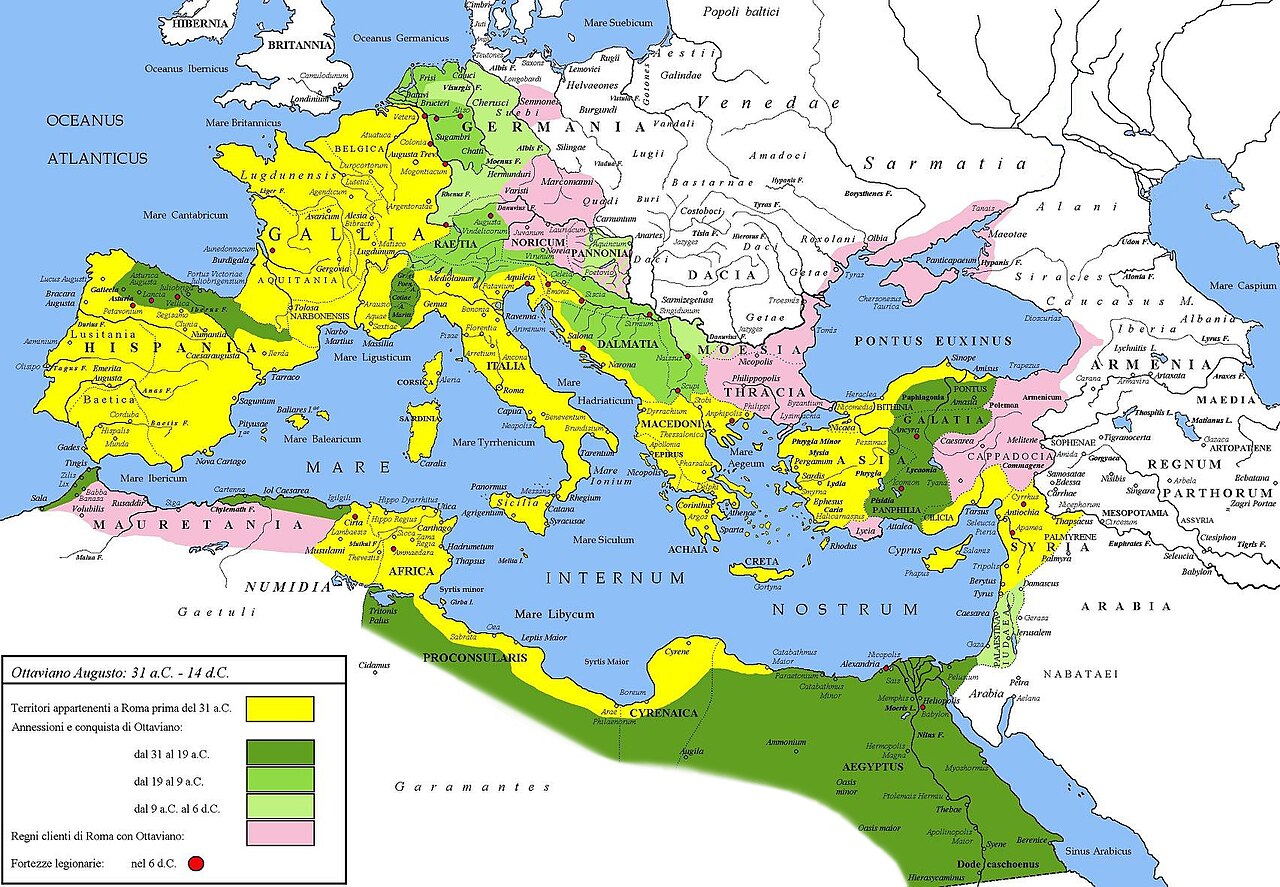
Extent of the Roman Empire under Augustus
Map showing the extent of the Roman Empire under Augustus, with territories gradually conquered during his reign
Month of August Named After Augustus
In 8 BC, the month Sextilis was renamed to Augustus (August) in honor of the first Roman emperor. Augustus had continued the calendar changes promoted by Caesar, and this renaming was part of his broader cultural legacy. The month names July and August remain in use today as lasting reminders of Caesar and Augustus.
1st Century
Death of Augustus and Succession of Tiberius
Augustus died in 14 AD, and the Julio-Claudian dynasty continued under Tiberius, his stepson whom he had appointed as heir under the influence of his wife Livia Drusilla. The Senate agreed with the succession and granted Tiberius the same titles and honors once granted to Augustus. However, Tiberius was not enthusiastic for political affairs and eventually retired to Capri in 26 AD.
Tiberius Retires to Capri
After agreement with the Senate, Tiberius retired to Capri in 26 AD and left control of the city of Rome in the hands of the praetorian prefect Sejanus until 31 AD, and then Macro from 31 to 37 AD. This effectively left Rome without direct imperial oversight for over a decade. Tiberius died or was killed in 37 AD.
Caligula Becomes Emperor
After Tiberius died in 37 AD, Caligula was chosen to rule the empire as the male line of the Julio-Claudians was limited. He was a popular leader in the first half of his reign but became a crude and insane tyrant in his later years. The Praetorian Guard murdered Caligula four years after the death of Tiberius, and proclaimed his uncle Claudius as the new emperor.
Claudius Begins Conquest of Britain
Emperor Claudius was not as authoritarian as Tiberius and Caligula, and his most important deed was beginning the conquest of Britannia. He also conquered Lycia and Thrace. Claudius was poisoned by his wife Agrippina the Younger in 54 AD, and his heir was Nero, son of Agrippina and her former husband.
Boudica's Revolt in Britain
In 60 AD, while Roman general Suetonius Paulinus was massacring druids on the island of Mona (Anglesey), the tribes of modern-day East Anglia staged a revolt led by Queen Boudica of the Iceni. The rebels sacked and burned Camulodunum, Londinium, and Verulamium before being crushed by Paulinus. Boudica committed suicide to avoid the disgrace of being paraded in triumph in Rome.
Great Fire of Rome
The Great Fire of Rome occurred during the reign of Nero, who is widely known as the first persecutor of Christians and for the fire, which was rumoured to have been started by the emperor himself. Buildings destroyed by the fire were later rebuilt under Vespasian, who also revitalised the Capitol. The fire became one of the most infamous events of Nero's reign.
Death of Nero and Year of the Four Emperors
In 68 AD, armies under Julius Vindex in Gaul and Servius Sulpicius Galba in Spain revolted against Nero. Deserted by the Praetorian Guards and condemned to death by the Senate, Nero killed himself. The following year, 69 AD, saw four emperors enthroned in turn: Galba, Otho, Vitellius, and finally Vespasian, who crushed Vitellius' forces and became emperor.
Vespasian Founds Flavian Dynasty and Begins Colosseum
Vespasian took control of the empire in 69 AD and established the Flavian dynasty, the second dynasty to rule Rome. He reconstructed many buildings, reformed the tax system, and started the construction of the Flavian Amphitheater, commonly known as the Colosseum. He also sent legions to defend the eastern frontier in Cappadocia and extended the occupation in Britannia.
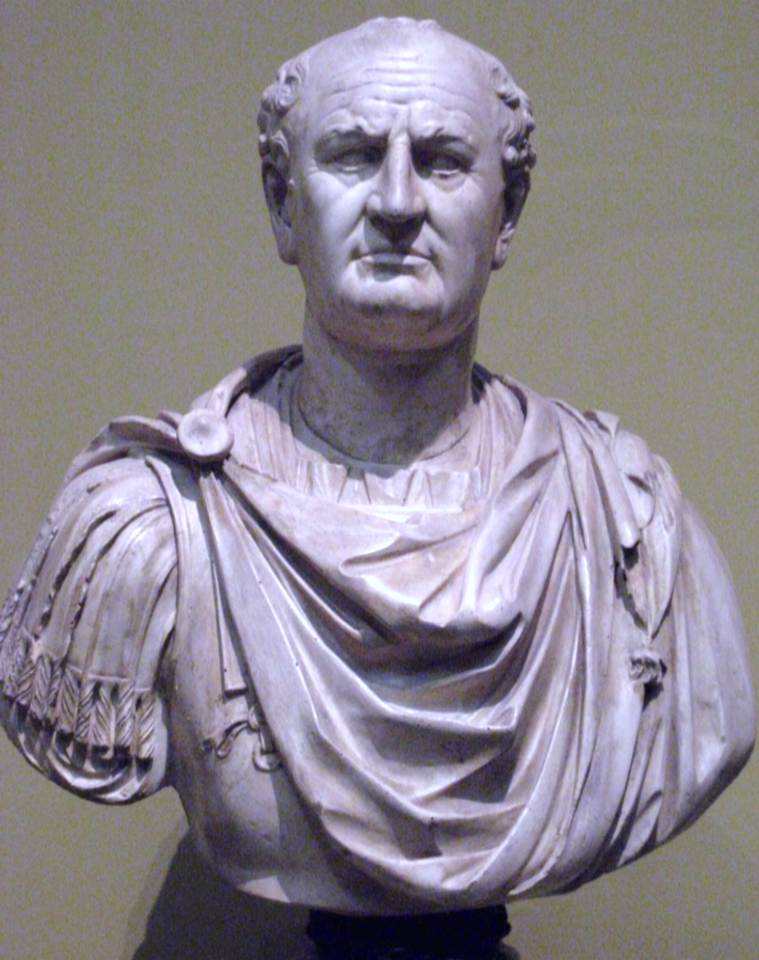
Bust of Vespasian
Bust of Vespasian, founder of the Flavian dynasty
Siege and Destruction of Jerusalem
The most significant military campaign of the Flavian period was the siege and destruction of Jerusalem in 70 AD by Titus, culminating the Roman campaign in Judea following the Jewish uprising of 66 AD. The Second Temple was completely demolished, and Titus' soldiers proclaimed him imperator in honor of the victory. Josephus claims that 1,100,000 people were killed during the siege, with 97,000 captured and enslaved.
Titus Completes the Colosseum
Titus became emperor in 79 AD and finished the Flavian Amphitheater (Colosseum), using war spoils from the First Jewish-Roman War, and hosted victory games that lasted for a hundred days. These games included gladiatorial combats, horse races, and a sensational mock naval battle on the flooded grounds of the Colosseum. Titus died of fever in 81 AD and was succeeded by his brother Domitian.
Nerva-Antonine Dynasty Begins
Following Domitian's murder, the Senate rapidly appointed Nerva as Emperor, beginning the Nerva-Antonine dynasty from 96 AD to 192 AD. This dynasty included the 'five good emperors': Nerva, Trajan, Hadrian, Antoninus Pius, and Marcus Aurelius. Gibbon declared the rule of these emperors the golden era of the Empire, during which Rome reached its greatest territorial extent.
Trajan's Reign and Maximum Territorial Expansion
Trajan succeeded Nerva in 98 AD and is credited with the restoration of traditional privileges and rights of commoner and senatorial classes. He fought three Dacian wars, winning territories roughly equivalent to modern-day Romania and Moldova, and undertook an ambitious public building program including Trajan's Forum, Market, and Column. In 117 AD, the Roman Empire reached the peak of its territorial expansion under Trajan.
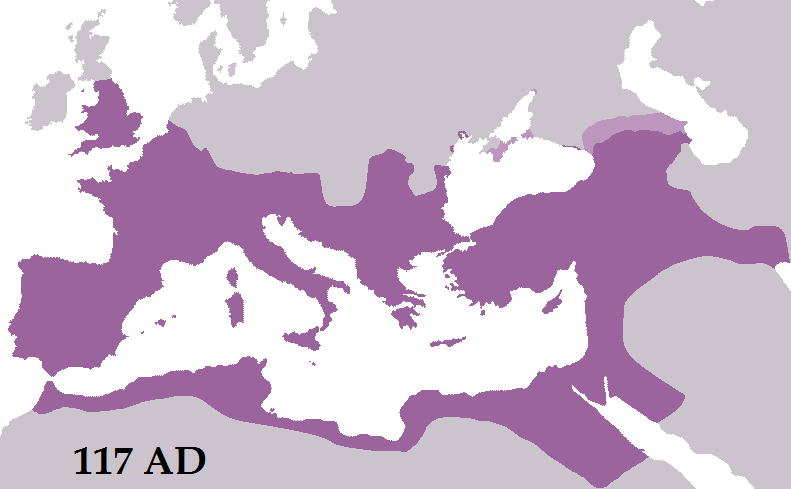
Roman Empire under Trajan in AD 117
Map showing the Roman Empire at its greatest extent under Trajan in AD 117
2nd Century
Trajan Captures Ctesiphon and Mesopotamia
In 115 AD, Trajan took the Northern Mesopotamian cities of Nisibis and Batnae, organized a province of Mesopotamia in 116, and issued coins claiming Armenia and Mesopotamia were under Roman authority. In that same year he captured Seleucia and the Parthian capital Ctesiphon near modern Baghdad. After defeating a Parthian revolt and a Jewish revolt, he withdrew due to health issues and died in 117 AD.
Hadrian's Reign and Construction of Hadrian's Wall
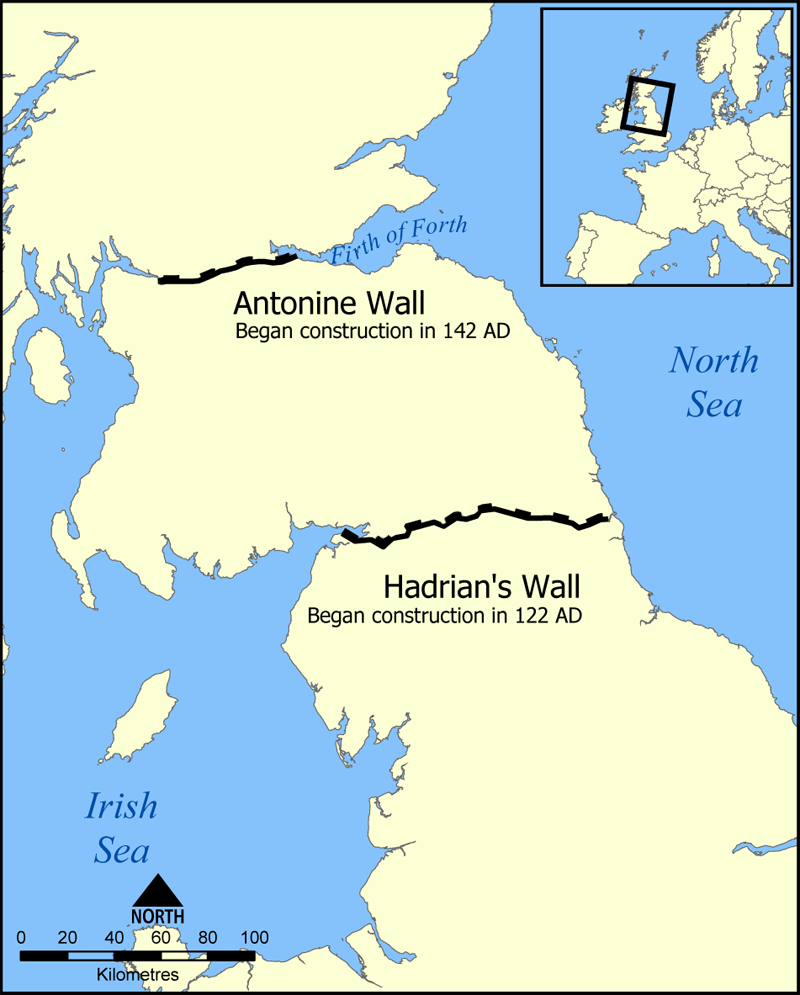
Trajan's successor Hadrian withdrew all troops from Parthia, Armenia, and Mesopotamia, abandoning Trajan's conquests. He constructed fortifications and walls, including the celebrated Hadrian's Wall which separated Roman Britannia from the tribes of modern-day Scotland. Hadrian promoted culture, especially Greek, forbade torture, humanised the laws, and travelled nearly every province in the Empire.
Hadrian's Wall map
Map showing the location of Hadrian's Wall and the Antonine Wall in Scotland and Northern England
Construction of the Pantheon
The Pantheon in Rome was built during the reign of Hadrian, and still contains the largest unreinforced concrete dome in the world. It stands as one of the best-preserved ancient Roman buildings and a testament to Roman engineering and architectural achievement. The building has been in continuous use throughout its history.

The Pantheon, Rome
The Pantheon, Rome, built during the reign of Hadrian, which still contains the largest unreinforced concrete dome in the world
Antoninus Pius Builds Antonine Wall
Following Hadrian's death in 138 AD, his successor Antoninus Pius built temples, theatres, and mausoleums, promoted the arts and sciences, and expanded Roman Britannia by invading what is now southern Scotland and building the Antonine Wall. His reign was the most peaceful in the entire history of the Roman Empire. He died in 161 AD, leaving 'an empire in very fine shape.'
Hadrian's Wall and Antonine Wall map
Map showing the location of both Hadrian's Wall and the Antonine Wall in Scotland and Northern England
Marcus Aurelius and the Antonine Plague
Marcus Aurelius, known as the Philosopher, was the last of the Five Good Emperors and a stoic philosopher who wrote the Meditations. His co-emperor Lucius Verus died in 169 AD, probably from the Antonine Plague, a pandemic that killed nearly five million people through the Empire in 165–180 AD. Marcus Aurelius also defeated barbarian tribes in the Marcomannic Wars and the Parthian Empire.
Commodus Becomes Emperor: Beginning of Decline
Commodus, son of Marcus Aurelius, became emperor after his father's death and is not counted as one of the Five Good Emperors due to his direct kinship and military passivity. Cassius Dio identifies his reign as the beginning of Roman decadence, describing Rome's transformation 'from a kingdom of gold to one of iron and rust.' He was killed by a conspiracy involving Quintus Aemilius Laetus and his wife Marcia in late 192 AD.
Year of the Five Emperors and Severan Dynasty
Following Commodus's assassination in 192 AD, the following year saw five emperors hold the imperial dignity: Pertinax, Didius Julianus, Pescennius Niger, Clodius Albinus, and Septimius Severus. Lucius Septimius Severus bribed opposing forces, pardoned the Praetorian Guards, and installed himself as emperor, founding the Severan dynasty. The changes in coinage and military expenditures were the root of the financial crisis that marked the Crisis of the Third Century.

The Severan Tondo
Portrait of Severus, Julia Domna, Caracalla and Geta, c. 199 CE
3rd Century
Caracalla Issues Edict of Caracalla
In 212 AD, Emperor Caracalla issued the Edict of Caracalla, giving full Roman citizenship to all free men living in the Empire, with the exception of the dediticii and freed slaves. Mary Beard points to the edict as a fundamental turning point, after which Rome was 'effectively a new state masquerading under an old name.' This was one of the most significant expansions of Roman citizenship in history.

Bust of Caracalla
Bust of Caracalla from the Capitoline Museums, Rome
Assassination of Caracalla
Macrinus conspired to have Caracalla assassinated by one of his soldiers during a pilgrimage to the Temple of the Moon in Carrhae in 217 AD. Macrinus assumed power but soon removed himself from Rome to the east and Antioch. His brief reign ended in 218 when the youngster Bassianus, supposedly an illegitimate son of Caracalla, was declared Emperor by disaffected soldiers.
Crisis of the Third Century Begins
After the death of Alexander Severus in 235 AD, the Roman state was plagued by civil wars, external invasions, political chaos, pandemics, and economic depression. There were 26 emperors in a 49-year period, signaling extreme political instability. The Plague of Cyprian broke out in 250 and killed a huge portion of the population, while hyperinflation and economic collapse further destabilized the empire.

Map of Ancient Rome 271 AD
Map showing the Roman Empire suffering internal schisms, forming the Palmyrene Empire and the Gallic Empire
Formation of the Palmyrene and Gallic Empires
In 260 AD, the provinces of Syria Palaestina, Asia Minor, and Egypt separated from the rest of the Roman state to form the Palmyrene Empire, ruled by Queen Zenobia and centered on Palmyra. In that same year the Gallic Empire was created by Postumus, retaining Britannia and Gaul. These separations followed the humiliating capture of Emperor Valerian by the Sassanids of Persia, the first Roman ruler to be captured by his enemies.
Map of Ancient Rome 271 AD
Map showing the Roman Empire's internal schisms, including the Palmyrene Empire and the Gallic Empire
Diocletian Establishes the Tetrarchy
In 284 AD, Diocletian was hailed as Imperator by the eastern army and healed the empire from the crisis through political and economic shifts. He established a new form of government called the Tetrarchy, dividing the Empire among four emperors: two in the West and two in the East. Diocletian also made several tax reforms and did not use a disguised form of Republic as previous emperors had done since Augustus.

Roman follis depicting Diocletian
A Roman follis coin depicting the profile of Diocletian, who established the Tetrarchy
4th Century
Diocletian Persecutes Christians
In 303 AD, Diocletian and Galerius started the persecution of Christians and ordered the destruction of all Christian churches and scripts, forbidding Christian worship. This was the peak of Roman persecution of Christians under Emperor Diocletian. Diocletian abdicated in 305 AD together with Maximian, becoming the first Roman emperor to resign.
Constantine Issues Edict of Milan
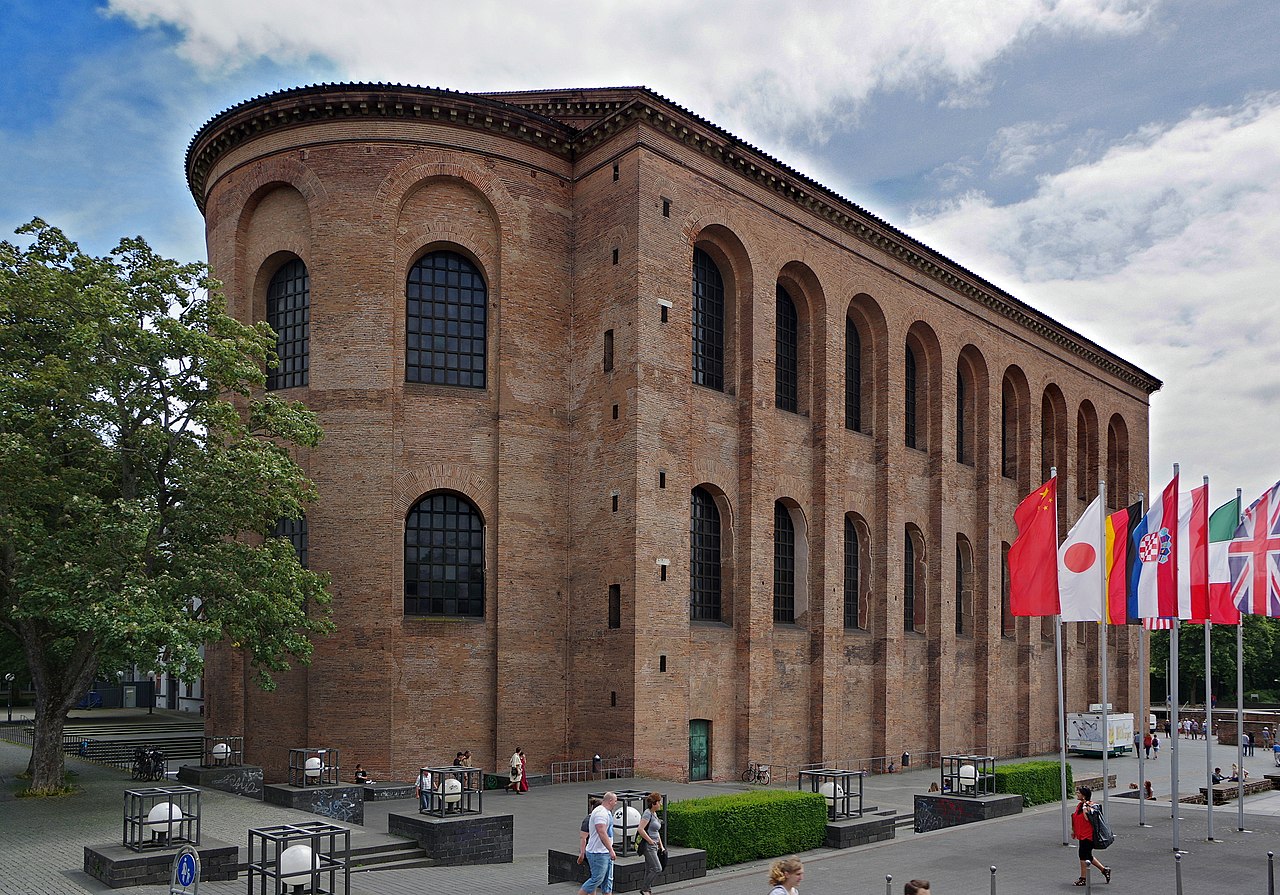
In 313 AD, Constantine issued the Edict of Milan, which granted liberty for Christians to profess their religion. Constantine had been converted to Christianity and began the Christianization of the Empire and of Europe. He had previously defeated Maxentius in 312 and would go on to defeat the tetrarch Licinius in 324, controlling all the empire.
Aula Palatina of Trier
Christian basilica built during the reign of Constantine I, representing the Christianization of the Roman Empire
Constantine Rebuilds Byzantium as Constantinople
In 324 AD, Constantine defeated the tetrarch Licinius and controlled all the empire. To celebrate his victories and Christianity's relevance, he rebuilt Byzantium and renamed it Nova Roma ('New Rome'), though the city soon gained the informal name of Constantinople ('City of Constantine'). Constantinople served as a new capital for the Empire, as Rome had lost its central importance since the Crisis of the Third Century.
Theodosius I Prohibits All Non-Christian Religions
All religions except Christianity were prohibited in 391 AD by an edict of Emperor Theodosius I, completing the Christianization of the Roman Empire. Theodosius also gave even more force to the Christian faith after the Battle of Adrianople. After his death, the Empire was divided into the Eastern Roman Empire ruled by Arcadius and the Western Roman Empire commanded by Honorius, both his sons.
Division of the Roman Empire
After the death of Theodosius I in 395 AD, the Roman Empire was permanently divided into the Eastern Roman Empire ruled by Arcadius and the Western Roman Empire commanded by Honorius, both of Theodosius' sons. This division marked a fundamental turning point in Roman history, as the two halves would follow very different trajectories. The Eastern Empire would survive for nearly a thousand more years.
5th Century
Visigoths Sack Rome
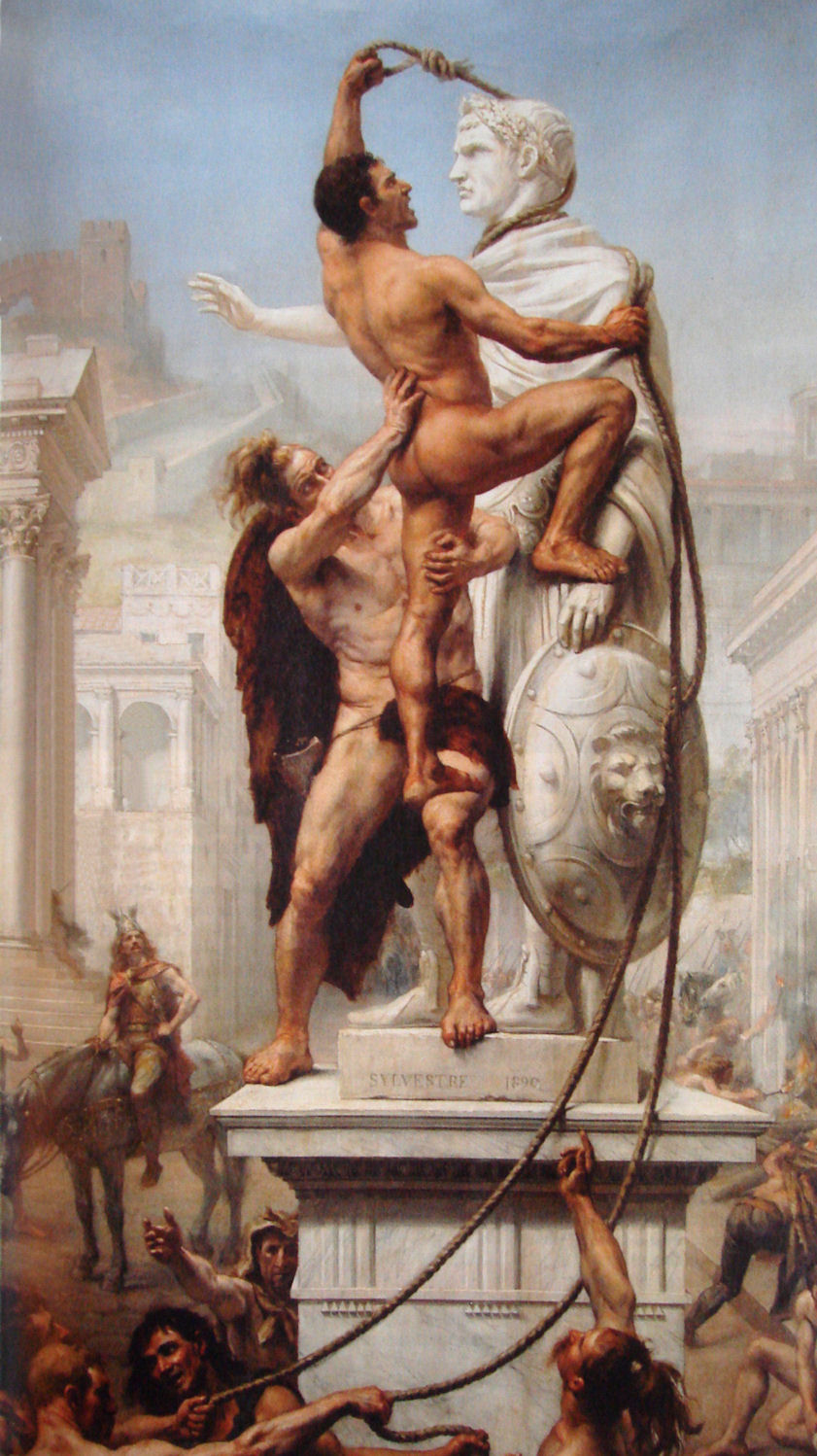
In 410 AD, the Theodosian dynasty saw the Visigoths sack Rome, a shocking event that reverberated throughout the Roman world. The professional field army had collapsed following the death of the general Stilicho in 408, who had tried to reunite the Empire and repel barbarian invasion. This was the first time Rome had been sacked in 800 years and symbolized the vulnerability of the Western Empire.
Sack of Rome by the Visigoths
Painting depicting the Sack of Rome by the Visigoths on 24 August 410
Fall of the Western Roman Empire
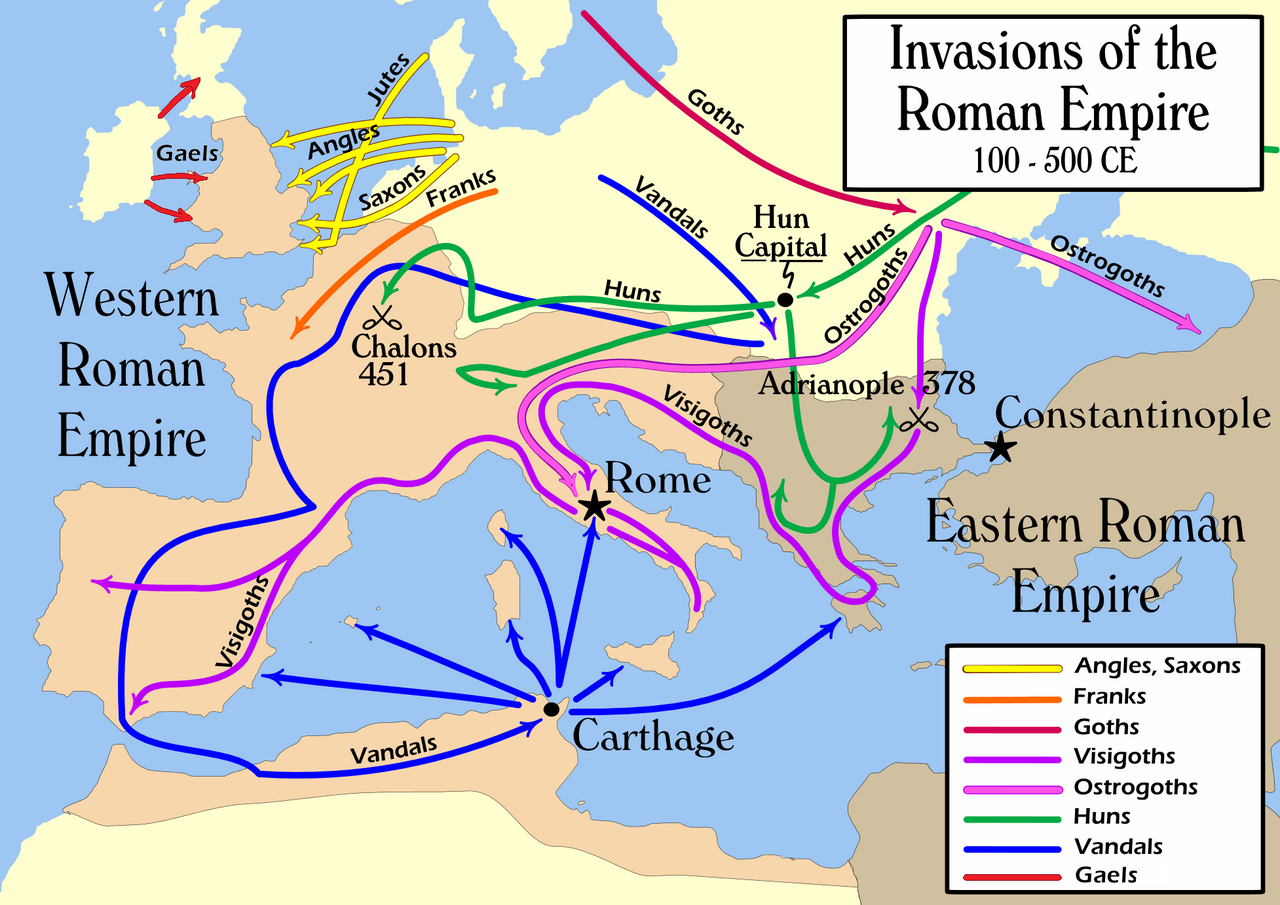
In 476 AD, the barbarian chieftain Odoacer defeated and killed the general Orestes, invaded Ravenna, and dethroned Romulus Augustus, son of Orestes. This event usually marks the end of Classical antiquity and the beginning of the Middle Ages. After 1,200 years of independence and nearly 700 years as a great power, the rule of Rome in the West ended.
Invasions of the Roman Empire
Map showing the barbarian invasions that contributed to the fall of the Western Roman Empire
6th Century
Justinian Codifies Roman Law
Emperor Justinian I ordered the codification of law around 530 AD, creating the Corpus Juris Civilis which preserved Roman legal principles. Roman law as preserved in Justinian's codes continued into the Byzantine Roman Empire and formed the basis of similar codifications in continental Western Europe. Roman law continued to be applied throughout most of Europe until the end of the 17th century.
Justinian Reconquers Italy and North Africa
During the 6th century, the Eastern Emperor Justinian reconquered the Italian peninsula from the Ostrogoths, North Africa from the Vandals, and southern Hispania from the Visigoths. However, within a few years of Justinian's death, Byzantine possessions in Italy were greatly reduced by the Lombards who settled in the peninsula. The Plague of Justinian also weakened the Byzantine Empire significantly.
11th Century
Battle of Manzikert: Byzantine Defeat
In 1071 AD, the Byzantine Empire suffered a decisive defeat at the Battle of Manzikert, which abruptly stopped its expansion and sent the empire into a protracted period of decline. Two decades of internal strife and Turkic invasions ultimately led Emperor Alexios I Komnenos to send a call for help to the Western European kingdoms in 1095. The West responded with the Crusades.
13th Century
Sack of Constantinople by the Fourth Crusade
The conquest of Constantinople in 1204 by participants of the Fourth Crusade fragmented what remained of the Byzantine Empire into successor states, with the ultimate victor being the Empire of Nicaea. After the recapture of Constantinople by Imperial forces, the Empire was little more than a Greek state confined to the Aegean coast. This event marked a catastrophic blow to the Eastern Roman Empire.
15th Century
Fall of Constantinople to the Ottomans
The Eastern Roman (Byzantine) Empire collapsed when Mehmed the Conqueror conquered Constantinople on 29 May 1453. This event marked the definitive end of the Roman Empire, which had lasted in various forms for over 2,200 years since the founding of the Republic. The fall of Constantinople is often used as a marker for the end of the Middle Ages and the beginning of the Early Modern period.