
File:Buddhist Expansion.svg
This map illustrates the spread of Buddhism from its heartland in northern India across all of Asia, representing the core subject of the entire timeline.
History of Buddhism
This timeline covers the history of Buddhism from its origins in 5th century BCE India through its spread across Asia and into the modern Western world. It traces the development of major Buddhist traditions, empires that supported Buddhism, key councils and schisms, and the religion's evolution across two and a half millennia.
Source: Wikipedia500 BCE – 1 BCE
Birth and Life of Siddhārtha Gautama
Siddhārtha Gautama, the historical founder of Buddhism, was born in the small Shakya Republic in what is now modern-day Nepal. He renounced the householder life, studied under various teachers as a sramana ascetic, and attained nirvana and bodhi through meditation. For the remaining 45 years of his life he traveled the Gangetic Plains teaching his doctrine and initiating monks and nuns into his order. By the time of his death at age 80, he had thousands of followers.
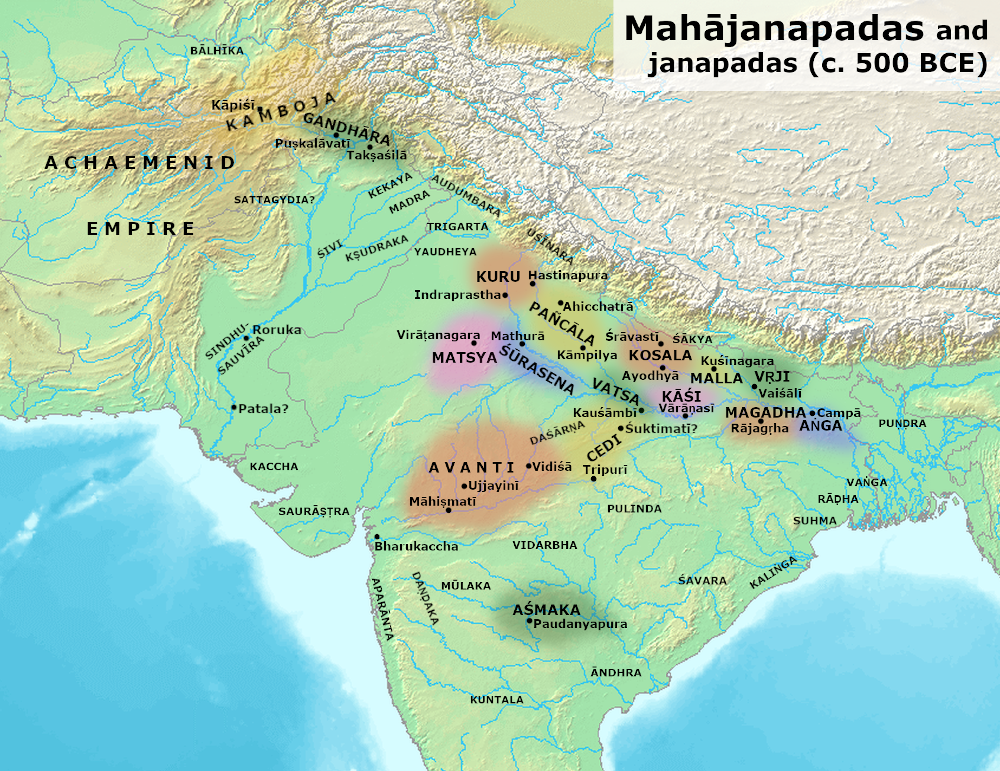
File:Mahajanapadas (c. 500 BCE).png
The sixteen most powerful kingdoms and republics around the lifetime of Gautama Buddha, showing the political landscape of ancient India during his life.
First Buddhist Council at Rājagṛha
Just after the Buddha's Parinirvana, the first Buddhist council was traditionally held at Rājagṛha (today's Rajgir), presided over by Mahākāśyapa with the support of king Ajātasattu. The council aimed to recite and organize the orally transmitted collections of the Buddha's teachings. Almost all modern scholars have questioned the historicity of this first council.
Second Buddhist Council and First Schism
The Second Buddhist Council took place at Vaishali approximately one hundred years after Gautama Buddha's parinirvāṇa, resulting in the first major schism of the Buddhist sangha. The community split into the Sthavira (Elders) and Mahasamghika (Great Sangha) factions, primarily over disagreements about monastic discipline (vinaya). These two groups would further divide into the various Early Buddhist Schools over subsequent centuries.

File:War over the Buddha's Relics, South Gate, Stupa no. 1, Sanchi.jpg
Relief from Sanchi depicting early Buddhist community events, illustrative of the early Buddhist sangha period.
Founding of the Mauryan Empire
The Mauryan Empire was founded by Chandragupta Maurya around 322 BCE and became the world's first major Buddhist state under Emperor Ashoka. The empire established free hospitals and free education and promoted human rights. It encompassed most of the Indian subcontinent and provided the political framework for Buddhism's first major expansion.

File:Maurya Empire, c.250 BCE.png
Map showing the extent of the Maurya Empire, the world's first major Buddhist state.
Introduction of Abhidharma Literature
In the third century BCE, some Buddhists began introducing new systematized teachings called Abhidharma, based on previous lists or tables of main doctrinal topics. Unlike the Nikayas, the Abhidharma literature consisted of systematic doctrinal exposition and often differed across Buddhist schools. These texts further contributed to the development of sectarian identities and sought to analyze all experience into its ultimate constituents called dharmas.
Reign of Emperor Ashoka and Buddhist Expansion
During the reign of the Mauryan Emperor Ashoka (268–232 BCE), Buddhism gained royal support and began to spread more widely, reaching most of the Indian subcontinent. After his invasion of Kalinga, Ashoka experienced remorse and began working to improve the lives of his subjects, building wells, rest-houses and hospitals. He propagated religion by building stupas and pillars urging respect for all animal life, and sent emissaries to spread Buddhism as far as Sri Lanka and the Greek kingdoms.

File:Ashokan Buddhist Missions.png
Map of the Buddhist missions during the reign of Ashoka, showing the spread of Buddhism across the known world.
Ashoka's Proselytism in the Hellenistic World
Ashoka's edicts describe efforts to propagate the Buddhist faith throughout the Hellenistic world, identifying Greek monarchs including Antiochus II Theos, Ptolemy II Philadelphos, Antigonus Gonatas, Magas, and Alexander II as recipients of Buddhist proselytism. Emissaries including Greek monks like Dhammarakkhita were sent to spread Buddhism. This represents one of the earliest known instances of Buddhist missionary activity in the Western world.
File:Ashokan Buddhist Missions.png
Map showing the extent of Ashoka's Buddhist missions, including to the Hellenistic world.
Third Buddhist Council at Pataliputra
Ashoka convened the third Buddhist council around 250 BCE at Pataliputra (today's Patna) with the elder Moggaliputtatissa. The objective was to purify the Saṅgha, particularly from non-Buddhist ascetics attracted by royal patronage. Following the council, Buddhist missionaries were dispatched throughout the known world as recorded in some of the edicts of Ashoka.

File:6thPillarOfAshoka.JPG
One of the pillars of Ashoka, which recorded his edicts and missionary activities.
Buddhism Established in Sri Lanka
Sri Lankan chronicles state that Ashoka's son Mahinda brought Buddhism to the island during the 2nd century BCE, converting King Devanampiya Tissa and many of the nobility. Ashoka's daughter Saṅghamitta also established the bhikkhunī (order for nuns) in Sri Lanka, bringing a sapling of the sacred bodhi tree that was planted in Anuradhapura. These two figures are seen as the mythical founders of Sri Lankan Theravada Buddhism.

File:Jetavanaramaya Stupa.jpg
The Jetavanaramaya in Anuradhapura, Sri Lanka, one of the great Buddhist monuments built in the early centuries of Sri Lankan Buddhism.
Greco-Bactrian Invasion and Indo-Greek Kingdom
The Greco-Bactrian king Demetrius I invaded the Indian Subcontinent around 200 BCE, establishing an Indo-Greek kingdom that lasted in parts of Northwest South Asia until the end of the 1st century CE. Buddhism flourished under the Indo-Greek and Greco-Bactrian kings, leading to a unique synthesis of Greek and Buddhist art and culture known as Greco-Buddhism.

File:Gandhara Buddha (tnm).jpeg
A Greco-Buddhist statue from Gandhara, one of the first representations of the Buddha, showing the synthesis of Greek and Buddhist artistic traditions.
Shunga Dynasty and Decline of Mauryan Buddhism
The Shunga dynasty (185–73 BCE) was established after military commander Pushyamitra Shunga assassinated the last Mauryan king. Buddhist scriptures allege that Pushyamitra persecuted Buddhists, destroying monasteries and offering rewards for killing monks, though modern historians dispute this based on archaeological evidence. Buddhist monks deserted the Ganges valley and artistic creation shifted to Gandhāra, Mathura, and Amaravati.
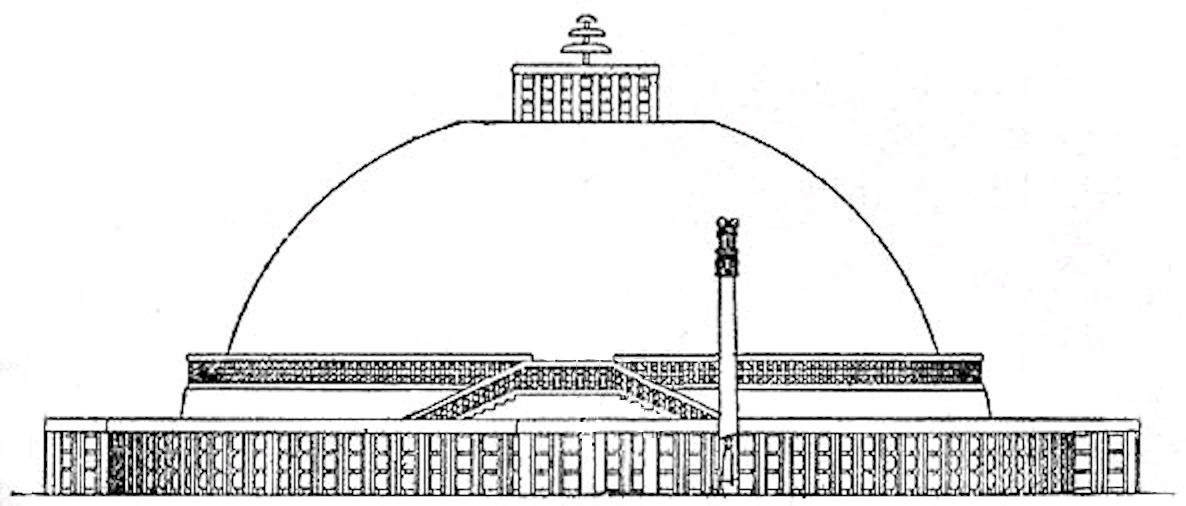
File:Sanchi Great Stupa under the Sungas.jpg
The Great Stupa at Sanchi as it appeared under the Shunga dynasty, showing continued Buddhist architectural activity despite alleged persecution.
Reign of King Menander I and Greco-Buddhism
Menander (reigned c. 160–135 BCE) was one of the most famous Indo-Greek kings and may have converted to Buddhism. He is presented in the Mahāyāna tradition as one of the great benefactors of the faith, on a par with Ashoka. The Milinda Pañha records a famous dialogue between Menander and the Buddhist monk Nāgasena, and upon Menander's death his remains were enshrined in stupas in a parallel with the historic Buddha.
File:Gandhara Buddha (tnm).jpeg
Greco-Buddhist art from the period of Indo-Greek rule, reflecting the cultural synthesis promoted by kings like Menander.
Origins of Mahayana Buddhism
The Buddhist movement that became known as Mahayana (Great Vehicle) began sometime between 150 BCE and 100 CE, drawing on both Mahasamghika and Sarvastivada trends. It emphasized the Bodhisattva path to full Buddhahood and emerged as a set of loose groups associated with new texts called the Mahayana sutras. The earliest inscription recognizably Mahayana dates from 180 CE and is found in Mathura.

File:Amaravati Stupa relief at Museum.jpg
Relief from the Amarāvatī Stupa in Andhra Pradesh, a major site associated with the origins of Mahayana Buddhism.
Pāli Canon Written Down in Sri Lanka
The Pāli canon was written down during the 1st century BCE to preserve the teaching in a time of war and famine. It is the only complete collection of Buddhist texts to survive in a Middle Indo-Aryan language and reflects the tradition of the Mahavihara school. This event was crucial for the preservation and transmission of Theravada Buddhism.
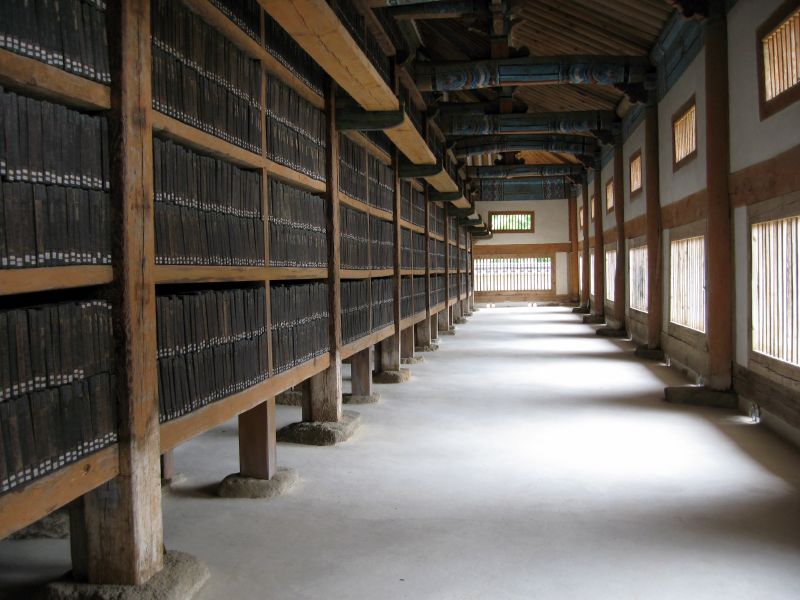
File:Korea-Haeinsa-Tripitaka_Koreana-01.jpg
The Tripitaka Koreana, a later example of the Buddhist canon being preserved in written form, illustrating the tradition of canonizing Buddhist texts.
0 CE – 499 CE
Kushan Empire and Height of Gandharan Buddhism
The Kushan empire (30–375 CE) was formed by the invading Yuezhi nomads and eventually encompassed much of northern India, Pakistan and Afghanistan. During Kushan rule, Gandharan Buddhism was at the height of its influence and a significant number of Buddhist centers were built or renovated. The Buddhist art of Kushan Gandhara was a synthesis of Greco-Roman, Iranian and Indian elements.

File:Map of the Kushan Empire.png
Map showing the Kushan territories and the maximum extent of Kushan dominions under Kanishka the Great, the height of Gandhāran Buddhist expansion.
Buddhism Introduced to China During Han Dynasty
Buddhism was introduced in China during the Han dynasty (206 BCE–220 CE) and was present by around 50 CE. The first documented Buddhist texts translated into Chinese are those of the Parthian An Shigao (148–180 CE). Early translators faced the difficulty of communicating foreign Buddhist concepts to the Chinese and often used Taoist terminology, a practice called 'concept-matching'.
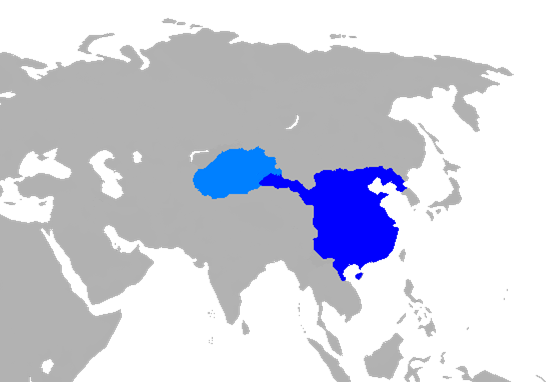
File:Han Dynasty map 2CE.png
Map of the Han Empire, showing the political context in which Buddhism was first introduced to China.
Buddhism Spreads Along the Silk Road to Central Asia
Buddhism was present in Central Asia from about the second century BCE, but expanded significantly during the 1st century CE under the Kushans. The Sarvastivada school flourished in this region, and monks also brought Mahayana teachings. Buddhism eventually reached modern-day Pakistan, Kashmir, Afghanistan, Uzbekistan, Turkmenistan and Tajikistan, with Buddhists translating texts into local languages.
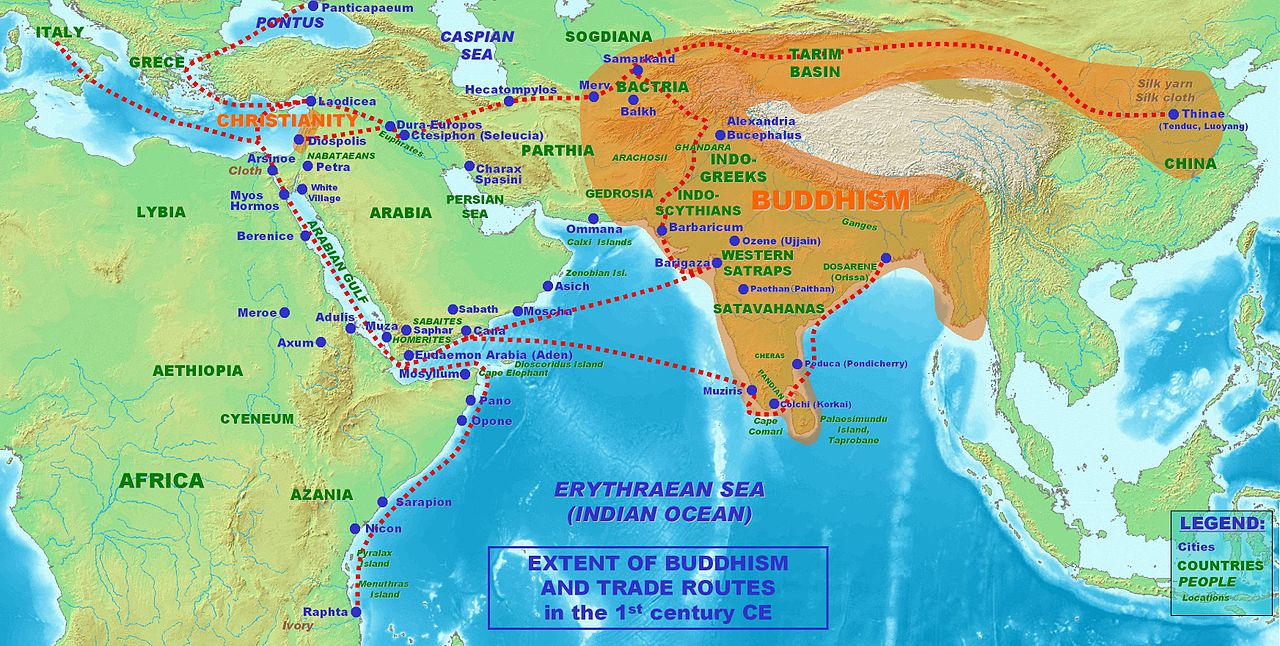
File:ExtentOfBuddhismAndTrade.jpg
Map showing the extent of Buddhism and trade routes in the 1st century CE, illustrating the Silk Road transmission of Buddhism.
Emperor Kanishka's Support of Buddhism and Buddhist Council
Emperor Kanishka (128–151 CE) is particularly known for his support of Buddhism, building stupas and monasteries in Peshawar. He convened a major Buddhist council for the Sarvastivada tradition, gathering 500 learned monks to compile extensive commentaries on the Abhidharma. The main fruit of this council was the compilation of the vast Mahā-Vibhāshā commentary, and Kushan royal support allowed Gandharan Buddhism to spread along the Silk Road to Central Asia and China.
File:Map of the Kushan Empire.png
Map of the Kushan Empire under Kanishka, showing the extent of his realm and the spread of Gandharan Buddhism.
Parthian An Shigao Translates Buddhist Texts into Chinese
The Parthian monk An Shigao (c. 148 CE) was among the first translators of Buddhist scriptures into Chinese, playing a key role in the transmission of Buddhism to China. Central Asians, particularly Iranians, played a crucial role in this transmission, with thirty-seven early translators of Buddhist texts identified, the majority from the Iranian cultural sphere.
First Mahayana Scriptural Texts Translated into Chinese
The first known Mahāyāna scriptural texts were translations into Chinese by the Kushan monk Lokakṣema in Luoyang, between 178 and 189 CE. This marked a crucial step in the transmission of Mahayana Buddhism to East Asia. These translations helped establish Mahayana as a major tradition in China.
Buddhism Flourishes During the Gupta Empire
Buddhism continued to flourish in India during the Gupta Empire (4th–6th centuries), which brought order to much of north India. Gupta rulers such as Kumaragupta I enlarged Nālandā university, which became the largest and most influential Buddhist university in India for many centuries. Great Buddhist philosophers like Dignaga and Dharmakirti taught philosophy there, and the influence of the Gupta style of Buddhist art spread across Asia.
Buddhism Introduced to Korea
Buddhism was introduced to the Three Kingdoms of Korea beginning around 372 CE. During the 6th century, many Korean monks traveled to China and India to study Buddhism and various Korean Buddhist schools developed. Buddhism prospered in Korea during the North–South States Period (688–926) when it became a dominant force in society.
File:Korea-Haeinsa-Tripitaka_Koreana-01.jpg
The Tripitaka Koreana at Haeinsa, South Korea, representing the deep Buddhist heritage of Korea.
Chinese Monk Faxian Visits India
The Chinese pilgrim Faxian visited India during the reign of the Gupta emperor Chandragupta II in 405 CE, commenting on the prosperity and mild administration of the Gupta empire. His visit is an important record of Buddhism in India during the Gupta period. Chinese pilgrims like Faxian played a key role in transmitting Buddhist knowledge between India and China.
500 CE – 999 CE
Buddhism Introduced to Japan
Buddhism was introduced to Japan in the 6th century by Korean monks bearing sutras and an image of the Buddha. During the Nara Period (710–794), Emperor Shōmu ordered the building of temples throughout his realm, and numerous temples and monasteries were built in the capital city of Nara. There was also a proliferation of Buddhist sects known as the Nanto Rokushū (the Six Nara Sects).

File:Kamakura Budda Daibutsu front 1885.jpg
The Great Buddha of Kamakura, representing the deep Buddhist heritage of Japan.
Buddhism Introduced to Tibet
Buddhism arrived in Tibet during the 7th century, primarily as a blend of Mahāyāna and Vajrayāna from the universities of the Pāla empire. From the outset, Buddhism was opposed by the native shamanistic Bon religion, but with royal patronage it thrived to a peak under King Rälpachän (817–836). Terminology in translation was standardized around 825, enabling a highly literal translation methodology.
Xuanzang Travels to India
The Chinese monk Xuanzang traveled to India during the Tang dynasty, bringing back 657 Buddhist texts along with relics and statues. He established a famed translation school in the Tang capital of Chang'an, focusing on Yogacara school texts. His travels provided invaluable records of Buddhism across India and Central Asia in the 7th century.

File:SectarianBuddhistschools.png
Map of major Buddhist schools in South Asia at around the time of Xuanzang's visit in the seventh century.
Srivijaya Empire Adopts and Spreads Buddhism
The Malay Srivijaya (650–1377), a maritime empire centered on the island of Sumatra, adopted Mahāyāna and Vajrayāna Buddhism and spread Buddhism to Java, Malaya and other regions they conquered. The Chinese Buddhist Yijing described their capital at Palembang as a great center of Buddhist learning where the emperor supported over a thousand monks. Atiśa studied there before travelling to Tibet as a missionary.
Pāla Empire and Flourishing of Vajrayana Buddhism
The Pāla Empire (8th–12th centuries) in the Bengal region were staunch supporters of Buddhism, building several important Buddhist centers such as Vikramashila, Somapura and Odantapuri. At these great Buddhist centers, scholars developed the philosophies of Vajrayana, Abhidharma, Madhyamaka, Yogacara and Pramana. Under the Pālas, Vajrayana Buddhism flourished and spread to Tibet, Bhutan and Sikkim.
Founding of Kūkai's Shingon and Saichō's Tendai Schools in Japan
During the late Nara period, the key figures of Kūkai (774–835) and Saichō (767–822) founded the influential Japanese schools of Shingon and Tendai, respectively. An important doctrine for these schools was hongaku (innate awakening or original enlightenment), which was influential for all subsequent Japanese Buddhism. Buddhism also influenced the Japanese religion of Shinto, which incorporated Buddhist elements.
Borobudur Temple Complex Built in Java
The Mataram kingdom (732–1006) in Java promoted Mahayana Buddhist culture and is known for their monumental temple construction, especially the massive Borobudur, as well as Kalasan, Sewu, and Prambanan. Borobudur is one of the greatest Buddhist monuments in the world. This period represents the height of Buddhist culture in the Indonesian archipelago.
1000 CE – 1499 CE
King Anawrahta Adopts Theravada Buddhism in Burma
King Anawrahta (1044–1078), the founder of the Pagan Empire, adopted the Theravādin Buddhist faith from Sri Lanka, building numerous Buddhist temples at his capital of Pagan. This marked the beginning of Theravada's dominance in Burma. After invasions from the Burmese and the Mongols weakened Theravada in this region, it had to be reintroduced from Sri Lanka.
Jayavarman VII Builds Mahayana Buddhist Structures at Angkor
One of the greatest Khmer kings, Jayavarman VII (1181–1219), built large Mahāyāna Buddhist structures at Bayon and Angkor Thom. Mahayana Buddhism and Hinduism were the main religions of the Khmer Empire (802–1431), which dominated most of the South-East Asian peninsula. Under the Khmer, numerous temples, both Hindu and Buddhist, were built in Cambodia and neighboring Thailand.
New Buddhist Schools Founded During Kamakura Period in Japan
During the Kamakura period (1185–1333), six new Buddhist schools were founded in Japan, known as 'New Buddhism' or Kamakura Buddhism. They include the influential Pure Land schools of Hōnen and Shinran, the Rinzai and Soto schools of Zen founded by Eisai and Dōgen, and the Lotus Sutra school of Nichiren. These schools competed with the older Nara schools and remain influential in Japanese Buddhism today.
File:Kamakura Budda Daibutsu front 1885.jpg
The Great Buddha of Kamakura, built during the Kamakura period, representing the flourishing of Buddhism in this era.
Destruction of Nālandā University by Turkic Raiders
A milestone in the decline of Indian Buddhism occurred in 1193 when Turkic Islamic raiders under Muhammad Khilji burnt Nālandā, the greatest Buddhist university in India. By the end of the 12th century, following the Islamic conquest of Buddhist strongholds in Bihar and Bengal by Muhammad bin Bakhtiyar Khalji, the practice of Buddhism retreated to the Himalayan foothills and Sri Lanka. This effectively ended Buddhism as a major religion in its homeland.
Kublai Khan Adopts Tibetan Buddhism and Yuan Dynasty
The emperors of the Yuan dynasty (1271–1368) converted to Tibetan Buddhism, with Kublai Khan inviting lama Drogön Chögyal Phagpa of the Sakya school to spread Buddhism throughout his realm. Buddhism became the de facto state religion of the Yuan dynasty. In 1269, Kublai Khan commissioned Phagpa lama to design the 'Phags-pa script to unify the writing systems of the multilingual empire.
1500 CE – 1999 CE
Altan Khan and the Title of Dalai Lama
In 1578, Altan Khan invited the 3rd Dalai Lama, head of the rising Gelug lineage, to a summit, forming an alliance that gave Altan Khan legitimacy and provided the Buddhist school with protection and patronage. Altan Khan recognized Sonam Gyatso as a reincarnation of Phagpa lama and gave him the title of Dalai Lama ('Ocean Lama'), which his successors still hold. This meeting established the Gelug school's dominance and the institution of the Dalai Lama.
5th Buddhist Council in Burma
King Mindon (r. 1853–1878) convened the 5th Buddhist council (1868–71) in Burma, where different editions of the Pali Canon were cross-checked and a final version was inscribed on 729 stone slabs, currently still the world's largest book. This council was a major effort to preserve and standardize the Theravada Buddhist canon. A new meditation movement called the Vipassana movement also arose in Burma during this period.
Panadura Debate and Buddhist Modernism
By 1865, Buddhist monks in British Ceylon began a counter movement against Christian attacks, printing pamphlets and debating Christians in public. The famous Panadura debate in 1873 saw the monk Gunananda win a debate in front of a crowd of 10,000. This period saw the rise of Buddhist modernism, which tended to see the Buddha from a humanist point of view and claimed that Buddhism was a rational and scientific religion.
Sir Edwin Arnold Publishes 'The Light of Asia'
Sir Edwin Arnold's book-length poem The Light of Asia (1879), a life of the Buddha, was a successful early publication on Buddhism that led to much interest among English-speaking middle classes. This work, along with the scholarship of Hermann Oldenberg, T. W. Rhys Davids and F. Max Müller, was influential in introducing Buddhism to western audiences. The late 19th century also saw the first-known modern western conversions to Buddhism.
Henry Steel Olcott and Helena Blavatsky Convert to Buddhism
The late 19th century saw the first-known modern western conversions to Buddhism, including leading Theosophists Henry Steel Olcott and Helena Blavatsky in 1880 in Sri Lanka. The Theosophical Society was very influential in popularizing Indian religions in the west. Olcott (1832–1907) and Anagarika Dharmapala (1864–1933) promoted Buddhist schools, lay organizations and the printing of newspapers.
6th Buddhist Council in Burma
In 1956, Burmese politician U Nu presided over a sixth Buddhist council, which saw monks from various Theravada countries produce another new edition of the Pali Canon. This council was a major international effort to standardize and preserve the Theravada Buddhist canon. It represented a significant moment of cooperation among Theravada Buddhist nations.
B. R. Ambedkar and the Dalit Buddhist Movement
The lawyer B. R. Ambedkar (1891–1956), leader of the Dalit Buddhist movement, urged low caste Indian Dalits to convert to Buddhism, helping usher in a revival of Buddhism in India. This movement helped Buddhism become popular among some Indian intellectuals and marginalized communities. Ambedkar's conversion and advocacy represented a significant modern development in Indian Buddhism.
14th Dalai Lama Flees Tibet
Tibet remained a traditional theocratic state with the Dalai Lamas as heads of state from 1912 until the Chinese communist invasion in 1950. The 14th Dalai Lama fled the country in 1959, and a Tibetan exile community was established in India with its center at Dharamsala. The 14th Dalai Lama has become one of the most popular Buddhist leaders in the world today.

File:President Barack Obama greets His Holiness the Dalai Lama (27591124962).jpg
The 14th Dalai Lama meeting with U.S. President Barack Obama in 2016, illustrating his continued global influence after fleeing Tibet.
Chinese Communist Cultural Revolution Destroys Buddhist Institutions
The Communist Cultural Revolution (1966–76) led to the closing of all Buddhist monasteries in China and widespread destruction of Buddhist institutions. During the Red Guard period (1966–67), Chinese communists also destroyed around 6,000 monasteries in Tibet along with their art and books, in an attempt to wipe out Tibetan Buddhist culture. However, since 1977, there has been a general shift in policy and Buddhist activity has been renewed.
Founding of the Insight Meditation Society
Theravada vipassana meditation was established in the West through the founding of institutions like the Insight Meditation Society in 1975. This was part of a broader wave of Buddhist institutions being established in the Western world, including Tibetan Buddhist centers and Zen centers. The Thai forest tradition also established communities in the US and UK during this period.
2000 CE – 2499 CE
Saffron Revolution in Burma
In 2007, Buddhist monks in Burma became involved in political protest movements in what became known as the Saffron Revolution. This represented a significant instance of Buddhist monks engaging in political activism in the modern era. The protests highlighted the ongoing role of Buddhism in Burmese society and politics.
Dalai Lama Meets U.S. President Barack Obama
The 14th Dalai Lama met with U.S. President Barack Obama in 2016, illustrating the global prominence of Tibetan Buddhism and the Dalai Lama's role as a world religious leader. This meeting reflects the broader integration of Buddhism into global political and cultural discourse in the modern era. The Dalai Lama has become one of the most recognized Buddhist figures in the world.
File:President Barack Obama greets His Holiness the Dalai Lama (27591124962).jpg
The Dalai Lama meeting with U.S. President Barack Obama in 2016.