
Territories of the Umayyad Caliphate
Map showing the vast extent of the Umayyad Caliphate, one of the largest empires in history, representing the peak of early Islamic expansion
History of Islam
This timeline covers the history of Islam from the birth of Muhammad around 570 CE through the modern period, tracing the rise and fall of major Islamic empires, caliphates, and dynasties. It encompasses military conquests, political developments, religious schisms, and cultural achievements across the Muslim world from Arabia to Southeast Asia.
Source: Wikipedia6th Century
Birth of Muhammad
Muhammad, the founder of Islam, was born in Mecca around 570 CE into the Arab clan of Quraysh, the chief tribe of Mecca. His family was part of a dominant force in the Hejaz region. Mecca was an important caravan trading center, and the Quraysh supported sacred months to sustain the Hajj trade.
7th Century
Muhammad Receives First Divine Revelations
Around 610 CE, Muhammad began receiving what Muslims consider to be divine revelations delivered through the angel Gabriel at Mount Hira on the Laylat al-Qadr. These revelations called for submission to the one God, preparation for the Last Judgement, and charity for the poor. These inspirations would later form the Quran.

Sanaa manuscript
A page from the Sanaa manuscript, one of the oldest Quranic manuscripts
Sahaba Flee to Zeila, Abyssinia
Early Islamic disciples fled to the port city of Zeila in modern-day northern Somalia to seek protection from the Quraysh at the court of the Emperor of Aksum. Some of the Muslims granted protection settled in parts of the Horn region to promote the religion. This migration helped spread Islam to the Horn of Africa.

Ruins of Zeila (Saylac), Somalia
Ruins of the ancient port city of Zeila where early Muslims sought refuge
Sahabas Preach in China
Four Sahabas (Sa'ad ibn abi Waqqas, Wahb Abu Kabcha, Jafar ibn Abu Talib and Jahsh ibn Riyab) preached in China in 616/17 CE after sailing from Abyssinia. This represents one of the earliest introductions of Islam to China. Sa'ad ibn abi Waqqas would later return to China multiple times, including leading an embassy in 650-51 CE at the request of Caliph Uthman.

The Huaisheng Mosque of China
The Huaisheng Mosque of China, built by Sa'd ibn Abi Waqqas
The Hijra: Muhammad Migrates to Medina
In 622 CE, Muhammad migrated from Mecca to the city of Yathrib (subsequently called Medina), an event known as the Hijra. He was joined by his followers and began to unify the tribes of Arabia under Islam. Later generations counted this event as the start of the Islamic era, and it marked a turning point in the development of the Muslim community.

Hijra Abyssinia (Rashid ad-Din)
1314 Illustration by Rashid ad-Din depicting early Muslim migration
First Mosque Built in India
According to historical records, the Cheraman Perumal Mosque was built in around 629 CE, said to be the first mosque in India. Native legends say a group of Sahaba under Malik Ibn Deenar arrived on the Malabar Coast and preached Islam. The Second Chera King Cheraman Perumal accepted Islam and received the name Tajudheen.
Muhammad Secures Control of Mecca
After a series of military confrontations and political manoeuvres, Muhammad secured control of Mecca and the allegiance of the Quraysh in 629 CE. He returned to Mecca and ordered the destruction of all pagan idols. This marked the culmination of his mission to unite Arabia under Islam.

Map of Arabia 600 AD
Map of the tribes of Arabia in late antiquity
Death of Muhammad
Muhammad died in 632 CE, by which time almost all the tribes of the Arabian Peninsula had converted to Islam. His death triggered a succession crisis, as disagreement broke out over who would lead the Muslim community. This dispute would eventually lead to the major sectarian split between Sunni and Shia Islam.
Abu Bakr Becomes First Caliph
After Muhammad's death, Abu Bakr, one of his closest associates, was chosen as the first caliph ('successor'). He asserted his authority in the Ridda wars against tribal leaders who refused to extend agreements made with Muhammad. The momentum of these campaigns carried into the lands of the Byzantine and Sasanian empires.
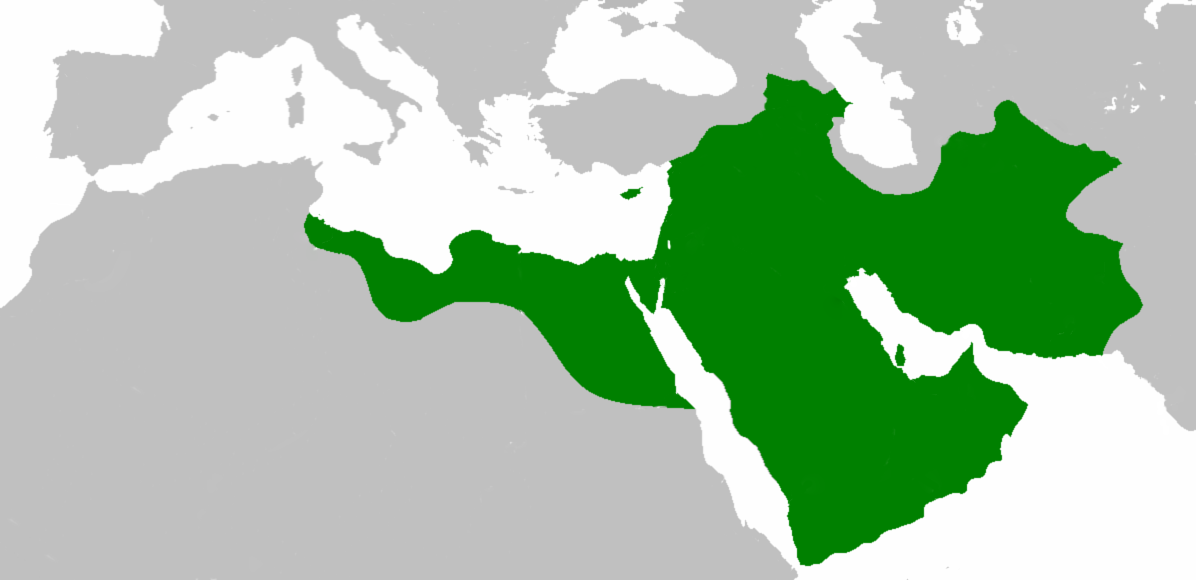
Rashidun Caliphate
Map of the Rashidun Caliphate at its peak
Umar ibn al-Khattab Becomes Second Caliph
Umar ibn al-Khattab became the second caliph in 634 CE and significantly expanded the Islamic empire. He improved administration, ordered improvement of irrigation networks, and established the Bayt al-mal welfare institution for the poor. By the end of his reign, Syria, Egypt, Mesopotamia, and much of Persia were incorporated into the Islamic empire.
Rashidun Caliphate
Map of the Rashidun Caliphate at its peak under Uthman
Arab Muslim Conquest of Egypt Completed
By the end of 641 CE, all of Egypt was in Arab hands following the Muslim conquests. The Arab armies had also controlled Mesopotamia and invaded Armenia. A subsequent attempt to conquer the Nubian kingdom of Makuria was repelled. Egypt's conquest was a major strategic and economic gain for the early Islamic empire.

Byzantine territories invaded by Arab Muslims
Eastern territories of the Byzantine Empire invaded by the Arab Muslims during the Arab–Byzantine wars (650 CE)
Uthman ibn Affan Becomes Third Caliph and Standardizes the Quran
Uthman ibn Affan became the third caliph in 644 CE and ordered a standard copy of the Quran to be prepared to address phonetic variations in recitation. The compilation was finished between 650 and 656 CE, and copies were sent to different centers of the expanding Islamic empire. This standardization was a pivotal moment in Islamic religious history.

First Islamic coins by caliph Uthman
Sasanid style coins during the Rashidun period
Muawiyah Sets Up Muslim Navy
In 649 CE, Muawiyah ibn Abi Sufyan, governor of Syria, established a navy to stop Byzantine harassment from the sea during the Arab-Byzantine wars. The ships were crewed by Monophysite Christians, Egyptian Coptic Christians, and Jacobite Syrian Christians alongside Muslim troops. This navy defeated the Byzantine navy at the Battle of the Masts in 655 CE, opening the Mediterranean Sea to Muslim ships.
Battle of the Masts
In 655 CE, the Muslim navy defeated the Byzantine navy at the Battle of the Masts, opening up the Mediterranean Sea to Muslim ships. This was a decisive naval victory that shifted the balance of power in the Mediterranean. The Muslim fleet was crewed by Christian sailors and Muslim troops under Muawiyah's command.
Ali ibn Abi Talib Becomes Fourth Caliph and First Fitna
When Uthman was assassinated in 656 CE, Ali ibn Abi Talib, cousin and son-in-law of Muhammad, assumed the position of caliph and moved the capital to Kufa in Iraq. This triggered the first Muslim civil war (the 'First Fitna') as Muawiyah I, governor of Syria, demanded arrest of the culprits. Ali was assassinated by the Kharijites in 661 CE.
Umayyad Caliphate Established
Muawiyah I established the Umayyad dynasty with a capital in Damascus after the Hasan-Muawiya treaty in 661 CE. Hasan ibn Ali handed over power to Muawiyah on the condition that he would be just and not establish a dynasty, but Muawiyah broke these conditions. The Umayyad dynasty would rule from 661 to 750 CE and become one of the largest empires the world had seen.
Territories of the Umayyad Caliphate
Map showing the vast extent of the Umayyad Caliphate
Battle of Karbala and Death of Husayn ibn Ali
Husayn ibn Ali, Muhammad's only surviving grandson, refused to swear allegiance to the Umayyads and was killed in the Battle of Karbala in 661 CE. This event is still mourned by Shia Muslims on the Day of Ashura and represents the foundational tragedy of Shia Islam. The battle deepened the sectarian divide between Sunni and Shia Muslims.
Arab Muslim Armies Conquer Kabul
In 664 CE, Arab Muslim armies conquered Kabul, extending Islamic rule into Central Asia. In 665 CE they pushed further into the Maghreb. These conquests were part of the broader expansion of the Umayyad Caliphate under Muawiyah I, who also extended Muslim rule to Rhodes, Crete, Bukhara, and Samarkand.
Founding of the Great Mosque of Kairouan
Arab general Uqba ibn Nafi erected the city of Kairouan in Tunisia in 670 CE and simultaneously built the Great Mosque of Kairouan, considered the oldest and most prestigious sanctuary in the western Islamic world. Kairouan was the first city founded by Muslims in the Maghreb. The mosque's present form dates from the 9th century.
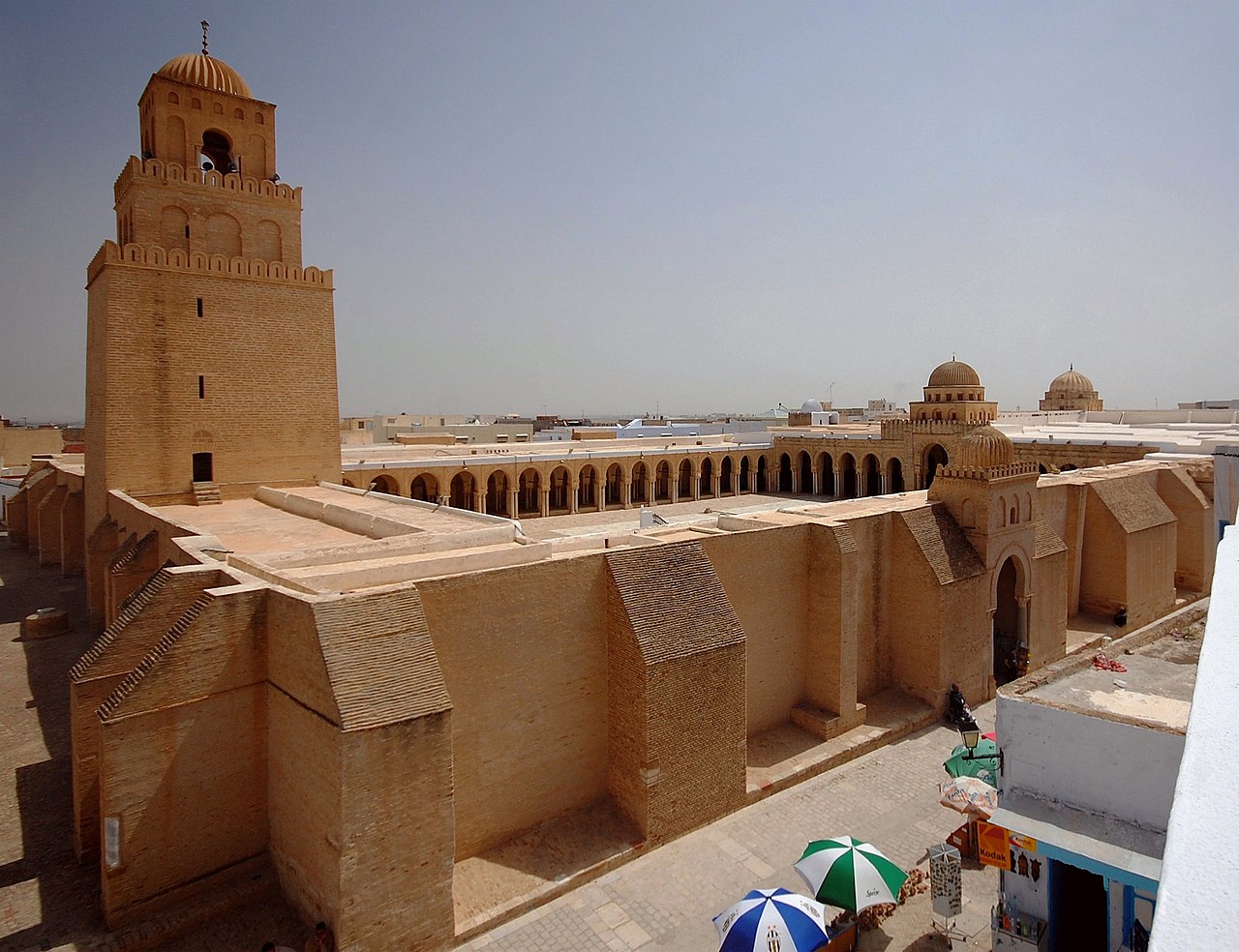
Great Mosque of Kairouan
The Mosque of Uqba (Great Mosque of Kairouan), founded by the Umayyad general Uqba Ibn Nafi in 670
Dome of the Rock Built in Jerusalem
Under the Umayyad caliph Abd al-Malik ibn Marwan, the Dome of the Rock was built in Jerusalem between 691 and 692 CE. This is where the word 'Islam' appears for the first time in an inscription. Abd al-Malik also played a major role in the reworking of the Quranic text and minted a new Islamic currency.

The Dome of Al Aqsa Mosque
The Al-Aqsa Mosque compound in Jerusalem
Battle of Sebastopolis and Islamic Currency Reform
In 692 CE, the Battle of Sebastopolis in Asia Minor resulted in a decisive defeat of the Byzantine Empire under Justinian II by Caliph Abd al-Malik, following the defection of a large contingent of Slavs. Following this victory, the Islamic currency was made the exclusive currency in the Muslim world. Abd al-Malik also made Arabic the state language and organized a regular postal service.

Pseudo-Byzantine coin
A Pseudo-Byzantine coin with depictions of Byzantine Emperor Constans II
8th Century
Muhammad ibn al-Qasim Reaches the Indus Valley
Islamic armies under Muhammad ibn al-Qasim made it as far as the Indus Valley, marking the first significant Islamic conquest of the Indian subcontinent. Muhammad bin Qasim conquered Sindh, though this was a short-lived consolidation of Indian territory. This conquest opened the door for future Islamic expansion into South Asia.

Qutb Minar ruins
Qutub Minar, commenced by Qutb-ud-din Aybak of the Slave dynasty, 1st dynasty of the Delhi Sultanate
Muslim Conquest of the Iberian Peninsula Begins
In 711 CE, Arab forces under the Berber General Tariq ibn Ziyad crossed the Strait of Gibraltar (named after the general) and began the conquest of southern Spain (al-Andalus). The Visigothic king Roderic was defeated and killed on 19 July at the Battle of Guadalete. By 718 CE, Muslims dominated most of the Iberian Peninsula.

Alhambra interiors
The interiors of the Alhambra in Granada, Spain decorated with arabesque designs
Battle of Tours Halts Islamic Expansion into Europe
The Umayyad army's advance into France was stopped at the Battle of Tours (also known as the Battle of Poitiers), marking the farthest extent of Islamic control in Europe. The Iberian Peninsula remained under Muslim control, but further expansion northward was halted. This battle is considered a pivotal moment in European history.

Umayyad army invades France
Umayyad army invades France after conquering the Iberian Peninsula
Abbasid Revolution Overthrows Umayyad Caliphate
The descendants of Muhammad's uncle Abbas ibn Abd al-Muttalib, rallying discontented mawali, poor Arabs, and Shia against the Umayyads, overthrew them with the help of general Abu Muslim in 750 CE. The Abbasid dynasty was inaugurated and the capital was moved to Baghdad. Almost the entire Umayyad dynasty was killed, except for prince Abd al-Rahman who escaped to the Iberian Peninsula.

Abbasid Caliphate in the 850s
Map of the Abbasid Caliphate at its height
Abd al-Rahman I Establishes Independent Caliphate in Spain
Abd al-Rahman I, a surviving member of the Umayyad family, escaped to the Iberian Peninsula and established an independent caliphate there in 756 CE. He proclaimed himself the al-Andalus emir after winning the Battle of Musarah. He began building the great mosque of Córdoba and died on 29 September 788 after a reign of thirty-four years.

The exterior of the Mezquita
The exterior of the Mezquita (Great Mosque) of Córdoba
Harun al-Rashid Rules the Abbasid Golden Age
Harun al-Rashid ruled the Abbasid Caliphate from 786 to 809 CE, a period marked by scientific, cultural, and religious prosperity. He established the library Bayt al-Hikma ('House of Wisdom'), and the arts and music flourished during his reign. His reign is considered part of the Islamic Golden Age.
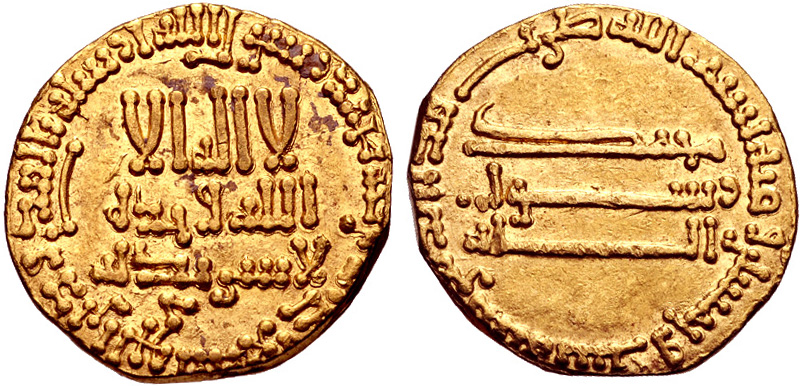
Gold dinar of Abbasid caliph Al-Mansur
Gold dinar of Abbasid caliph Al-Mansur, founder of Baghdad, patron of art and science
Idrisid Dynasty Founded in Morocco
The Idrisid dynasty, the first Arab rulers in the western Maghreb (Morocco), began ruling in 788 CE. The dynasty is named after its first sultan Idris I. They ruled until 985 CE and represented the establishment of an independent Islamic state in the far western Maghreb.
9th Century
Abbasids Conquer Southern Italy
In 827 CE, the Abbasid dynasty conquered Southern Italy, initially having also conquered Mediterranean islands including the Balearics. This extended Islamic rule into the heart of Europe. The Muslim Moors would later be deported and enslaved from the Emirate of Sicily and elsewhere in southern Italy.
Hamdanid Dynasty Founded
The Hamdanid dynasty was founded by Hamdan ibn Hamdun when he was appointed governor of Mardin in Anatolia by the Abbasid Caliphs in 890 CE. This was one of several regional dynasties that emerged as the Abbasid Caliphate fragmented. The Hamdanids would play a significant role in the politics of the region.
10th Century
Fatimid Caliphate Founded
The Fatimid dynasty was founded in 909 CE by Abdullah al-Mahdi Billah in Ifriqiya (modern-day Tunisia and eastern Algeria). He legitimized his claim through descent from Muhammad by way of his daughter Fatima and her husband Ali ibn Abi Talib. The Fatimids would eventually conquer Egypt and establish Cairo as their capital.

Fatimid Caliphate in 1000
Map of the Fatimid Caliphate at its height around 1000 CE
Aghlabids Deposed by Fatimid Dynasty
The Aghlabid rule in the Maghreb was short-lived, and they were deposed by the Shiite Fatimid dynasty in 909 CE. The Fatimids had been appointed as virtually autonomous rulers by Harun al-Rashid. By around 960, the Fatimids had conquered Abbasid Egypt, building a capital there in 973 called 'al-Qahirah' (Cairo).
Abd al-Rahman III Takes Title of Caliph of Córdoba
By the end of the 10th century, the ruler Abd al-Rahman III took over the title of Caliph of Córdoba (912-961 CE). The Umayyads went on developing a strengthened state with its capital as Córdoba. His rule is known as the heyday of Muslim presence in the Iberian Peninsula.
The exterior of the Mezquita
The exterior of the Mezquita (Great Mosque) of Córdoba
Buyid Confederation Controls Baghdad
In the 930s, Ali ibn Buyah and his two younger brothers founded the Buyid confederation. By 945 CE, Central Iraq submitted to Buyid control, and the Buyids took control of Baghdad, reducing the Abbasid Caliph to a figurehead. The Buyids held Baghdad for over a century, during which the Caliphate was at its lowest ebb.

Regional powers from Abbasid fragmentation
Regional powers born out of the fragmentation of the Abbasid caliphate
Fatimids Conquer Egypt and Found Cairo
The Fatimid general Jawhar conquered Egypt in 969 CE and built a new palace city near Fustat, which he called al-Mansuriyya. Under Al-Muizz Lideenillah, the Fatimids founded a new capital at al-Qahira (Cairo) in 969 CE. Cairo was intended as a royal enclosure for the Fatimid caliph and his army.
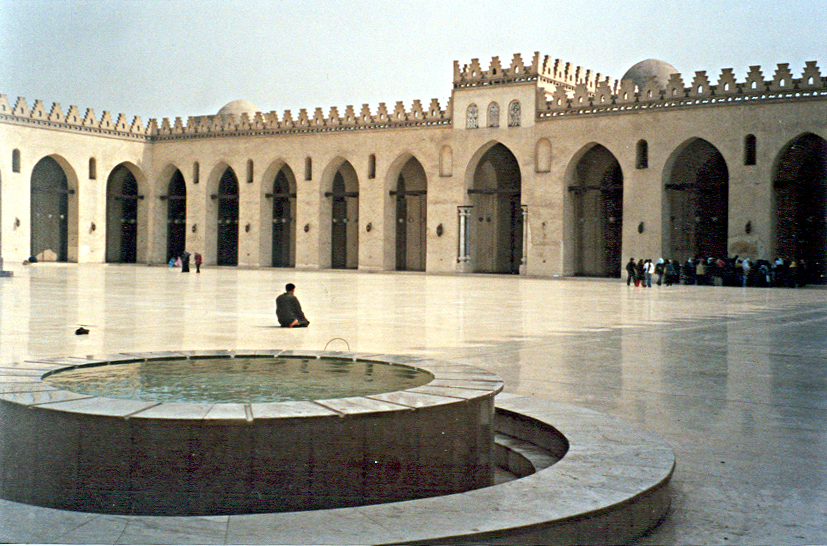
The Al-Hakim Mosque, Cairo
The Al-Hakim Mosque in Cairo, Egypt, built by Fatimid vizier Gawhar Al-Siqilli
11th Century
Umayyad Caliphate of Córdoba Collapses
The Umayyad Caliphate of Córdoba collapsed in 1031 CE due to political divisions and civil unrest during the rule of Hicham II. Al-Andalus then broke up into a number of states called taifa kingdoms. The decomposition of the Caliphate into petty kingdoms weakened the Muslims in the Iberian Peninsula vis-à-vis the Christian kingdoms of the north.
Seljuk Empire Absorbs Abbasid Influence
Abbasid influence had been consumed by the Great Seljuq Empire by 1055 CE, a Muslim Turkish clan which had migrated into mainland Persia. The Seljuks played an important role in the revival of Sunnism when Shia influence was increasing. The Seljuk military leader Alp Arslan (1063-1072) financially supported sciences and literature and established the Nezamiyeh university in Baghdad.
First Crusade Called by Pope Urban II
In 1095 CE, Pope Urban II called for the First Crusade from Western Europe, inspired by the conquests in Spain by Christian forces and implored by the eastern Roman emperor to help defend Christianity in the East. The Crusade captured Edessa, Antioch, County of Tripoli, and Jerusalem. Jerusalem was captured by crusaders who massacred its inhabitants.
12th Century
Saladin Founds Ayyubid Dynasty and Reconquers Jerusalem
Saladin founded the Ayyubid dynasty centered in Egypt and in 1174 CE proclaimed himself Sultan, conquering the Near East region. After Shirkuh ended Fatimid rule in 1169, Saladin reconquered most of the area in 1187, leaving the Crusaders holding only a few ports. The Ayyubids ruled much of the Middle East during the 12th and 13th centuries.

Ayyubid empire
Map of the Ayyubid empire
13th Century
Delhi Sultanate Founded
Qutb-ud-din Aybak conquered Delhi in 1206 CE and began the reign of the Delhi Sultanate, a successive series of dynasties that synthesized Indian civilization with wider commercial and cultural networks. The Sultanate greatly increased demographic and economic growth in India and deterred Mongol incursion into the Indo-Gangetic plain. It also enthroned one of the few female Muslim rulers, Razia Sultana.
Qutb Minar
Qutub Minar, commenced by Qutb-ud-din Aybak of the Slave dynasty, 1st dynasty of the Delhi Sultanate
Mamluk Sultanate Founded
In 1250 CE, the Ayyubid Egyptian dynasty was overthrown by slave regiments, and the Mamluk Sultanate was born. Military prestige was at the center of Mamluk society, and it played a key role in confrontations with the Mongol Empire. The Mamluks were slave-soldiers predominantly of Turkic, Caucasian, and Southeastern European origins.

Mamluk Sultanate map
Map of the Mamluk Sultanate (in red) and the Mongol Ilkhanate (in blue) (1250–1382)
Mongol Empire Ends Abbasid Dynasty
The Mongol Empire put an end to the Abbasid dynasty in 1258 CE when Mongol forces under Hulagu Khan sacked Baghdad and deposed the caliph. The Mongols had spread throughout Central Asia and Persia, with Isfahan falling by 1237. The Mamluk sultans and Syria later appointed a powerless Abbasid Caliph in Cairo.
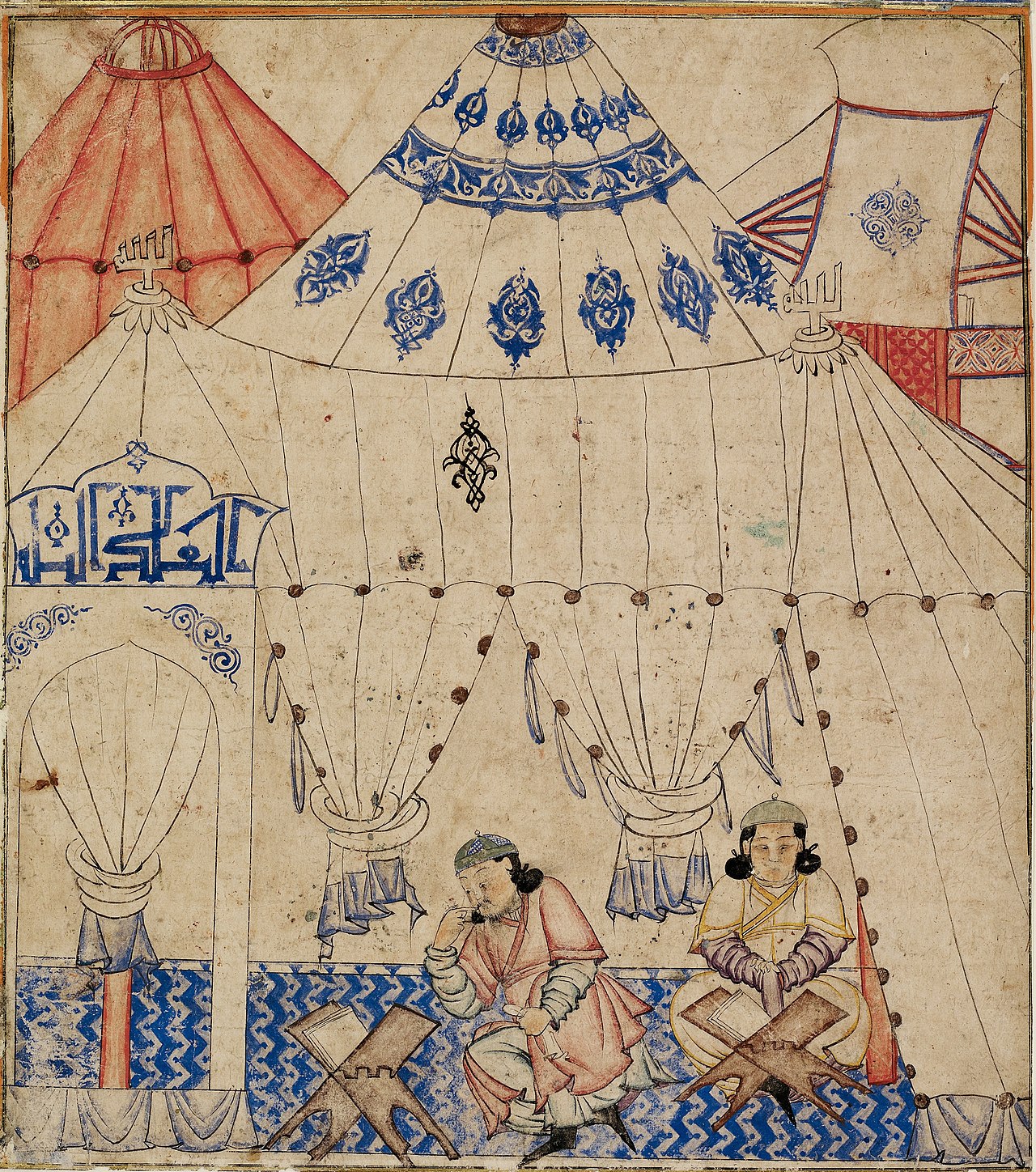
Mongol ruler Ghazan studying the Quran
The Mongol ruler Ghazan depicted studying the Quran inside a tent
Jalaluddin Rumi Writes the Masnavi
During the Mongol period, the Persian Sufi poet and mystic Jalaluddin Rumi (1207-1273) wrote his masterpiece, the Masnavi, which he believed to be 'sent down' from God and understood as the proper explanation of the Quran. Rumi's work represents the height of Persian Sufi literature and had a profound influence on Islamic mysticism. According to his biographer, the invading Mongols were impressed by Rumi's devotion to God.
Battle of Ain Jalut: Mamluks Stop Mongol Advance
In 1260 CE, the Mongol invaders were finally stopped by Egyptian Mamluks north of Jerusalem at the pivotal Battle of Ain Jalut. The Mongols were again defeated by the Mamluks at the Battle of Hims a few months later, and then driven out of Syria altogether. This was a turning point that preserved the Islamic heartland from Mongol conquest.
Marco Polo Detects Islamic Kingdom in Sumatra
Marco Polo detected an Islamic kingdom in Perlak, Sumatra in 1292 CE. A powerful Islamic kingdom named Pasai was to grow from the north coast of Sumatra. This represents one of the earliest documented Islamic polities in Southeast Asia, marking the spread of Islam through trade routes.

Grand Mosque of Demak
Grand Mosque of Demak, the first Muslim state in Java
14th Century
Mansa Musa's Pilgrimage to Mecca
Mansa Musa, ruler of the Mali Empire, publicly demonstrated Mali's integration into the wider Islamic world through his pilgrimage to Mecca in 1324 CE. The Mali Empire incorporated Islamic institutions into its political system, where Islam functioned primarily as a court religion. This pilgrimage showcased the wealth and power of the Mali Empire to the wider Islamic world.
Black Death Reaches Alexandria
The plague began in China and reached Alexandria in Egypt in 1347 CE, spreading over the following years to most Islamic areas. The Black Death may have killed one third of the population in the Middle East region. The combination of the plague and the Mongol wars left the Middle Eastern Islamic world in a seriously weakened position.
Timur Conquers Persia and Founds Timurid Empire
Timur (Tamerlane), himself a Muslim, conquered Persia in the 1360s and moved against the Delhi Sultanate in India and the Ottoman Turks in Anatolia. His ceaseless conquests were accompanied by displays of brutality matched only by Chinggis Khan. Samarqand, the cosmopolitan capital of Timur's empire, flourished under his rule as never before.

Tamerlane chess
Tamerlane chess, invented by Amir Timur
Timurid Renaissance
The Timurid Empire based in Central Asia saw a tremendous increase in the fields of arts and sciences. Remarkable achievements included the invention of Tamerlane Chess, reconstruction of Samarkand, and contributions by Sultan Shah Rukh's family including Gawhar Shad, polymath Ulugh Begh, and Sultan Husayn Bayqara in astronomy, mathematics, and architecture. The prosperity of Herat was said to have competed with Florence as a center of cultural rebirth.

Goharshad Mosque
Goharshad Mosque built by the Timurid Empire
15th Century
Battle of Ankara: Timur Captures Bayezid I
Mongol warlord Timur (Tamerlane) captured Ottoman Sultan Bayezid I in the Battle of Ankara in 1402 CE, beginning the Ottoman Interregnum. This episode was characterized by the division of Ottoman territory amongst Bayezid I's sons, who submitted to Timurid authority. The empire recovered when Mehmed I reunited Asia Minor and declared himself sultan in 1413.
Ottoman Conquest of Constantinople
In 1453 CE, the Ottoman Turks under Mehmed II laid siege to Constantinople, the capital of Byzantium, using muskets and large cannons. The Byzantine fortress succumbed after 54 days of siege, ending the Byzantine Empire. This conquest marked a major turning point in world history and established the Ottomans as the dominant power in the region.

Osman I, founder of the Ottoman Empire
Ottoman miniature depicting Osman I, founder of the Ottoman Empire
Islam Introduced to the Philippines
By the late 15th century, Islam had been introduced to the Philippines via the southern island of Mindanao. The foremost socio-cultural Muslim entities that resulted were the Sultanate of Sulu and Sultanate of Maguindanao. Islamised kingdoms in northern Luzon, such as the Kingdom of Maynila and the Kingdom of Tondo, were later conquered and Christianised by Spanish colonisers beginning in the 16th century.
Reconquista Completed with Fall of Granada
The Christian Reconquista in Al-Andalus was eventually completed with the fall of Granada in 1492 CE. This ended nearly 800 years of Muslim rule in the Iberian Peninsula. The Reconquista had begun in the 8th century as Iberian Christian kingdoms sought to retake Al-Andalus from the Moors.
Alhambra interiors
The interiors of the Alhambra in Granada, Spain, the last Muslim stronghold in Iberia
16th Century
Safavid Dynasty Rises to Power in Persia
The Shiite Safavid dynasty rose to power in Tabriz in 1501 CE under Shah Ismail I, defeating the ruling Turcoman federation Aq Qoyunlu. Shah Ismail I made conversion to Twelver Shia Islam mandatory for the largely Sunni population of Iran to unite them against the Sunni Ottomans. This resulted in the Safavid conversion of Iran to Shia Islam, which profoundly shaped Iranian identity.
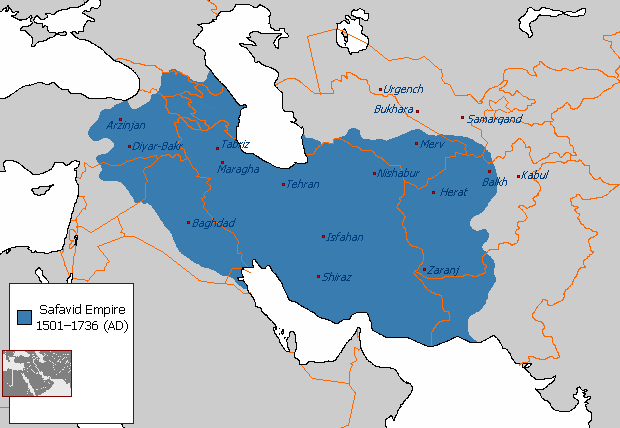
The Safavid Empire
The Safavid Empire at its greatest extent under Shah Ismail I (1501–1524)
Portuguese Capture Malacca
Portuguese forces captured Malacca in 1511 CE under naval general Afonso de Albuquerque. With Malacca subdued, the Aceh Sultanate and Bruneian Empire established themselves as centres of Islam in Southeast Asia. This marked the beginning of European colonial interference in the Muslim world of Southeast Asia.
Battle of Chaldiran: Ottomans Defeat Safavids
The Ottoman sultan Selim I challenged and defeated the Safavids at the Battle of Chaldiran in 1514 CE, seeking to repel Safavid expansion. This battle established the Ottoman-Safavid rivalry that would define Middle Eastern politics for centuries. Selim I also deposed the ruling Mamluks in Egypt, absorbing their territories in 1517.
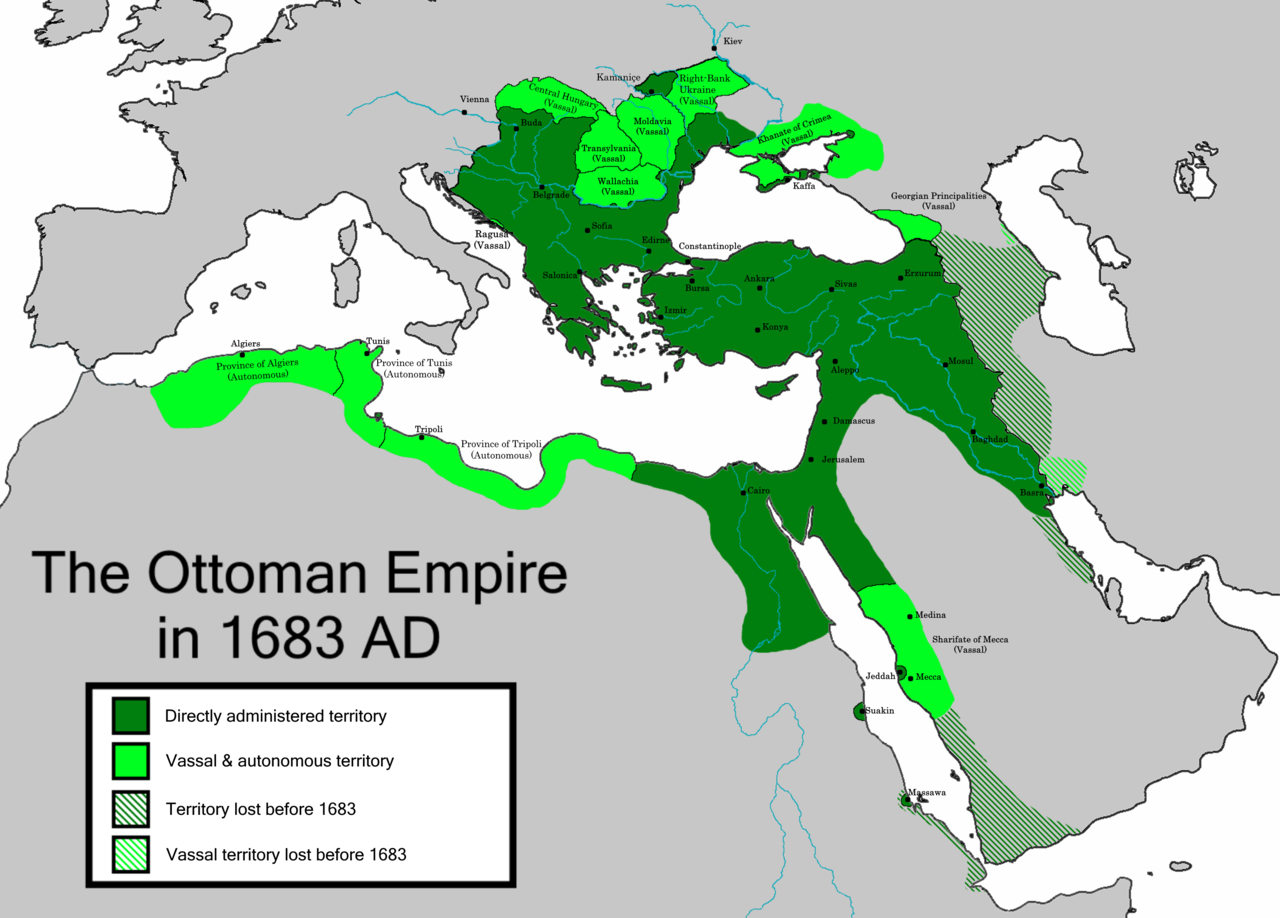
Ottoman Empire at its greatest extent
The Ottoman Empire and sphere of influence at its greatest extent (1683)
Selim I Becomes Custodian of the Two Holy Mosques
In 1517 CE, Ottoman sultan Selim I became the 'Custodian of the Two Holy Mosques' in Mecca and Medina through the conquering and unification of Muslim lands, strengthening the Ottoman claim to the caliphate. He also defeated the Mamluk Sultanate and made Egypt part of the Ottoman Empire. This marked the Ottoman Empire's claim to leadership of the entire Muslim world.
Mughal Empire Founded
The Mughal Empire was founded in 1526 CE when Babur defeated Ibrahim Lodi, the last ruler of the Delhi Sultanate, in the First Battle of Panipat. The empire was established by the Timurid dynasty with Turco-Mongol Chagatai roots from Central Asia. The Mughal Empire would eventually comprise almost all of South Asia and become one of the world's largest economies.

The Mughal Empire
Mughal India at its greatest extent
Suleiman the Magnificent Advances into Hungary
Suleiman I advanced deep into Hungary following the Battle of Mohács in 1526 CE, reaching as far as the gates of Vienna. He also signed a Franco-Ottoman alliance with Francis I of France against Charles V of the Holy Roman Empire. Suleiman I's rule (1520-1566) is often identified as the apex of Ottoman power.

Süleymaniye Mosque
The Süleymaniye Mosque in Istanbul, built on the order of sultan Suleiman the Magnificent
Akbar Becomes Mughal Emperor and Propounds Din-i Ilahi
The 'classic period' of the Mughal Empire began in 1556 CE with the ascension of Akbar to the throne. Akbar propounded a syncretic religion called Din-i Ilahi in the latter part of his life, as recorded in historical books like Ain-i-Akbari and Dabistan-i Mazahib. The Mughal Empire under Akbar did not try to intervene in native societies, co-opting and pacifying them through conciliatory administrative practices.
18th Century
Safavid Dynasty Toppled by Hotaki Dynasty
The Safavid dynasty was toppled in 1722 CE by the Hotaki dynasty, which ended their forceful conversion of Sunni areas to Twelver Shiism. The Safavid dynasty had ruled from 1501 to 1736 and had established Twelver Shiism as the official religion of Iran. Their fall marked the end of a major era in Iranian and Islamic history.
Battle of Plassey: East India Company Overtakes Bengal
In 1757 CE, the East India Company overtook Bengal Subah at the Battle of Plassey, marking a turning point in the decline of Mughal power in India. By the mid-18th century, the Marathas had routed Mughal armies and won over several Mughal provinces from the Punjab to Bengal. This battle marked the beginning of British colonial rule in India.
19th Century
Sokoto Caliphate Founded by Uthman dan Fodio
In 1802 CE, Uthman dan Fodio, a Fulani scholar, led a major jihad in Hausaland that overthrew existing rulers and led to the creation of the Sokoto Caliphate. The new state centralized Muslim authority and introduced legal, educational, and administrative reforms based on Islamic principles. Dan Fodio's movement inspired subsequent jihads across West Africa.
Indian Rebellion of 1857 and End of Mughal Empire
The last Mughal emperor, Bahadur Shah II, issued a firman supporting the Indian Rebellion of 1857. Following the rebellion's defeat, he was tried by the East India Company for treason, imprisoned, and exiled to Rangoon. The British parliament passed the Government of India Act to nationalize the East India Company and assume direct control of India as the British Raj.
Samori Touré Resists French Colonial Expansion
Samori Touré, a Mandinka military strategist and founder of the Wassoulou Empire, opposed French forces in West Africa until his capture in 1898 CE. His successors were defeated in 1901. These resistance movements were part of a broader pattern of Islamic resistance to European colonial expansion in West Africa during the 19th century.
20th Century
Arab Revolt Against Ottoman Forces
During World War I, the Allies cooperated with Arab partisans against the Ottoman Empire during the Arab Revolt. The British, led by T. E. Lawrence ('Lawrence of Arabia'), cooperated with Arab guerillas against the Ottoman forces, eventually securing the withdrawal of all Ottoman troops from the region by 1918. Many Arabs were later dismayed by the Balfour Declaration, which contradicted the McMahon-Hussein Correspondence.
Ottoman Empire Defeated in World War I
The Ottoman Empire's decision to back Germany in World War I meant they shared the Central Powers' defeat. The defeat led to the overthrow of the Ottomans by Turkish nationalists led by Mustafa Kemal (Atatürk). Atatürk renegotiated the treaty of Sèvres (1920) and established the modern Republic of Turkey, recognized by the Allies in the Treaty of Lausanne (1923).

Ottoman army in World War I
Ottoman army in World War I
State of Israel Established
The State of Israel came into existence on 14 May 1948 as a polity to serve as the homeland for the Jewish people. It was defined in its declaration of independence as a 'Jewish state'. The establishment of Israel led to the displacement of the Palestinian people and the beginning of the Arab-Israeli conflict.
Six-Day War
The Six-Day War was fought between 5-10 June 1967 between Israel and the neighbouring states of Egypt, Jordan, and Syria. The Arab countries closed the Suez Canal following the war. These developments increased the importance of petroleum in Libya, which is a short shipping distance from Europe.
Yom Kippur War and 1973 Oil Embargo
In October 1973, a new war between Israel and its Muslim neighbours, known as the Yom Kippur War, broke out. In response to Western support for Israel, the Arab world imposed the 1973 oil embargo against the United States and Western Europe. Saudi Arabia agreed to use its oil wealth to finance the 'front-line states' bordering Israel in their struggle.
Iranian Revolution
In 1979 CE, the Iranian revolution transformed Iran from a constitutional monarchy to a populist theocratic Islamic republic under the rule of Ayatollah Ruhollah Khomeini. A new constitution was approved and a referendum established the government, electing Ruhollah Khomeini as Supreme Leader. This revolution had profound effects on the Muslim world, intensifying Sunni-Shia tensions and contributing to the Iran-Iraq War.