
Map of the frontlines in the Iran-Iraq War
This map showing the furthest ground gains made by both sides during the war best represents the overall scope and geography of the eight-year conflict
Iran–Iraq War
This timeline covers the Iran-Iraq War (1980-1988), one of the deadliest conventional wars of the 20th century. It traces the conflict from its origins in border disputes and the 1979 Iranian Revolution through eight years of brutal warfare, including major battles, chemical weapons use, and international involvement, to the UN-brokered ceasefire in August 1988.
Source: Wikipedia1935 CE – 1939 CE
Iran-Iraq Treaty on Shatt al-Arab
Iran and Iraq signed a treaty in 1937 to settle their dispute over control of the Shatt al-Arab river. Under the agreement, Iranian ships were required to pay tolls when using the river. This treaty would become a source of ongoing tension between the two nations for decades.

File:Shatt al arab.png
The Shatt al-Arab on the Iran-Iraq border
1965 CE – 1969 CE
Iran Breaks the 1937 Shatt al-Arab Treaty
In 1969, Iran unilaterally broke the 1937 treaty by ceasing to pay tolls for ships using the Shatt al-Arab river. The Shah of Iran argued the original treaty had been unfair. Iraq threatened war but took no action, as its weaker military was deterred when Iranian naval forces sailed down the river in a show of force.
File:Shatt al arab.png
The Shatt al-Arab on the Iran-Iraq border
1975 CE – 1979 CE
Algiers Agreement Signed
Iraq ceded to Iran the eastern bank of the Shatt al-Arab river in the 1975 Algiers Agreement, temporarily resolving the border dispute between the two nations. The agreement was brokered with Algerian mediation and involved a meeting between the Shah of Iran, Algerian President Boumédiène, and Saddam Hussein. Iraq would later cite this agreement as a grievance and a motivation for the 1980 invasion.

File:1975 Algiers Agreement.jpg
A meeting of Mohammad Reza Pahlavi, Houari Boumédiène, and Saddam Hussein during the Algiers Agreement in 1975
Iranian Revolution Overthrows the Shah
The 1979 Iranian Revolution overthrew Shah Mohammad Reza Pahlavi and brought Ruhollah Khomeini to power, establishing an Islamic Republic. This fundamentally altered the regional balance of power and created new tensions with neighboring Iraq. Saddam Hussein, who had previously expelled Khomeini from Iraq, now faced a hostile theocratic neighbor calling for Islamic revolution to spread to Iraq.
Hussein Praises Iranian Revolution, Calls for Friendship
In July 1979, despite Khomeini's calls for Iraqis to overthrow the Ba'ath government, Saddam Hussein gave a speech praising the Iranian Revolution and called for an Iraqi-Iranian friendship based on non-interference. Khomeini rejected Hussein's overture by calling for Islamic revolution in Iraq, alarming Hussein and deepening the rift between the two nations.
1980 CE – 1984 CE
Iran Withdraws Ambassador from Iraq
On 8 March 1980, Iran announced it was withdrawing its ambassador from Iraq and downgraded diplomatic ties to the chargé d'affaires level, demanding Iraq do the same. The following day, Iraq declared Iran's ambassador persona non grata and demanded his withdrawal by 15 March. This diplomatic breakdown was a significant step toward open conflict.
Assassination Attempt on Tariq Aziz
In April 1980, the Islamic Dawa Party, an Iraqi Islamist group with ties to Iran, attempted to assassinate Tariq Aziz, Iraq's deputy prime minister, in retaliation for a March decree making Dawa membership a capital offense. The attempt failed but killed several students. Three days later, the funeral procession for the dead students was bombed, and Iraq executed prominent Shia cleric Muhammad Baqir al-Sadr in response.
Iraq Attacks Iranian Embassy in London
On 30 April 1980, Iraq organized an attack on the Iranian embassy in London, further escalating tensions between the two countries. This event was part of a broader pattern of Iraqi-Iranian hostility in the months leading up to the full-scale invasion. The attack contributed to the deteriorating diplomatic relations between the two nations.
Iraq Reclaims Disputed Border Territories
On 10 September 1980, Iraq forcibly reclaimed territories in Zain al-Qaws and Saif Saad that it had been promised under the 1975 Algiers Agreement but that Iran had never handed over. This led both Iran and Iraq to void the Algiers Agreement on 14 September and 17 September respectively, removing the last diplomatic framework governing their border.
File:Shatt al arab.png
The Shatt al-Arab on the Iran-Iraq border
Iraq Launches Full-Scale Invasion of Iran
On 22 September 1980, Iraq launched a full-scale invasion of Iran, beginning with surprise air strikes on ten Iranian airfields aimed at destroying the Iranian Air Force. The next day, Iraq launched a ground invasion along a broad front with multiple simultaneous attacks. Hussein hoped the attack would lead to the new Iranian government's downfall or at least end Iran's calls for his overthrow.
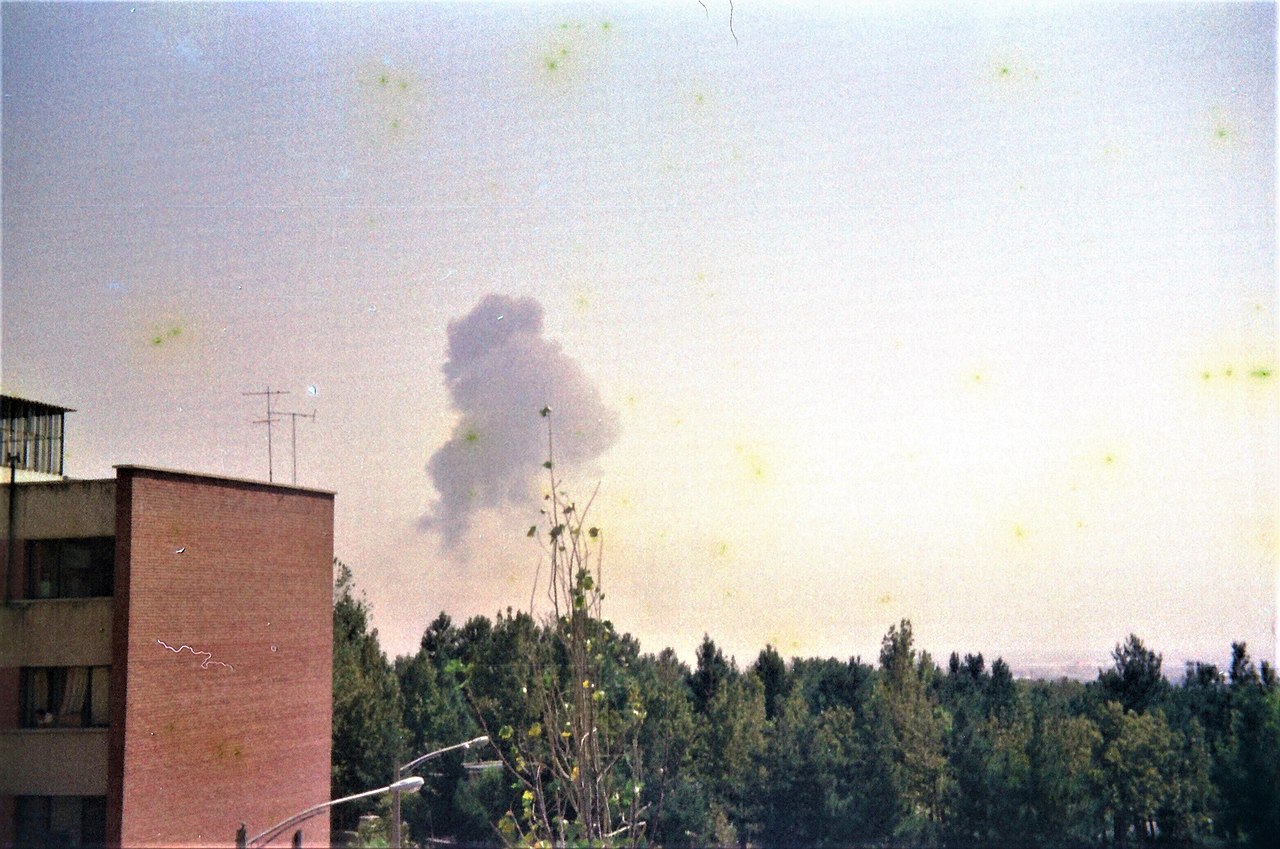
File:Iran Iraq War Start Attack on Tehran Airport 1980-09-22.jpg
Explosion in Mehrabad Air Base in Tehran after Iraqi forces attacked Tehran on 22 September 1980
First Battle of Khorramshahr Begins
On 22 September 1980, a prolonged battle began in the city of Khorramshahr, eventually leaving around 7,000 dead on each side. Iraqi tanks launched attacks with no infantry support and many were lost to Iranian anti-tank teams. By 24 October, most of the city was captured and the Iranians evacuated across the Karun River, though some partisans continued fighting until November.
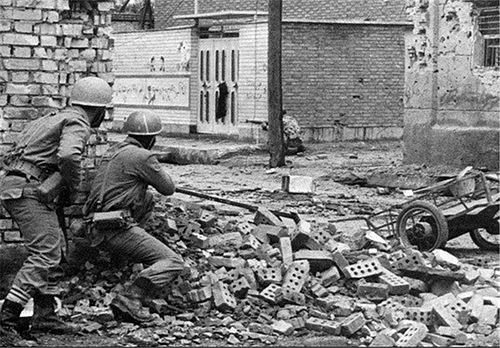
File:Battle of khorramshahr 2.jpg
Resistance of the outnumbered and outgunned Iranians in Khorramshahr slowed the Iraqis for a month
Iran Launches Operation Kaman 99 Counterattack
The day after the Iraqi air invasion, Iran retaliated with a large-scale attack against Iraqi air bases and infrastructure in Operation Kaman 99. Groups of Iranian fighter jets attacked targets throughout Iraq including oil facilities, dams, petrochemical plants, oil refineries, Mosul Airbase, Baghdad, and the Kirkuk oil refinery. Iraq was taken by surprise at the strength of the retaliation, which inflicted heavy losses and economic disruption.

File:Irani F-14 Tomcats carrying AIM-54 Phoenixs.jpg
Iranian F-14A Tomcats equipped with AIM-54A, AIM-7 and AIM-9 missiles
Iranian Navy Attacks Basra
On 24 September 1980, the Iranian Navy attacked Basra, Iraq, destroying two oil terminals near the port of al-Faw, thus reducing Iraq's ability to export oil. This was one of the first major Iranian naval actions of the war and demonstrated Iran's ability to strike at Iraq's economic infrastructure despite the ongoing ground invasion.
Iran Attacks Osirak Nuclear Reactor
On 30 September 1980, Iran's air force launched Operation Scorch Sword, damaging the nearly-complete Osirak Nuclear Reactor near Baghdad. This was the first attack on a nuclear reactor in history and the first pre-emptive attack on a nuclear reactor to forestall the development of a nuclear weapon. France later repaired the reactor after the attack.
Iran Launches Operation Morvarid
On 28 November 1980, Iran launched Operation Morvarid, an air and sea attack which destroyed 80% of Iraq's navy and all of the radar sites in the southern portion of the country. When Iraq laid siege to Abadan, it could not blockade the port or prevent seaborne resupply as a result of this operation. This was a significant Iranian naval victory early in the war.
Hussein Announces Iraq Going on the Defensive
On 7 December 1980, Hussein announced that Iraq was going on the defensive, acknowledging that the initial invasion had stalled. Iraq's strategic reserves had been depleted by Iranian resistance, preventing major offensives for years. By the end of 1980, Iraq had destroyed and captured numerous Iranian tanks but failed to achieve its strategic objectives.
Battle of Dezful – Major Iranian Armored Offensive Fails
On 5 January 1981, Iran launched Operation Nasr, a major armored offensive from Dezful toward Susangerd. The Iranian tanks raced through Iraqi lines with unguarded flanks and without infantry support, and were cut off by Iraqi tanks. In the ensuing Battle of Dezful, the Iranian armored divisions were nearly wiped out in one of the biggest tank battles of the war, with Iran losing 100-200 tanks.

File:Banisadr iran iraq war 2.jpg
Iranian president Abulhassan Banisadr during a visit to the frontlines
Iran Attacks H-3 Air Base
On 3 April 1981, the Iranian Air Force launched a surprise attack on the H-3 Air Base in western Iraq, near the Jordanian border, where the Iraqi Air Force had been moved to protect it from Iranian attacks. The attack destroyed numerous Iraqi combat aircraft and is considered one of the most sophisticated air operations of the war. Despite this success, Iran was forced to cancel its 180-day air offensive due to attrition from sanctions and purges.

File:Operation H3 map.png
The surprise attack on H-3 airbase is considered to be one of the most sophisticated air operations of the war
Iran Ends Iraqi Siege of Abadan
By late 1981, Iran launched Operation Samen-ol-A'emeh, ending the Iraqi Siege of Abadan in September. The Iranians used a combined force of regular artillery with small groups of armor, supported by Pasdaran (IRGC) and Basij infantry. This was a significant Iranian victory that demonstrated their improving military coordination.

File:Siege of Abadan, Iran–Iraq War.webm
Fighting during the Siege of Abadan
Operation Tariq al-Quds – Iran Retakes Bostan
On 29 November 1981, Iran began Operation Tariq al-Quds with three army brigades and seven Revolutionary Guard brigades. The Iranians constructed a road through unguarded sand dunes and launched their attack from the Iraqi rear. The town of Bostan was retaken from Iraqi divisions by 7 December, marking the first use of Iranian 'human wave' tactics and causing serious Iraqi morale problems.
Operation Fath ol-Mobin – Iran Drives Iraq from Khuzestan
In March 1982, Iran launched Operation Fath ol-Mobin, a surprise attack in which Iranian helicopters landed behind Iraqi lines, silenced their artillery, and captured an Iraqi headquarters. The Revolutionary Guard and regular army surrounded Iraqi forces near Shush, and Iraqi forces were driven away from Shush, Dezful, and Ahvaz. By this time, most of Khuzestan province had been recaptured by Iran.

File:Me, Iraqi war tank.jpg
Iraqi T-62 tank wreckage in Khuzestan province, Iran
Syria Closes Kirkuk-Baniyas Pipeline
In April 1982, Iran's ally Syria closed the Kirkuk-Baniyas pipeline that had allowed Iraqi oil to reach tankers on the Mediterranean, reducing the Iraqi budget by $5 billion per month. This left Iraq with only the pipeline to Turkey as a means of exporting oil, plus tanker trucks to Aqaba in Jordan. Saudi Arabia, Kuwait, and other Gulf states saved Iraq from bankruptcy by providing $37-60 billion in loans.
Operation Beit ol-Moqaddas and Second Battle of Khorramshahr
In April 1982, Iran launched Operation Beit ol-Moqaddas with 70,000 Revolutionary Guard and Basij members. On 23 May 1982, the Iranians began the drive toward Khorramshahr across the Karun River. In less than 48 hours of fighting, the city fell and 19,000 Iraqis surrendered; a total of 10,000 Iraqis were killed or wounded while Iranians suffered 30,000 casualties. During the whole operation, 33,000 Iraqi soldiers were captured.

File:Capture in Khorramshahr.jpg
Iraqi soldiers surrendering after the Liberation of Khorramshahr
Reagan Signs Directive to Prevent Iraqi Defeat
In June 1982, U.S. President Ronald Reagan signed a directive determining that the U.S. 'would do whatever was necessary to prevent Iraq from losing.' This marked a significant shift in U.S. policy, leading to increased support for Iraq including intelligence, economic aid, and dual-use equipment. Reagan also removed Iraq from the list of countries 'supporting terrorism' in 1982.

File:Bush reagan.jpg
President Ronald Reagan and Vice President George H. W. Bush in the Oval Office in 1984
Hussein Proposes Ceasefire, Iran Refuses
On 20 June 1982, Hussein announced he wanted to sue for peace and proposed an immediate ceasefire and withdrawal from Iranian territory within two weeks. Khomeini responded by saying the war would not end until a new government was installed in Iraq and reparations were paid. Iran then launched an invasion of Iraq, creating a five-year offensive phase of the war.
Operation Before the Dawn – Iran Attacks Central Sector
In February 1983, Iran launched Operation Before the Dawn, shifting focus from the southern to the central and northern sectors. Employing 200,000 Revolutionary Guardsmen, Iran attacked near Amarah, Iraq, southeast of Baghdad, attempting to reach highways connecting northern and southern Iraq. The attack was stalled by terrain obstacles, but the Iraqis could not force the Iranians back.
Donald Rumsfeld Meets Saddam Hussein
In December 1983, Donald Rumsfeld, serving as the American special envoy to the Middle East, met with Saddam Hussein in Baghdad. This meeting symbolized the growing U.S.-Iraq relationship and the American tilt toward Iraq during the war. The U.S. was providing Iraq with intelligence, economic aid, and dual-use technology to help prevent an Iranian victory.

File:Shakinghands high.OGG
Donald Rumsfeld as the American special envoy to the Middle East meets Saddam Hussein in December 1983
Iraq Attacks Kharg Island – Tanker War Begins
In early 1984, Iraq attacked the oil infrastructure at Kharg Island, beginning the so-called tanker war. Iraq's aim was to provoke Iran into closing the Strait of Hormuz, which would bring American intervention. Iran limited its retaliatory attacks to Iraqi shipping, leaving the strait open, but attacked a Kuwaiti tanker carrying Iraqi oil near Bahrain on 13 May 1984 and a Saudi tanker on 16 May.

File:Small Boats of Iran in Taker war 3.JPG
IRGC navy speedboats using swarm tactics
Iraq Bombs Eleven Iranian Cities
On 7 February 1984, Hussein ordered his air force to attack eleven Iranian cities; bombardments ceased on 22 February. It was estimated that 1,200 Iranian civilians were killed during the raids in February alone. This marked the beginning of systematic strategic bombing of Iranian cities, which would become known as the 'war of the cities.'

File:War of the Cities map.png
A map indicating the attacks on civilian areas of Iran, Iraq, and Kuwait that were targeted during the war of the cities
Operation Kheibar – Battle of the Marshes
From 24 February to 19 March 1984, Iran launched Operation Kheibar, a major offensive in the Hawizeh Marshes using motorboats and transport helicopters in an amphibious assault. The Iranians captured the vital oil-producing Majnoon Island but suffered catastrophic helicopter losses when Iraq shot down 49 of 50 Iranian helicopters on 27 February. At least 20,000 Iranians were killed in the marsh battles.

File:Murdered Iraqi POW 2.jpg
An Iraqi POW who was shot by Iranian troops after they conquered the Iraqi Majnoon oil field in October 1984
1985 CE – 1989 CE
Operation Badr – Iran Crosses the Tigris
On 11 March 1985, Iran launched Operation Badr, a major offensive directed against the Baghdad-Basra highway using 100,000 men with 60,000 in reserve. Iran broke through north of Qurna on 14 March and that same night reached and crossed the Tigris River using pontoon bridges, capturing part of Highway 6. Iraq responded with chemical attacks and a second war of the cities, eventually driving Iran back.

File:President Ali Khamenei in Iran-Iraq War.jpg
Iranian President Ali Khamenei on the battlefront during the war
Operation Dawn 8 – Iran Captures al-Faw Peninsula
On 10-11 February 1986, Iran launched Operation Dawn 8, in which 30,000 men from the Revolutionary Guard and Basij captured the al-Faw peninsula in southern Iraq in only 24 hours of fighting. The sudden capture shocked the Iraqis, who had thought it impossible for Iranians to cross the Shatt al-Arab. Iraqi counter-offensives on 12 February and 24 February both failed, costing them many soldiers, tanks, and aircraft.

File:Operation dawn 8 map.svg
Operation Dawn 8 during which Iran captured the al-Faw Peninsula
Khomeini Issues Fatwa to Win War by March 1987
In April 1986, Khomeini issued a fatwa declaring that the war must be won by March 1987. The Iranians increased recruitment efforts, obtaining 650,000 volunteers. Iran began planning their largest offensives of the war, which they called their 'final offensives,' reflecting confidence in their recent military successes at al-Faw and Mehran.
Battle of Mehran – Iraq Captures then Loses City
On 15-19 May 1986, Iraq's Second Corps captured the city of Mehran near the Zagros Mountains. Hussein offered to exchange Mehran for al-Faw, but Iran rejected the offer. On 30 June, Iran launched a counterattack, recapturing the city by 3 July. Iraqi losses were heavy enough to allow the Iranians to also capture territory inside Iraq, and depleted the Iraqi military enough to prevent them from launching a major offensive for the next two years.
Operation Karbala-4 – Iranian Amphibious Assault
On 25 December 1986, Iran launched Operation Karbala-4, an amphibious assault against the Iraqi island of Umm al-Rassas in the Shatt al-Arab. According to Iraqi General Ra'ad al-Hamdani, this was a diversionary attack. The Iranians had 60,000 casualties while the Iraqis had 9,500. Iraqi commanders exaggerated Iranian losses to Hussein, leading many Iraqi troops to be on leave when the main attack began.
Operation Karbala-5 – Siege of Basra
In early 1987, Iran launched Operation Karbala-5, attempting to capture Basra in what became the biggest battle of the war, known for its extensive casualties and ferocious conditions. While Iranian forces crossed the border and captured the eastern section of Basra Governorate, the operation ended in a stalemate. This was a severe blow to Iran's military and morale, and Iran was unable to launch any major offensives afterward.
Operation Earnest Will Begins – U.S. Escorts Kuwaiti Tankers
Starting 7 March 1987, the U.S. Navy offered to provide protection for foreign tankers reflagged and flying the U.S. flag in Operation Earnest Will. Kuwait had formally petitioned foreign powers on 1 November 1986 to protect its shipping after Iranian speedboat attacks. The Soviet Union had already agreed to charter tankers starting in 1987. Neutral tankers shipping to Iran were not protected, inflicting losses on Iran and undermining its trade.
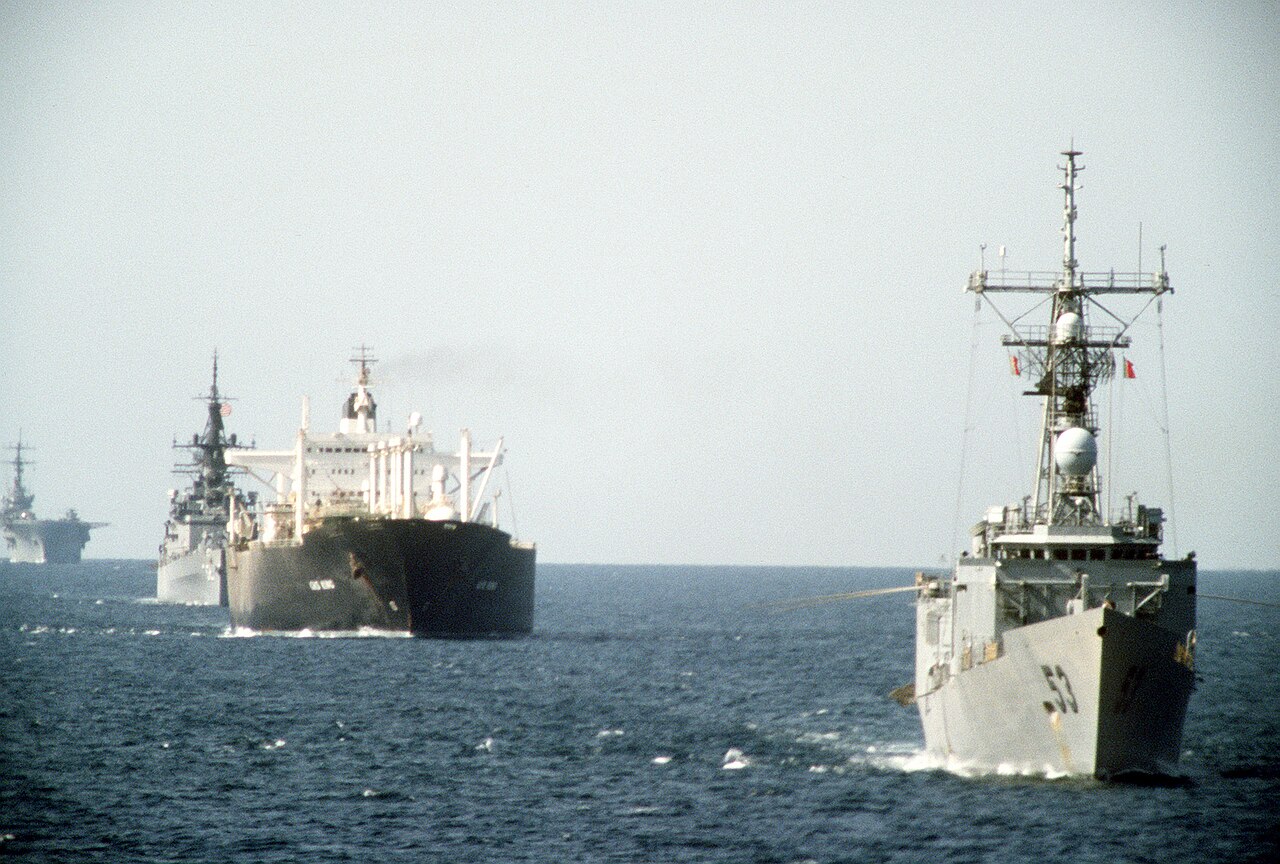
File:USS Hawes escort tanker Gas King
Operation Earnest Will: Tanker convoy under US Navy escort (21 October 1987)
USS Stark Struck by Iraqi Missiles
On 17 May 1987, a U.S. Navy ship, USS Stark, was struck by two Exocet missiles fired from an Iraqi Dassault Mirage F1 fighter jet. The attack killed 37 sailors and remains the only successful anti-ship missile strike on an American warship. Whether Iraqi leadership authorized the attack remains unknown, and initial Iraqi claims that Stark was inside the war zone were shown to be false.

File:USS Stark.jpg
USS Stark listing following two hits by Exocet missiles
Chemical Attack on Sardasht
On 28 June 1987, Iraqi fighter bombers attacked the Iranian town of Sardasht near the border using chemical mustard gas bombs. While many towns and cities had been bombed before and troops attacked with gas, this was the first time the Iraqis had attacked a civilian area with poison gas. 5,000 people were stricken, 113 died immediately, and many more died over the following decades.

File:Sardashtchemic.jpg
Victims of the 1987 chemical attack on Sardasht, West Azerbaijan, Iran
U.S. Navy Captures Iranian Mine-Laying Ship Iran Ajr
On 24 September 1987, U.S. Navy SEALs captured the Iranian mine-laying ship Iran Ajr, a diplomatic disaster for the already isolated Iranians. Iran had previously sought to maintain plausible deniability regarding its use of mines, but the Navy SEALs captured and photographed extensive evidence of Iran Ajr's mine-laying activities. On 8 October, the U.S. Navy destroyed four Iranian speedboats.
Operation Nimble Archer – U.S. Destroys Iranian Oil Rigs
In October 1987, the U.S. Navy launched Operation Nimble Archer, destroying two Iranian oil rigs in the Persian Gulf in response to Iranian Silkworm missile attacks on Kuwaiti oil tankers. This was part of the escalating U.S.-Iran confrontation in the Persian Gulf during the tanker war. The operation demonstrated the increasing direct U.S. military involvement against Iran.
Iraq Launches Fifth War of the Cities
In February 1988, Saddam began the fifth and most deadly war of the cities. Over the next two months, Iraq launched over 200 al-Husayn missiles at 37 Iranian cities. Saddam also threatened to use chemical weapons in his missiles, which caused 30% of Tehran's population to leave the city. Iran retaliated, launching at least 104 missiles against Iraq in 1988 and shelling Basra.
File:War of the Cities map.png
A map indicating the attacks on civilian areas of Iran, Iraq, and Kuwait that were targeted during the war of the cities
Chemical Attack on Halabja
In March 1988, in retaliation for Kurdish collaboration with the Iranians who had captured the town of Halabja, Iraq launched a massive poison gas attack against Kurdish civilians, killing thousands. Iran airlifted foreign journalists to the ruined city, and images of the dead were shown throughout the world. Western opposition to Iran led some to also blame Iran for the attack, though evidence pointed to Iraq.
Second Battle of al-Faw – Iraq Recaptures Peninsula
On 17 April 1988, Iraq launched Operation Ramadan Mubarak, a surprise attack against the 15,000 Basij troops on the al-Faw peninsula. Key areas were hit by mustard gas and nerve gas, while helicopters landed Iraqi commandos behind Iranian lines. Within 48 hours, all Iranian forces had been killed or cleared from the al-Faw Peninsula. The heavy and well-executed use of chemical weapons was the decisive factor in the victory.
File:Operation dawn 8 map.svg
The al-Faw Peninsula, recaptured by Iraq in April 1988
Operation Praying Mantis – U.S. Attacks Iranian Navy
On 17 April 1988, the same day as Iraq's attack on al-Faw, the United States Navy launched Operation Praying Mantis in retaliation against Iran for damaging a warship with a mine. Iran lost oil platforms, destroyers, and frigates in this battle, which ended only when President Reagan decided the Iranian navy had been damaged enough. This was the Navy's largest engagement of surface warships since World War II.

File:Bild-Prayingmantis5sahand.jpg
The Iranian frigate IS Sahand burns after being hit by U.S. air launched missiles and bombs, April 1988
Tawakalna ala Allah Operations – Iraq's Final Offensives
On 25 May 1988, Iraq launched the first of five Tawakalna ala Allah Operations, consisting of one of the largest artillery barrages in history coupled with chemical weapons. The marshes had been dried by drought, allowing Iraqi tanks to bypass Iranian field fortifications. By 12 July, the Iraqis had captured the city of Dehloran, Iran, along with 2,500 troops and much armor and materiel. Stephen Pelletiere wrote that these operations 'resulted in the absolute destruction of Iran's military machine.'

File:TBO-4-POVs-17061988.jpg
Iranian soldiers captured during Iraq's 1988 offensives
Operation Forty Stars – MEK Captures Mehran
On 18 June 1988, the People's Mojahedin Organization of Iran (PMOI/MEK) conducted Operation Forty Stars, in which twenty-two organized brigades of Mojahedin recaptured the city of Mehran. In four days, they wiped out a Pasdaran division, seizing Mehran and building a bridgehead twelve miles into Iran. According to the PMOI, Iraqi soldiers did not participate in the operation.
USS Vincennes Shoots Down Iran Air Flight 655
On 3 July 1988, the USS Vincennes shot down Iran Air Flight 655, killing all 290 passengers and crew on board. The American government claimed the Airbus A300 had been mistaken for an Iranian F-14 Tomcat. The lack of international sympathy for Iran disturbed the Iranian leadership, and they came to the conclusion that the U.S. was on the verge of waging a full-scale war against them.
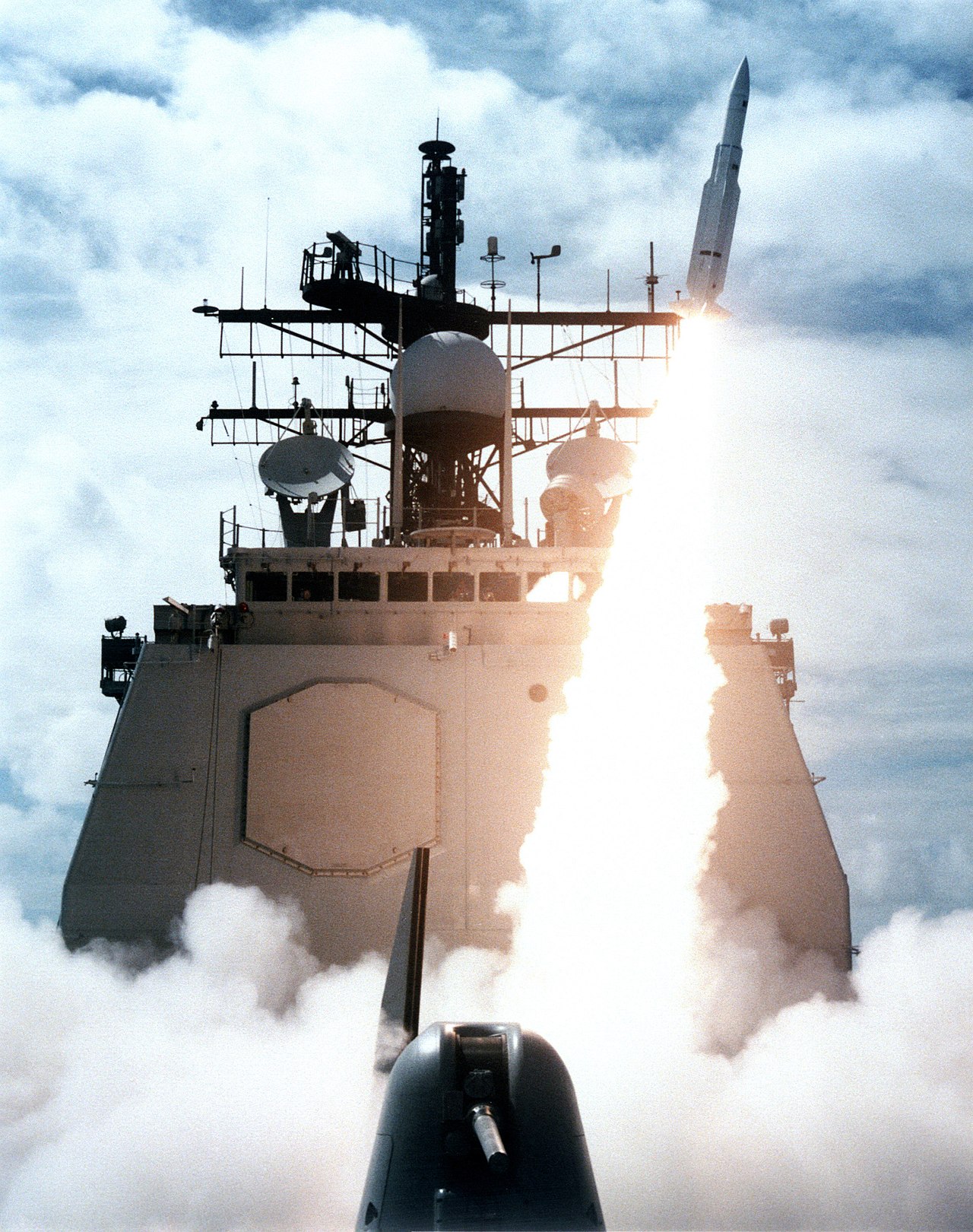
File:USS Vincennes launching SM-2MR in 1987.jpg
USS Vincennes in 1987, a year before it shot down Iran Air Flight 655
Iran Accepts UN Resolution 598 – Ceasefire
On 20 July 1988, Iran accepted Resolution 598, showing its willingness to accept a ceasefire. A statement from Khomeini was read out in a radio address, and he expressed deep displeasure and reluctance, famously saying he had 'drunk the poisoned chalice.' The news was greeted with celebration in Baghdad but with a sombre mood in Tehran.
Operation Mersad – Iran Defeats MEK Invasion
Shortly after Iran accepted the ceasefire, the MEK army launched Operation Forough Javidan (Eternal Light) on 26 July 1988, advancing rapidly toward Kermanshah with Iraqi support. Iran launched its counter-attack, Operation Mersad, under Lieutenant General Ali Sayyad Shirazi. Iranian paratroopers landed behind MEK lines while the Air Force launched air attacks, defeating the MEK in Kerend-e Gharb on 29 July. Iran estimated 4,500 MEK were killed while 400 Iranian soldiers died.

File:Mersad.jpg
Burned-out vehicles shown in the aftermath of Operation Mersad
Iraq Launches Anfal Campaign Against Kurds
After the ceasefire with Iran, Iraq spent the rest of August and early September 1988 clearing Kurdish resistance. Using 60,000 troops along with helicopter gunships, chemical weapons, and mass executions, Iraq hit 15 villages, killing rebels and civilians, and forced tens of thousands of Kurds to relocate. By 3 September 1988, the anti-Kurd campaign ended; 400 Iraqi soldiers and 50,000-100,000 Kurdish civilians and soldiers had been killed.
UN Resolution 598 Takes Effect – War Ends
Resolution 598 became effective on 8 August 1988, ending all combat operations between Iran and Iraq. By 20 August 1988, peace with Iran was restored. UN peacekeepers belonging to the UNIIMOG mission took the field, remaining on the Iran-Iraq border until 1991. The war caused around 500,000 deaths and was the deadliest conventional war ever fought between regular armies of developing countries.
1990 CE – 1994 CE
Hussein Recognizes Iranian Rights Over Shatt al-Arab
Shortly after his invasion of Kuwait in 1990, Hussein recognized Iranian rights over the eastern half of the Shatt al-Arab and stated he would accept Iran's demands and withdraw Iraq's military from disputed territories. A peace agreement was signed finalizing the terms of the UN resolution, diplomatic relations were restored, and the Iraqi military withdrew. Most prisoners of war were released in 1990, though some remained as late as 2003.
File:Shatt al arab.png
The Shatt al-Arab on the Iran-Iraq border
UN Security Council Identifies Iraq as Aggressor
In 1991, the UN Security Council identified Iraq as the aggressor of the war. UN Secretary General Javier Pérez de Cuéllar reported that Iraq's initiation of the war was unjustified, as was its occupation of Iranian territory and use of chemical weapons against civilians. He stated that had the UN accepted this earlier, the war would almost certainly not have lasted as long as it did.