Spanish Empire in 1790
This map shows the Spanish Empire at its territorial peak, illustrating the vast global reach that made it 'the empire on which the sun never sets'
Spanish Empire
A comprehensive timeline of the Spanish Empire from its origins in 1492 through its final dissolution in 1976, covering territorial expansion, colonial administration, wars, and the eventual independence movements across the Americas, Africa, and Asia.
Source: Wikipedia1402 CE - 1430 CE
Beginning of Canary Islands Conquest
Norman nobleman Jean de Béthencourt began the conquest of the Canary Islands under a feudal agreement with the Crown of Castile during the reign of Henry III. This marked the beginning of Spanish overseas expansion and would serve as a model for later colonial conquests.
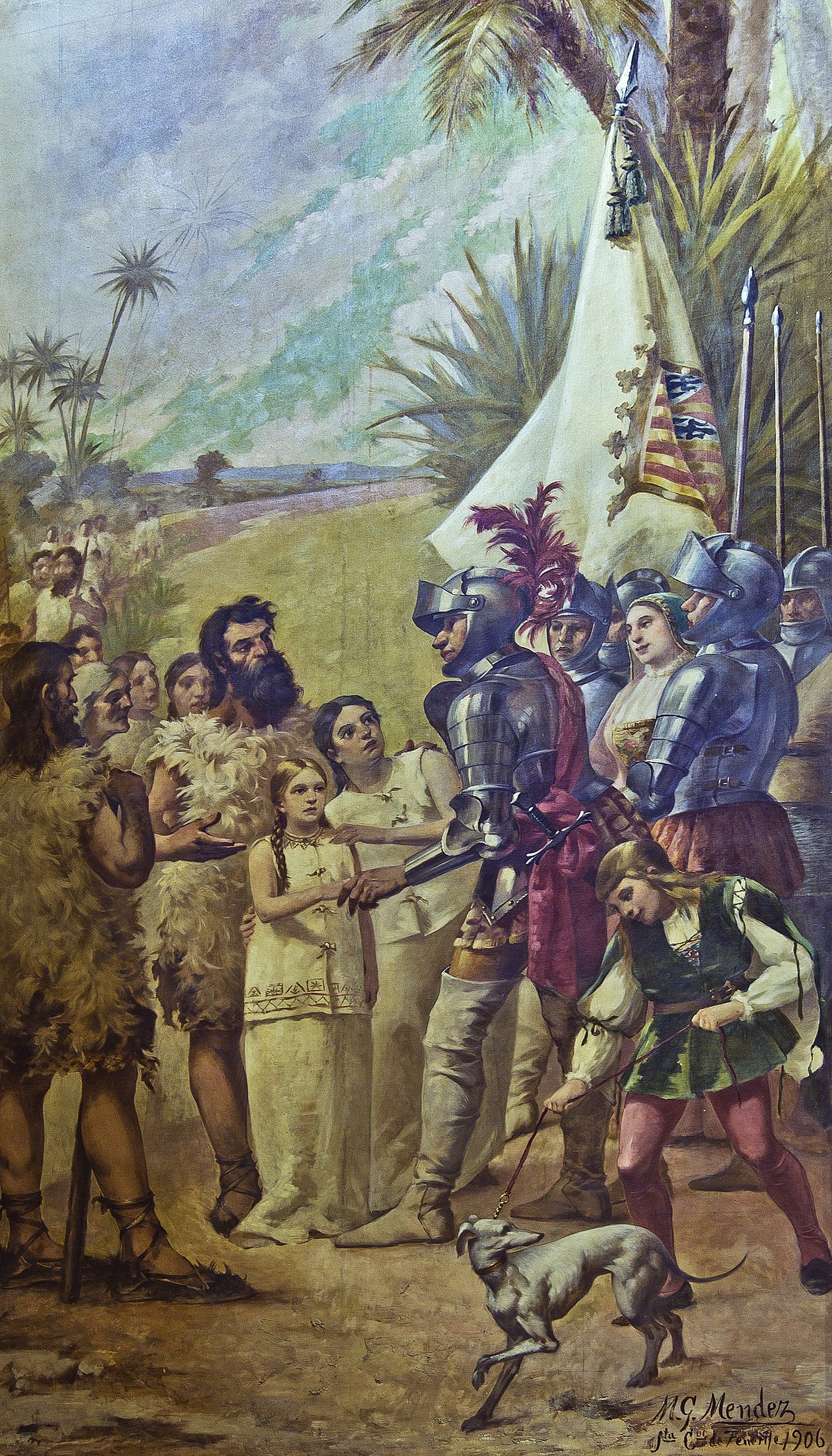
The conquest of the Canary Islands (1402–1496)
The conquest of the Canary Islands (1402–1496)
1460 CE - 1488 CE
Portuguese Discovery of Gold Coast
Portugal discovered the Gold Coast in the Gulf of Guinea, sparking a massive gold rush. This discovery intensified competition between Portugal and Castile for African territories and trade routes, leading to conflicts over lucrative commerce.
War of Castilian Succession Begins
The War of the Castilian Succession provided the Catholic Monarchs with an opportunity to attack Portuguese power and take control of the lucrative Guinea trade. This conflict would reshape Iberian colonial ambitions and territorial divisions.
Marriage of Ferdinand and Isabella
The marriage of Ferdinand of Aragon and Isabella of Castile created a personal union that most scholars view as the foundation of the Spanish monarchy. This dynastic alliance unified the economic and military power of Iberia under the House of Trastámara.
Treaty of Alcáçovas
This treaty ended the War of Castilian Succession and established Portuguese dominance over African territories while securing Castilian control of the Canary Islands. It represented a major diplomatic victory for Portugal and forced Spain to seek alternative routes to Asia.
1489 CE - 1517 CE
Conquest of Granada Completed
Ferdinand and Isabella defeated the last Muslim king and completed the Christian reconquest of the Iberian Peninsula after a ten-year war. This victory earned them the title of Catholic Monarchs from Pope Alexander VI and freed resources for overseas expansion.
Capitulations of Santa Fe
Christopher Columbus obtained his appointment as viceroy and governor of lands he might discover from the Catholic Monarchs. This document established the first administrative organization in the Indies and set the legal framework for Spanish colonization.
Columbus's First Voyage
Christopher Columbus's arrival in the Americas marked the beginning of Spanish colonization and the European Age of Discovery. This voyage fundamentally changed world history by connecting the Old and New Worlds permanently.

The return of Columbus, 1493
The return of Columbus, 1493
Inter Caetera Papal Bull
Pope Alexander VI issued the Inter caetera papal bull, which solidified Spain's claim to the newly discovered lands in the Americas. This papal decree provided religious and legal justification for Spanish colonization efforts.
Treaty of Tordesillas
Spain and Portugal divided the world into two spheres of influence, with Spain receiving exclusive rights to establish colonies in most of the New World. This treaty fundamentally shaped global colonization patterns and territorial claims.
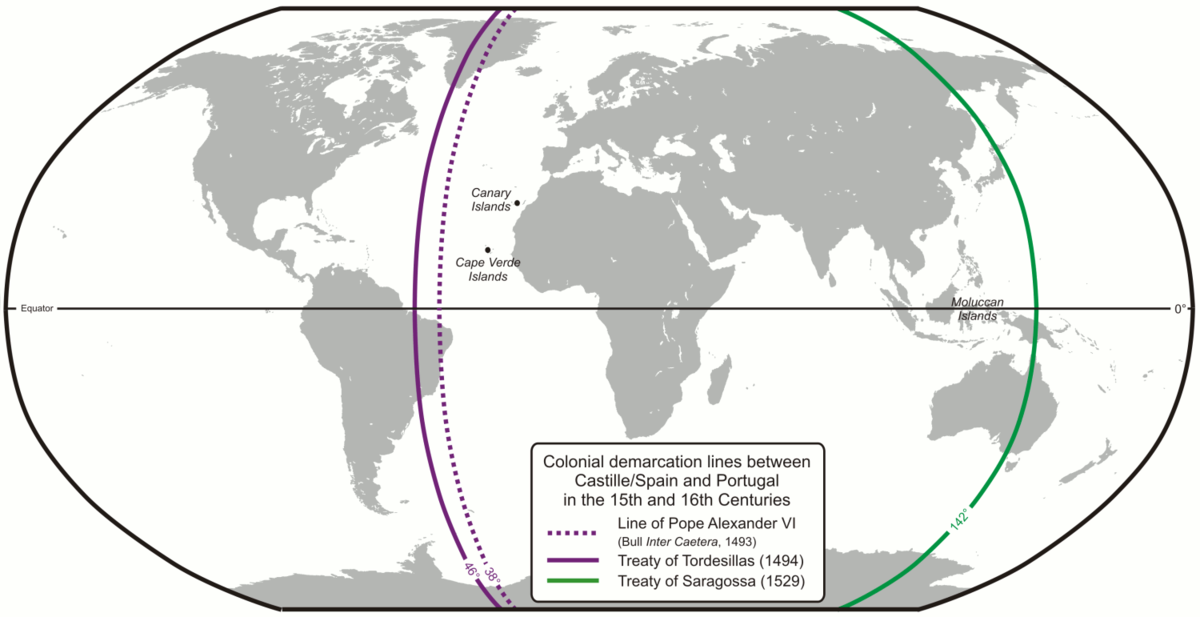
Castile and Portugal divided the world in The Treaty of Tordesillas.
Castile and Portugal divided the world in The Treaty of Tordesillas.
Foundation of Santo Domingo
Bartholomew Columbus founded Santo Domingo, which became the first permanent European city in the Americas. This stone-built city served as the administrative center for Spanish colonial operations and the model for future colonial settlements.
Conquest of Melilla
Spain conquered Melilla in North Africa, marking the beginning of Spanish expansion into Muslim territories outside the Iberian Peninsula. This conquest established Spain's presence in North Africa and demonstrated its military capabilities.
Juan Ponce de León Conquers Puerto Rico
Juan Ponce de León conquered Puerto Rico, expanding Spanish control in the Caribbean. This conquest provided Spain with another strategic base for further expansion and demonstrated the effectiveness of Spanish military tactics in the New World.
Foundation of Santa María la Antigua del Darién
Vasco Núñez de Balboa established the first permanent settlement on the American mainland in present-day Panama. This settlement served as a crucial base for further exploration and the eventual discovery of the Pacific Ocean.
Balboa Discovers the Pacific Ocean
Vasco Núñez de Balboa crossed the Isthmus of Panama and became the first European to see the Pacific Ocean from the American coast. He claimed the Pacific and all adjoining lands for the Spanish Crown, vastly expanding Spanish territorial claims.
Charles I Becomes King of Spain
Charles I inherited the Spanish throne, beginning Habsburg rule in Spain. As the grandson of the Catholic Monarchs, he brought together the Castilian empire in the Americas with Habsburg possessions in Europe, creating a vast global empire.
1518 CE - 1546 CE
Cortés Begins Conquest of Mexico
Hernán Cortés organized an expedition of 550 conquistadors and sailed for Mexico, defying the governor of Hispaniola. This unauthorized expedition would lead to the conquest of the Aztec Empire and establish Spanish dominance in Mesoamerica.
Battle of Potonchán
Cortés's forces defeated a 10,000-strong Chontal Mayan army at Potonchán, demonstrating Spanish military superiority and opening the path to the Aztec Empire. This victory established Spanish dominance over indigenous forces in Mexico.
Spanish Victory over Tlaxcalans
360 Castilians and 2,300 Totonac allies defeated a 20,000-strong Tlaxcalan army, leading to thousands of Tlaxcalans joining the Spanish against the Aztecs. This alliance was crucial for the eventual conquest of the Aztec Empire.
Spanish Enter Tenochtitlan
Cortés's forces entered Emperor Moctezuma II's capital city of Tenochtitlan, marking a crucial moment in the conquest of the Aztec Empire. This peaceful entry would soon turn into violent conflict and siege warfare.
Battle of Cempoala
Cortés defeated Pánfilo de Narváez's force sent to punish him for his unauthorized invasion of Mexico. This victory eliminated Spanish opposition to Cortés's conquest and reinforced his forces with Narváez's surviving troops.
La Noche Triste
The Spanish were driven out of Tenochtitlan during La Noche Triste, suffering heavy losses and losing all their gold and guns. This defeat demonstrated Aztec military capability and forced the Spanish to regroup for a prolonged siege.
Battle of Otumba
The Spanish and their allies, without artillery or arquebusiers, repelled 100,000 Aztecs at Otumba. This remarkable victory allowed the Spanish to escape and regroup, demonstrating their tactical superiority despite being outnumbered.
Fall of Tenochtitlan
After a prolonged siege, Tenochtitlan fell to Spanish forces and Cuauhtémoc was captured. At least 100,000 Aztecs died during the siege, marking the end of the Aztec Empire and the beginning of Spanish colonial rule in Mexico.
Alvarado Begins Central American Conquest
Pedro de Alvarado commenced the conquest of northern Central America following the fall of the Aztec Empire. This expansion extended Spanish control throughout Mesoamerica and established the foundation for colonial administration in the region.
Pizarro Conquers the Inca Empire
Francisco Pizarro conquered the Inca Empire by capturing its leader Atahualpa during a surprise attack in Cajamarca, resulting in the massacre of thousands of Incas. This conquest opened vast territories in South America to Spanish colonization.
Establishment of Viceroyalty of New Spain
The Viceroyalty of New Spain was established to govern Spanish territories in North America and the Caribbean. This administrative reorganization centralized colonial government and established the framework for Spanish rule in the Americas.
Establishment of Viceroyalty of Peru
The Viceroyalty of Peru was established to govern Spanish territories in western South America, including present-day Peru, Bolivia, Ecuador, and parts of Chile and Argentina. This created the administrative structure for Spanish rule in South America.
Discovery of Potosí Silver Mines
The rich silver mines of Potosí in Bolivia were discovered, becoming one of the most important sources of wealth for the Spanish Empire. These mines would produce vast quantities of silver that financed Spanish military campaigns and territorial expansion.
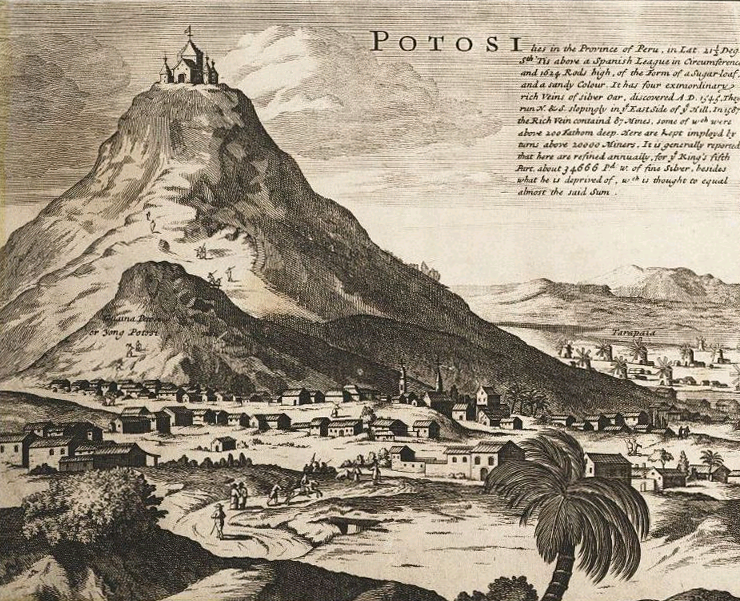
Cerro de Potosí, discovered in 1545
Cerro de Potosí, discovered in 1545, the rich, sole source of silver from Peru, worked by compulsory indigenous labor called mit'a.
1547 CE - 1575 CE
Philip II Becomes King of Spain
Philip II inherited the Spanish throne from his father Charles V, ruling over one of the first truly global empires. His reign would see the height of Spanish power and the colonization of the Philippines, making Spain a dominant world power.
Treaty of Cateau-Cambrésis
Philip II reaffirmed Spanish control over the Kingdom of Naples, Sicily, Sardinia, and the Duchy of Milan through this treaty. This agreement solidified Spanish dominance in Italy and established it as the core of Spanish power in Europe.
Spanish Colonization of Philippines Begins
Spanish explorer Miguel López de Legazpi arrived in the Philippines, beginning Spanish colonization of the archipelago. This expansion made Philip II ruler of one of the first true globe-spanning empires, connecting Asia to the Spanish colonial system.
1576 CE - 1604 CE
Spanish Annexation of Portugal
Philip II's victory in the War of the Portuguese Succession led to the annexation of Portugal and the creation of the Iberian Union. This effectively integrated Portugal's overseas empire into Spain's domain, creating an unprecedented global empire.
1634 CE - 1662 CE
Portugal Regains Independence
Portugal regained its independence from Spain, ending the Iberian Union that had lasted since 1580. This separation reduced Spanish territorial control and marked the beginning of the decline of Spanish global dominance.
1692 CE - 1720 CE
Death of Charles II and War of Spanish Succession
Charles II of Spain died without an heir, leading to the War of the Spanish Succession. This conflict would determine the future of the Spanish Empire and result in the establishment of Bourbon rule in Spain.
Philip V Becomes King of Spain
Philip V, a French Bourbon prince and grandson of Louis XIV, became King of Spain after the War of Spanish Succession. This marked the beginning of Bourbon rule in Spain and initiated significant administrative and economic reforms.

Philip V of Spain (r. 1700–1746)
Philip V of Spain (r. 1700–1746), the first Spanish monarch of the House of Bourbon
Treaties of Utrecht
The Treaties of Utrecht ended the War of Spanish Succession, confirming Philip V as King of Spain while ceding European territories to other powers. The treaty also granted Britain the asiento de negros, allowing British merchants to sell slaves in Spanish America.
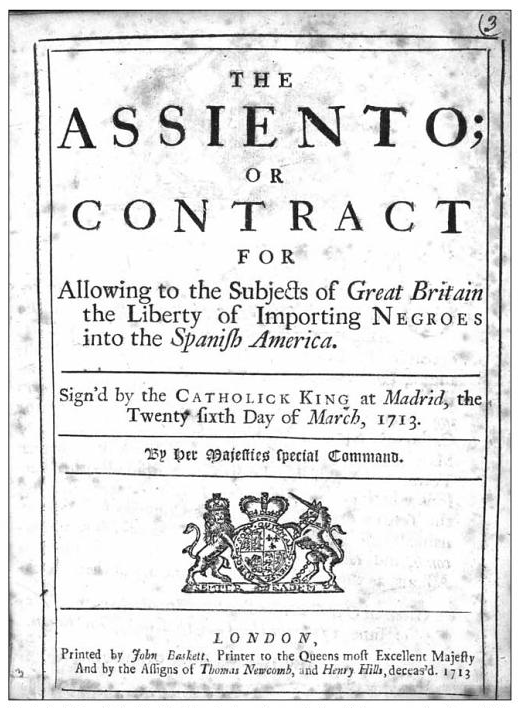
1713 Asiento contract
Cover of the English translation of the Asiento contract signed by Britain and Spain in 1713 as part of the Utrecht treaty that ended the War of Spanish Succession.
1721 CE - 1749 CE
Battle of Cartagena de Indias
Spain successfully repulsed a major British attack on the fortress of Cartagena de Indias in present-day Colombia. This victory helped secure Spanish dominance in the Caribbean and demonstrated the effectiveness of Spanish colonial defenses.

Battle of Cartagena de Indias (1741)
Battle of Cartagena de Indias (1741). Spain's victory in the battle helped secure Spanish rule in the region for over half a century.
1750 CE - 1778 CE
Establishment of Viceroyalty of Río de la Plata
Spain created the Viceroyalty of Río de la Plata to better administer its South American territories and counter Portuguese expansion. This administrative reorganization reflected Bourbon efforts to modernize colonial government and improve economic efficiency.
1779 CE - 1807 CE
Tupac Amaru Uprising
A major indigenous uprising led by Tupac Amaru II erupted in Peru, challenging Spanish colonial authority. This rebellion demonstrated growing unrest with Bourbon reforms and tighter colonial control, foreshadowing later independence movements.
Siege of Pensacola
Spanish forces led by Bernardo de Gálvez captured Pensacola from the British during the American Revolutionary War. This victory was part of Spain's successful Gulf Coast campaign that helped recapture Florida from British control.

Bernardo de Gálvez at the Siege of Pensacola (1781)
Bernardo de Gálvez at the Siege of Pensacola (1781) during the American Revolutionary War. Gálvez led the Gulf Coast campaign, which saw Spanish forces recapture Florida from the British.
Louisiana Purchase
Napoleon sold the Louisiana Territory to the United States, ending Spanish control over this vast region. This transaction marked the first major territorial loss for Spain in the 19th century and reduced Spanish influence in North America.
1808 CE - 1836 CE
Napoleonic Invasion of Spain
Napoleon Bonaparte invaded the Iberian Peninsula and placed his brother Joseph on the Spanish throne, creating a crisis of legitimacy. This event triggered the Peninsular War and sparked independence movements throughout Spanish America.
Argentine Independence Movement Begins
Argentina began its independence movement, marking the start of widespread Spanish American wars of independence. This movement would inspire similar independence struggles throughout Spanish America and lead to the gradual dissolution of the Spanish Empire.
Mexican War of Independence Begins
The Mexican War of Independence began, initiating more than a decade of struggle against Spanish rule. This conflict would eventually lead to Mexican independence in 1821 and the loss of Spain's most valuable North American territory.
Adams-Onís Treaty
Spain ceded its claims in the western United States to America and sold Florida, establishing a boundary between New Spain and the U.S. This treaty marked a significant reduction in Spanish territorial claims in North America.
Mexican Independence
Mexico gained independence from Spain after more than a decade of warfare, ending Spanish rule in its most valuable North American territory. This independence led to the subsequent independence of Central American provinces by 1823.
Battle of Ayacucho
The decisive Battle of Ayacucho effectively ended Spanish rule in South America, with the captured Royalist army consisting mostly of Spanish Americans rather than Spaniards. This victory secured independence for Peru and marked the end of major Spanish military presence in South America.
1837 CE - 1865 CE
Spanish Annexation of Santo Domingo
Spain annexed Santo Domingo, which had been independent since 1821. This recolonization effort led to a guerrilla war in 1863 and proved costly for Spain, which spent over 33 million pesos fighting insurgents before withdrawing in 1865.
Spanish Withdrawal from Santo Domingo
Spain withdrew from Santo Domingo after spending over 33 million pesos fighting insurgents, with 10,888 Spanish soldiers killed or wounded and 18,000 dead from all causes. This costly failure demonstrated the difficulty of reestablishing colonial control.

Towns controlled by the Spanish Army in Santo Domingo
Towns controlled by the Spanish Army in Santo Domingo on 1 December 1864 (solid red), and towns occupied earlier in November 1864 (red outline).
1895 CE - 1923 CE
Spanish-American War Begins
The United States declared war on Spain, marking the start of the Spanish-American War. This conflict would result in Spain losing its remaining territories in the Americas and the Pacific, effectively ending the Spanish Empire.

The Spanish Empire at the start of the Spanish–American War in 1898
The Spanish Empire at the start of the Spanish–American War in 1898
Treaty of Paris (1898)
The Treaty of Paris ended the Spanish-American War, with Spain ceding Cuba, Puerto Rico, and Guam to the U.S. and selling the Philippines for $20 million. This treaty marked the effective end of the Spanish Empire as a global power.
German-Spanish Treaty
Spain sold its remaining Pacific Ocean possessions to Germany, retaining only its African territories. This transaction completed Spain's withdrawal from the Pacific and marked the end of its global maritime empire.
Spanish Morocco Established
Morocco was divided between French and Spanish protectorates, with Spain receiving the northern region. This division established Spanish Morocco as one of Spain's last significant colonial territories in the 20th century.
Battle of Annual
Spanish forces suffered a major military defeat against Moroccan insurgents led by Abdelkrim during the Rif War. This disaster was described as occurring during 'the most acute period of Spanish decadence' and led to the use of chemical weapons.
1924 CE - 1952 CE
Alhucemas Landing
The Spanish Army and Navy, with French collaboration, conducted the Alhucemas landing, ending the Rif War. This operation is considered the first successful amphibious landing in history supported by seaborne air power and tanks.
1953 CE - 1976 CE
Spanish Morocco Independence
When French Morocco became independent, Spain surrendered Spanish Morocco to the new nation but retained control of Sidi Ifni, Tarfaya, and Spanish Sahara. This marked the beginning of the end of Spanish colonial presence in North Africa.
Equatorial Guinea Independence
Under pressure from Equatoguinean nationalists and the United Nations, Spain announced it would grant independence to Equatorial Guinea. This decision marked Spain's withdrawal from its last significant African colony.
Spanish Withdrawal from Western Sahara
The Green March prompted Spanish withdrawal from Spanish Sahara under Moroccan military pressure, ending Spanish control over its last major colonial territory. The future of this former Spanish colony remains disputed to this day.
End of Spanish Empire
The Spanish Empire officially ended in 1976 with the completion of decolonization processes. This marked the conclusion of nearly 500 years of Spanish colonial rule and the transformation of Spain into a modern European nation-state.